
Double-click to edit...
In early February, four promising culinary talents met on the coastline of the remote Danish island
on Bornholm. They all wanted to prove once and for all, that they had what it took to be crowned Rising
Star 2022. What followed, in the 2022 Sol Over Gudhjem Rising Star cooking competition, was a display
of incredible talent, passion and heart. As well as the breaking of not one but two culinary records. Join
us for a look at what it takes to be at the top of the pool of aspiring young chef talents.
“It has been made perfectly clear that the Danish cooking scene has bounced back. And that even the established names should feel a little uncertain. These are not rising stars. They are the new giants.” The words are those of veteran food reviewer and culinary expert, Svend Rasmussen, and they fall at the end of what was a very exciting start to 2022 in the world of competitive cooking.
In a heated 2022 edition of Sol Over Gudhjem Rising Star cooking competition, four promising young talents gave their all in a televised bout to prove that they were not only rising stars. They were stars in their own light.
Celebrating young talent
Held annually in a seaside studio on the rugged coast of the remote island of Bornholm, Rising Star is a cooking contest like few others. Regarded as a baby sister of Denmark’s arguably biggest competitive cooking event, Sol Over Gudhjem, Rising Star – as the name implies – focuses on emerging talents of the industry. And on offering them recognition as the promising stars of the future that they are.
Furthermore, the competition serves a chance to highlight the culture and culinary traditions of Bornholm, a remote and sadly often overlooked island situated on the very outskirts of the kingdom, some 150 kilometers away from the nearest landmass.
The contestants for Rising Star are handpicked at the beginning of their promising culinary careers. And for this one day in early February, they have the chance to prove themselves. In front of 18 rolling TV cameras and a panel of judges consisting of four legends of their industry.
I want to see their personality on the plate!
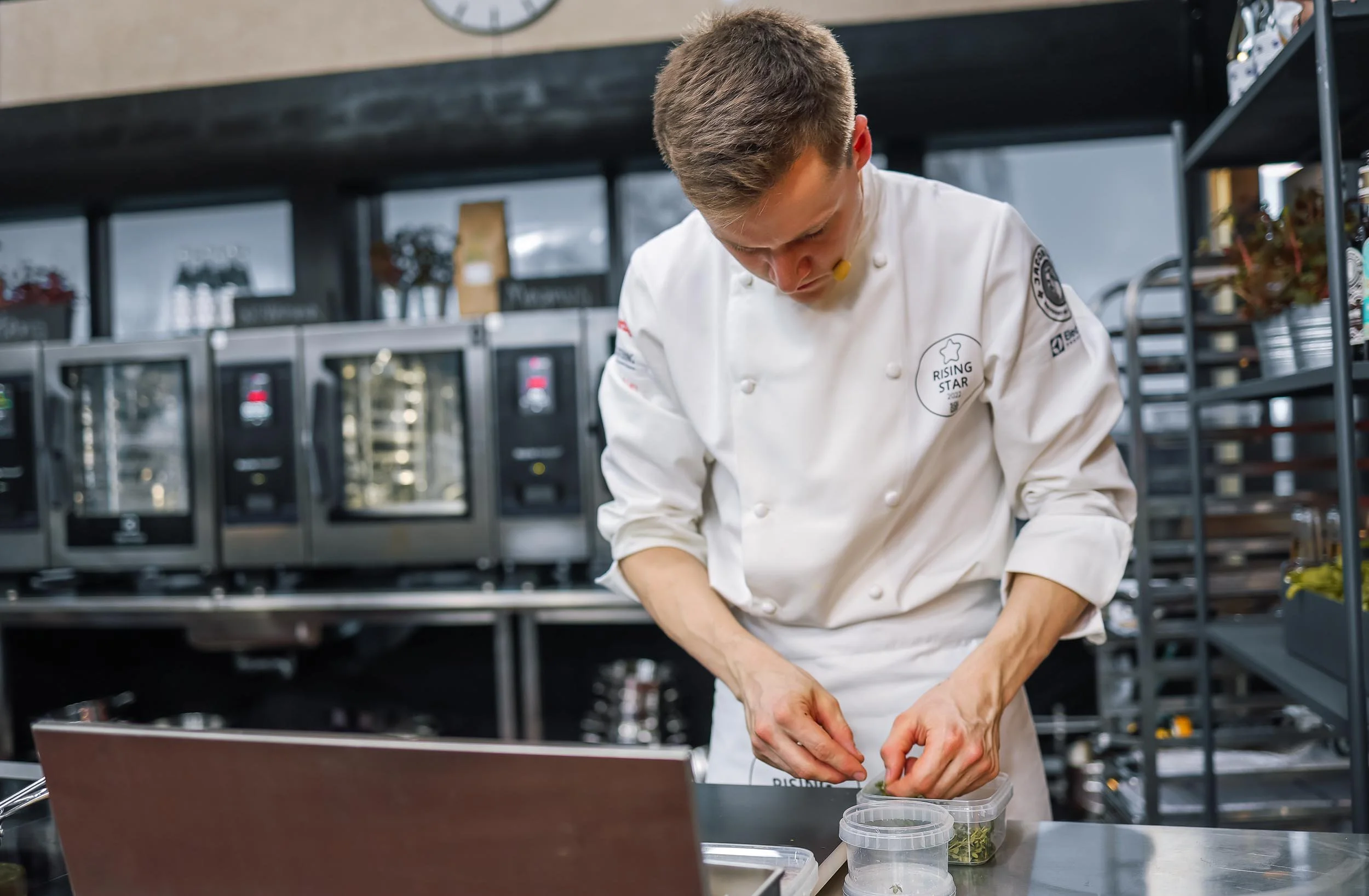
In 2022, the panel consisted of none other Copenhagen original Per Thøstesen from Bistro Boheme, Master Chef judge Dak Wichangoen, Michelin-starred chef Nicolai Nørregaard from Kadeau, and last year’s winner, Adreas Tancula Møller from Copenhagen’s famous smørrebrød restaurant, Møntergade. Widely celebrated as champions of their field, the seasoned judges were excited to share their input with the young contestants.“
I want to see their personality on the plate,” said Andreas Møller on behalf of the panel, “Your personality is your fingerprint on the food you serve. You serve a bit of your personality, every time you cook for someone. And you are never better than the last plate to leave your kitchen. One simple mistake is enough. In a competition like this, you have to offer flavor and personality, and you have to deliver on time.”
Your personality is your fingerprint on the food you serve. You serve a bit of your personality, every time you cook for someone.
Great expectations
Personality, according to culinary commentator, Svend Rasmussen, who covered the event for TV2 Bornholm, would not be hard to find in this year’s lineup. “They are all from star restaurants,” he said at the beginning of the broadcast. “They all have something to fight for and something to fight with. They all have their strengths and weaknesses.”
Giovanna Fiore from Michelin-starred Restaurant Syttende was determined to bring a bit of her native France and her love for all things dessert to the competition, yet admits to being inexperienced in the field of competitive cooking. “My heart is in the pastry kitchen,” she offers. “I love the refinement and attention to detail. This is my first competition. I am nervous. But ready to prove myself.”
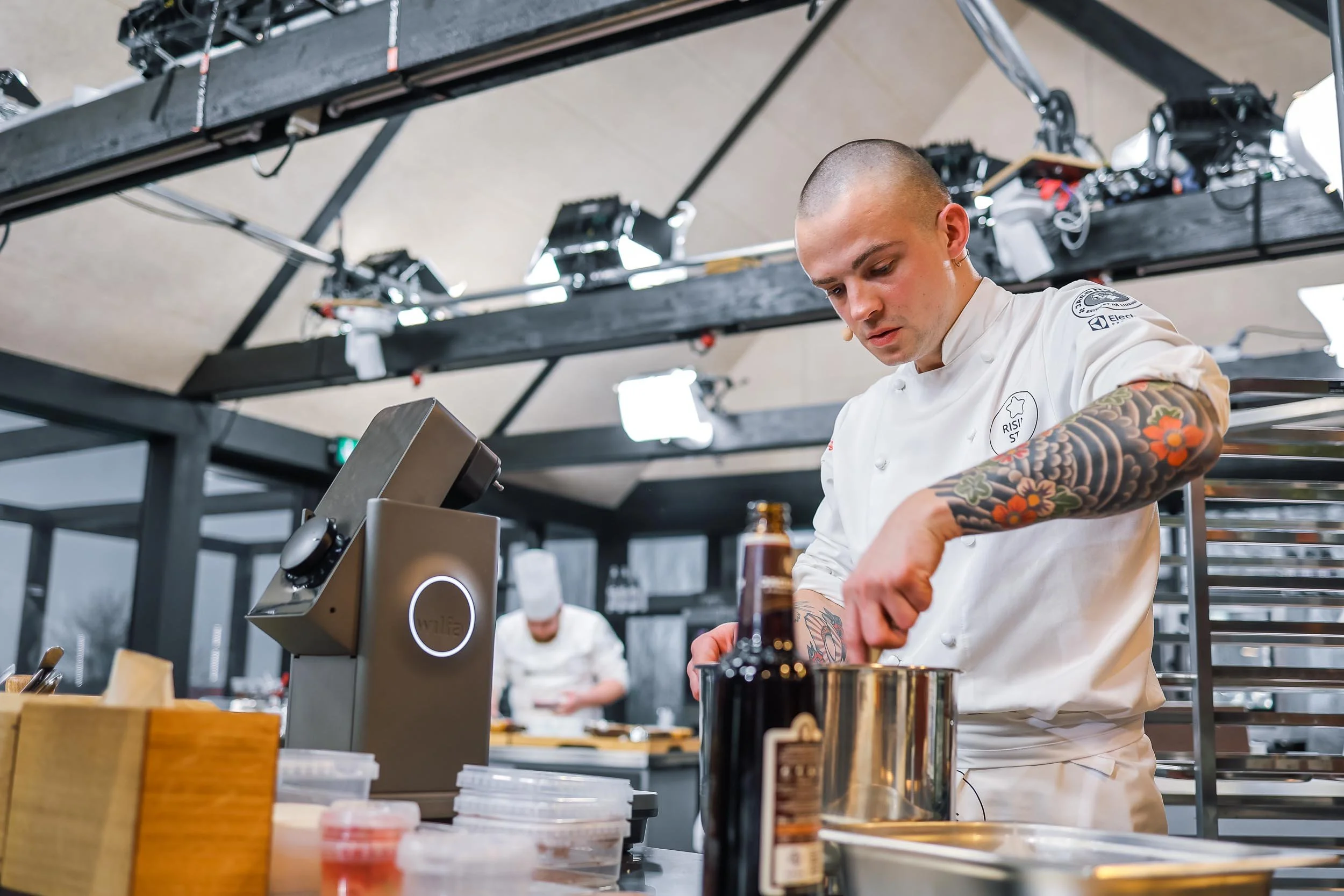
Hans Kjellsson from Sushi Anaba, according to many, played the role as wild card in the competition as his clearly Japanese-inspired style and techniques differ vastly from both those of his co-competitors and general trends in fine dining. Seemingly calm and smiling, he promised to bring both seaweed and yuzu to the party, along with a Japanese sense of calm, that he hoped would tip the odds in his favor as things heat up.
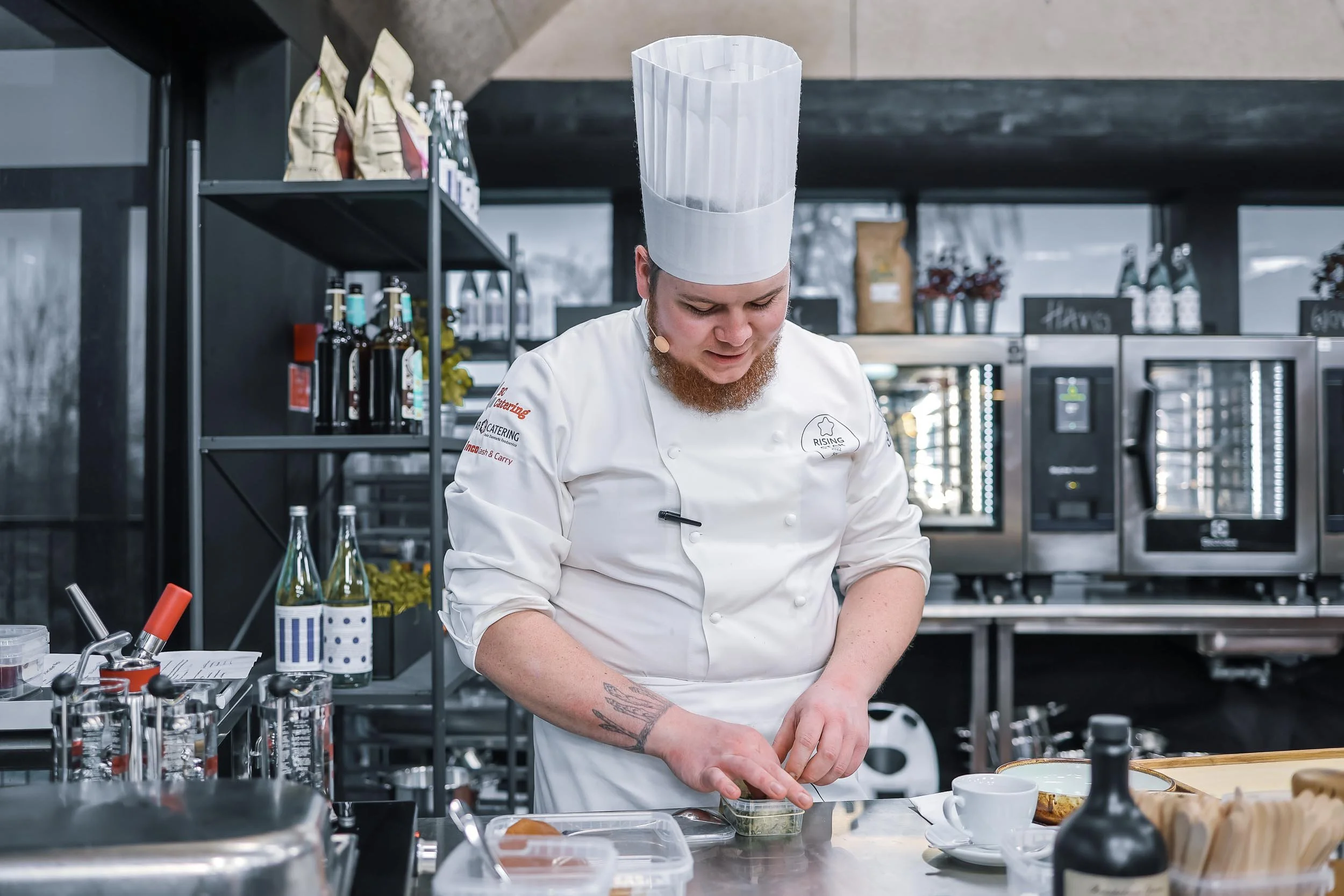
Marc Kaalund from Restaurant Fru Larsen, on the other hand, taps well into the zeitgeist of modern Nordic cooking with his love for foraging and seasonal vegetables. His years of experience from competitive cooking made him, a clear favorite in the eyes of many, yet he admits to feeling rusty after a few years out of the game. “I feel the pressure,” he grinned as the show began, “but then again, I am used to that since I became a father in September!”
The final contestant, Magnus Carlsen from Restaurant Alchemist, is the protégé of none other than culinary mastermind Rasmus Munk. He has shown not only great culinary talent, but also enough heart and determination over the years to land himself a role as somewhat of a crowd favorite. Knowing fully well, that his own greatest enemy may be his uncompromising strive for perfection and achievement. “I want to create memories,” he stated simply as the contest kicked into gear.
I want to create memories.
Baptism of fire – Mysteries and challenges
For the aspiring chefs, the bout in the TV kitchen in Gudhjem would prove a baptism of fire rather than a walk in the park. In the span of just about four hours, they had to prepare a main dish and a dessert in front of rolling cameras and a panel of judges made up of their culinary heroes.
Yet, in a contest like this there are many more stress factors than just time at play. Competitive cooking is something else entirely than everyday service. In a contest like this, the menu must be created on the day, comprised of ingredients, made available on the day. The menu must be planned, written down and submitted to the judges within the first fifteen minutes, then executed and delivered on time according to promise. Every second counts. Every mistake is weighed and every single detail is important.
For their efforts, the contestants were rewarded a maximum of 60 points per judge per dish, or 240 points total. Of the 60 points, up to 30 were awarded for flavor. 10 points were awarded for appearance, another 10 for kitchen etiquette, and an important final 10 points were for “Bornholm spirit”, or how well the contestants manage to tap into the unique culture and produce found on the island of Bornholm.
Double-click to edit...
They all have something to fight for and something to fight with. They all have their strengths and weaknesses.
As somewhat of a helping hand, the contestants were allowed to plan and practice their desserts ahead, using a predefined, mandatory set of ingredients including beer from Carlsberg’s Jacobsen line, heirloom wheat from Aurion, chocolate from Cacao Barry, local Bornholm apple juice and organic cane sugar.
The main course, on the other hand, had to be created on the day. Using predominantly ingredients from a shared produce buffet as well as five ingredients revealed on the day as part of a so-called mystery box. And for perhaps the first time in a major Danish cooking competition, the mystery box was completely meat free.
Instead, the box revealed to the contestant on the day, contained local eggs from Frostegaard farm as well as beautiful heirloom carrots and beets from the ORIGENAL initiative No animal protein. No fish. No seafood. Simply beets, carrots and eggs. For some much-needed umami and depth to the otherwise relatively bland ingredients, the box furthermore contained a pack of Sort Himmel, an experimental dehydrated blue cheese from Arla Unika, as well as a product known simply as Unika 4, a Danish spin on Ayran, a tangy, salted yoghurt drink of Middle Eastern origin.
Double-click to edit...
While the dairy protein, Svend Rasmussen explained, would offer some of the richness and flavor that would otherwise be provided by meat, the question still lingered as the contest kicked into gear. Would the plant-based stipulation eventually prove too much for the young contestant? Luckily not, the resounding answer would be, as the four competitors entered their kitchens and set to work, cooking their hearts out with heirloom vegetables and dairy protein.
A heated battle
Marc Kaalund, the champion of vegetables was the first to deliver his main course of grilled cabbage with caramelized carrots, Sort Himmel cheese, toasted rye bread and a sauce blanquette made with local eggs and Arla Unika 4 Ayran.
At 146 points, his dish paved an impressive way for a heat of dishes. A heat that included Giovanna Fiore’s ambitious roasted celeriac with beet crudité and tonka bean, and Magnus Carlsen’s comforting, warm winter salad with cheese mousse.
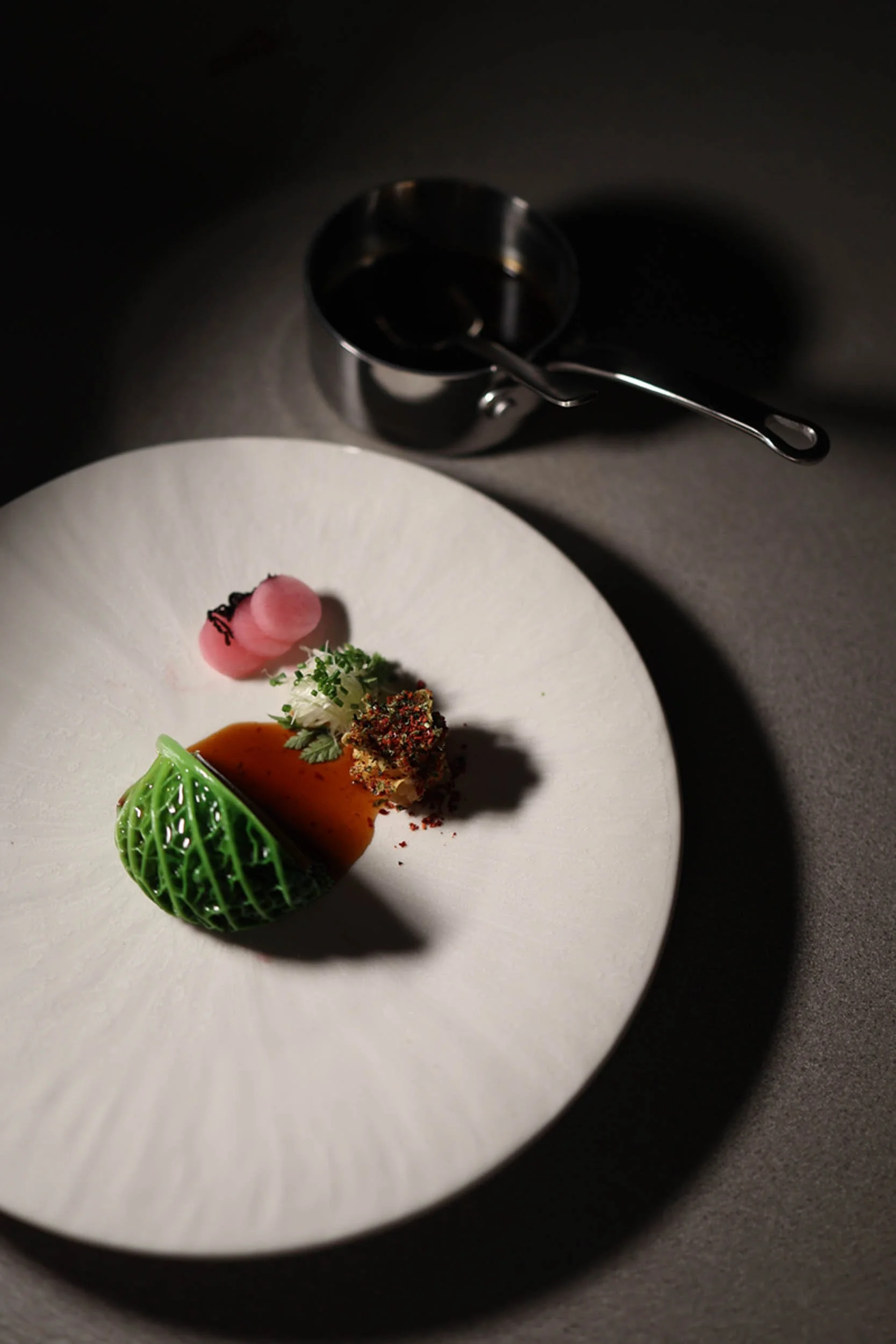
A beautiful display of strength, Magnus’ dish was praised by the judges for its depth of flavor and only outdone by a masterfully calm Hans Kjellsson who churned out the arguably prettiest dish of the day with his Bornholm-style Japanese-inspired okonomiyaki featuring variations of cabbage, baked beets, kombu seaweed, shiso-pickled daikon, spicy okonomiyaki sauce and a smoked blanquette seasoned with Unika 4 Ayran.
At an amazing 225 total points, it became not only one of the prettiest displays in Sol Over Gudhjem history, but also the highest scoring dish in the history of the competition… And it remained so for all of an hour before a clearly motivated Magnus Carlsen bounced back in the dessert heat with a stunning work of art.
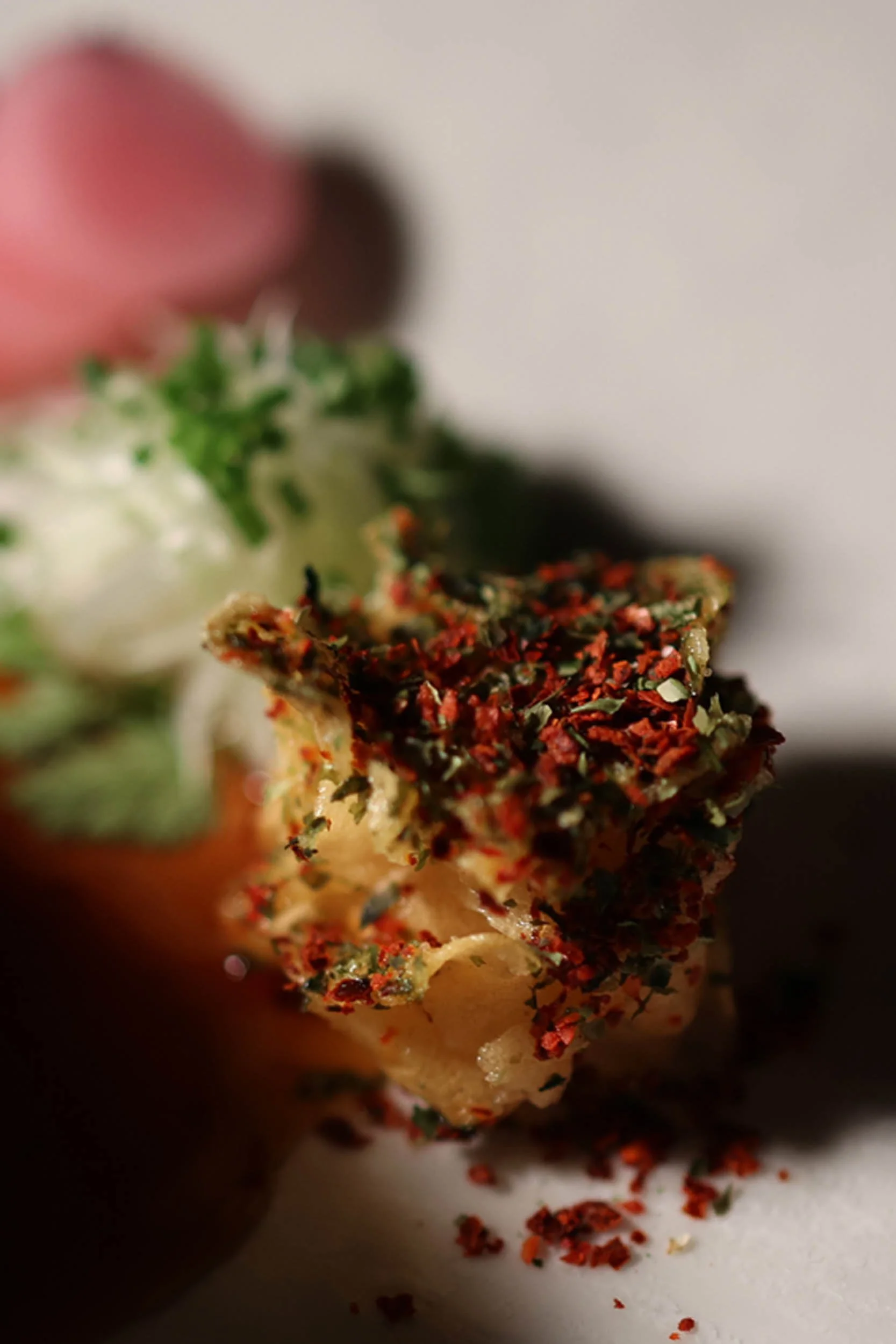
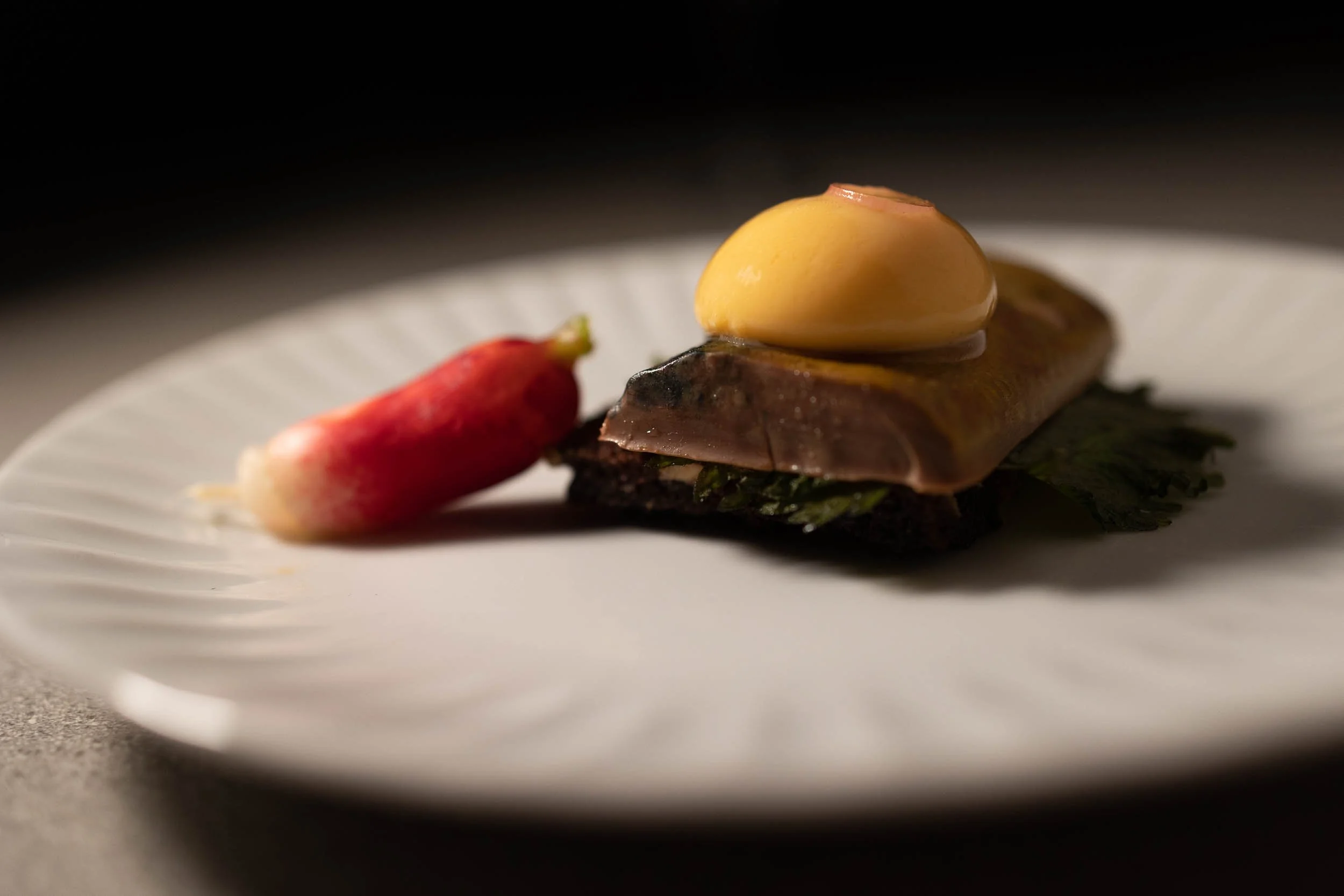
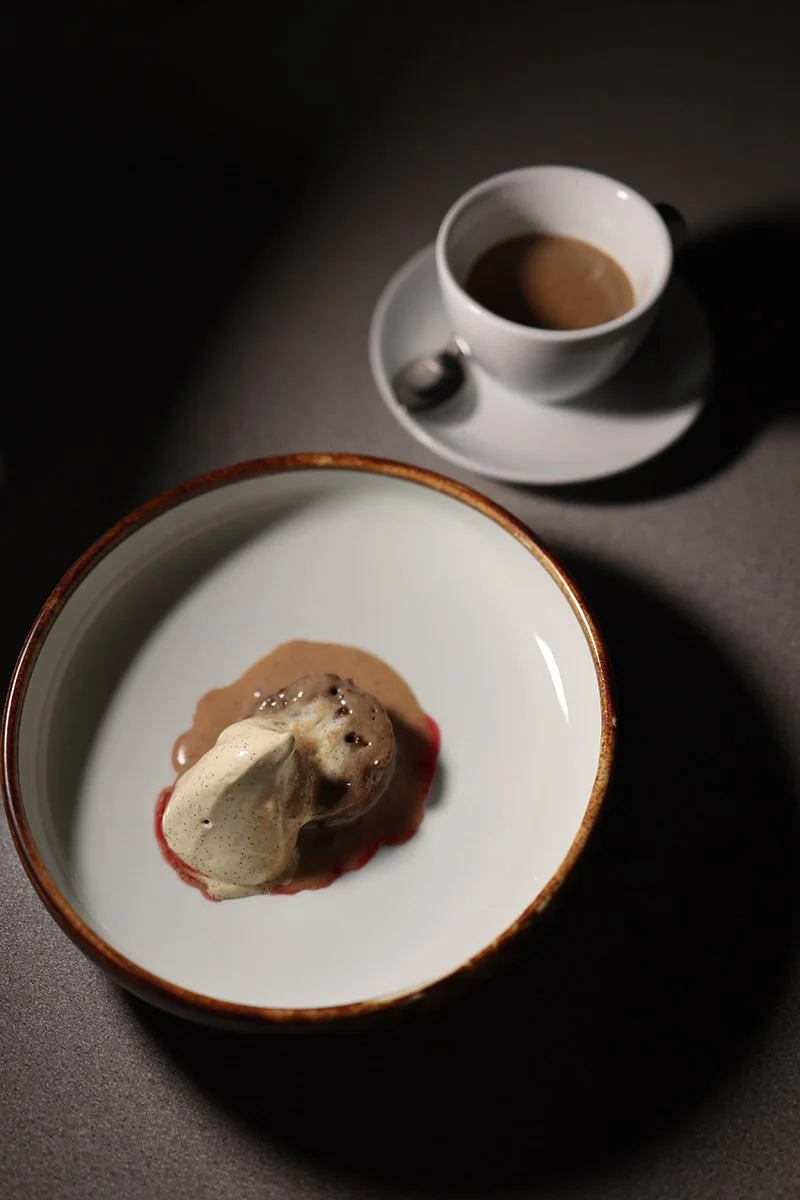
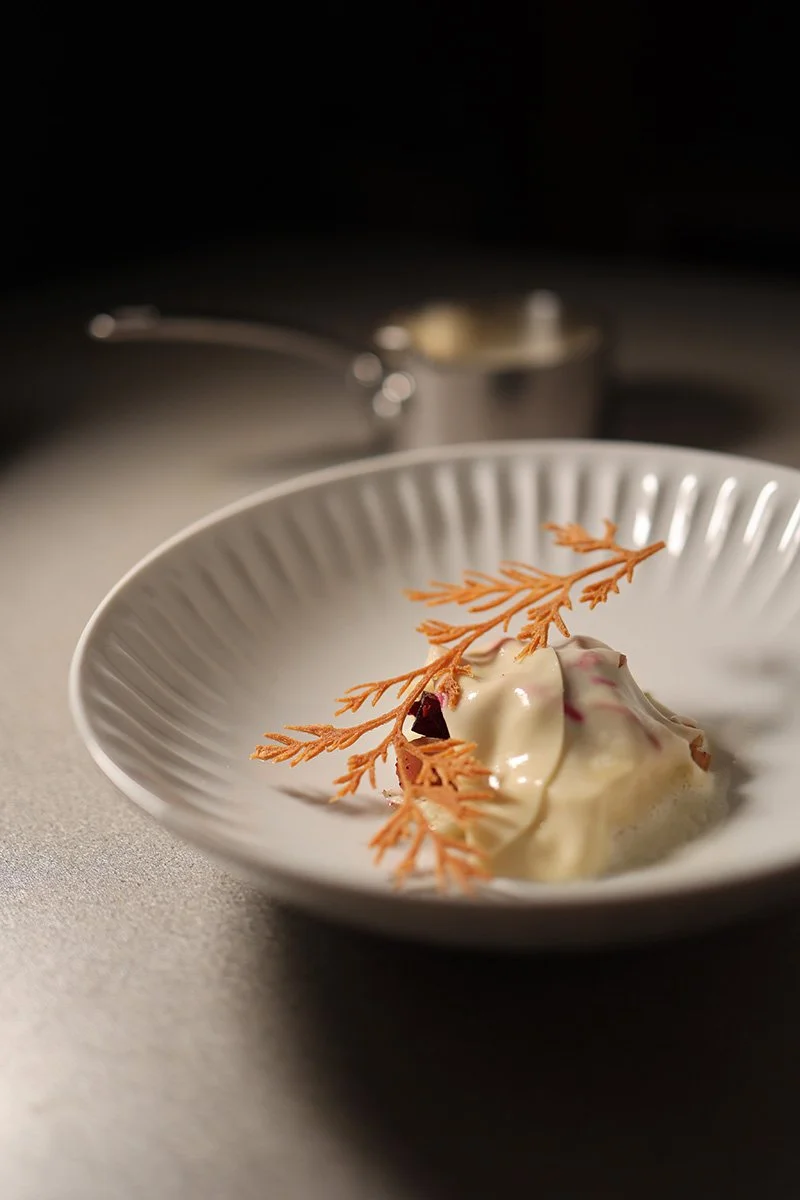
Magnus’ dessert tapped fully into the local Bornholm spirit as a sweet twist on an appropriately named piece of smørrebrød, Sol Over Gudhjem, consisting of smoked herring and raw egg yolk on rye. Magnus’ dessert version was made with toasted chocolate cake topped with brown butter ice cream and beer caramel set in a herring shaped smoked chocolate cast served with a sphere of egg yolk and sea buckthorn.
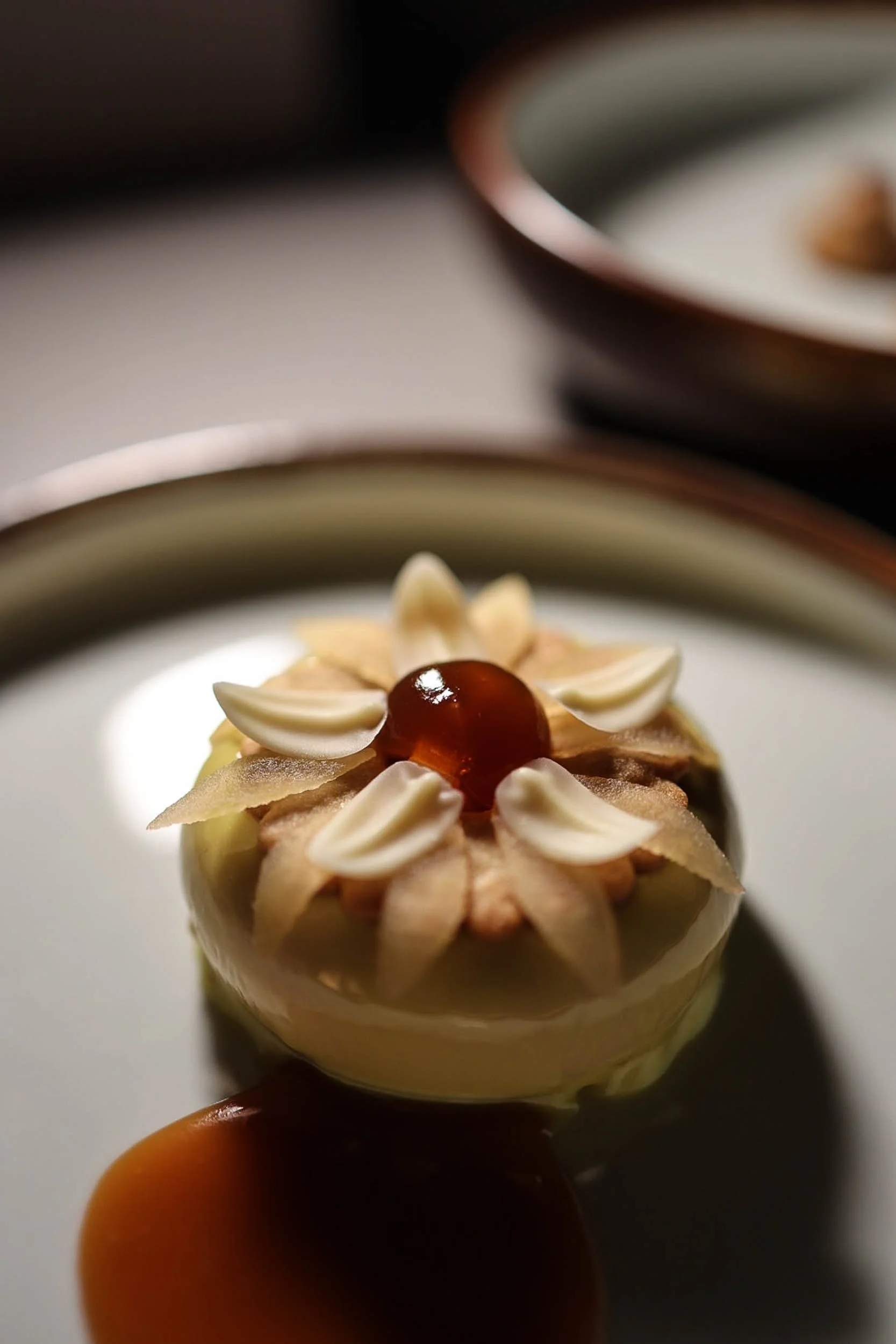
At an incredible 227 points, it became the second dish of the day to break a record. Yet, sadly, for Magnus, it was not enough to topple his wildcard competitor, Hans Kjellsson, whose yuzu and white chocolate tart with salted cherry leaf ice cream, apple sorbet and IPA/honey sauce earned him a total of 435 points. Along with the title of very surprised, humble winner of an incredibly tight, incredibly impressive run to the be crowned Rising Star 2022.
I cannot believe it
“I cannot believe it,” a visibly moved winner told yeswefood.com following the competition. “I was not too happy about the blue cheese element. It is not something that the Japanese work with much. The acidity of the ayran on the other hand, hit home. As did the vegetarian stipulation. I have practiced and I am used to performing in front of a crowd at Sushi Anaba. I guess I that has helped me plan my time well, stay calm, deal with the TV crew and questions and execute perfectly.”
”Essentially, there were very few things that did not go well for him,” judge Nicolai Nørregaard added. “He came out on top of a strong field. And with efforts like these, I am happy that I am done competing,” he added with a grin.
“There was no doubt, that Magnus’ dessert was superior,” his co-judge, Per Thøstesen, added. “It was close to perfect and scored full Bornholm Spirit points. But Hans, as of right now, is simply the better competitive chef.”
The bar has been set incredibly high this year,” a visibly pleased Svend Rasmussen added after the cameras had stopped rolling. “They have really pulled themselves together and I am quite pleasantly surprised. Minor flaws and mistakes aside, they all did well, but what puts Hans apart is the way he managed his time and understood his own limitations.”
