
Double-click to edit...
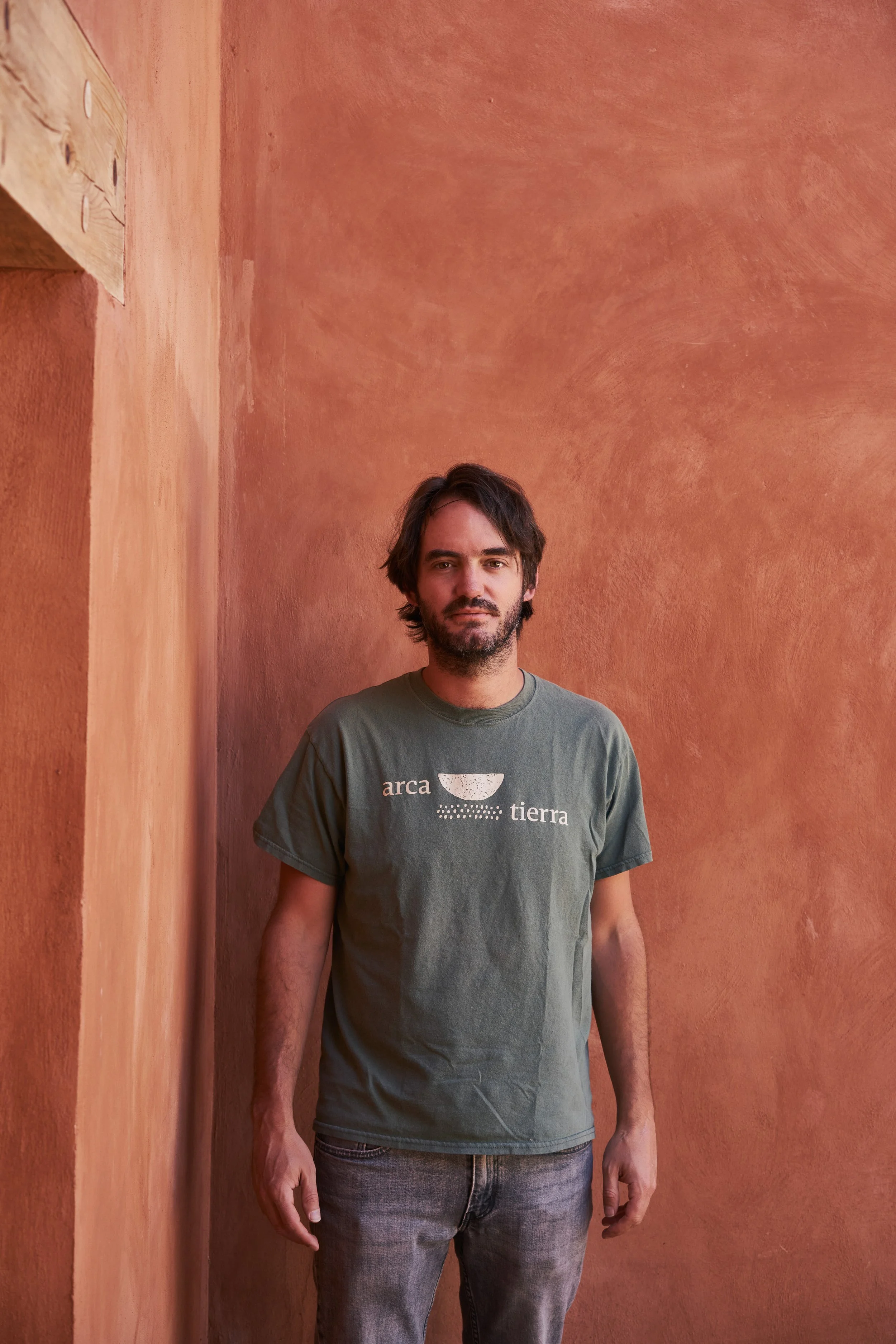
PABLO USOBIAGA
Champions of Change: Reviving ancient gardens, rewriting the rules of gastronomy and building nature's favourite restaurant.
PUBLISHED
OCTOBER 2026 ı PHOTO: Alex Vargas x Pablo Antoli
What if the future of gastronomy had less to do with what happens inside a restaurant and more with everything that happens before an ingredient reaches the kitchen? In Mexico City, Pablo Usobiaga together with his brother Lucio is challenging the foundations of the food industry through Arca Tierra and Baldío, two interconnected projects built around regenerative agriculture, forgotten traditions and the people who cultivate the land. Following their recognition as Champions of Change 2026 by Latin America's 50 Best Restaurants, meet the man who believes that food can do far more than nourish us. It might just change the way we live.
A lawyer walks into a farm...
Here is a man who spent years navigating the complexities of financial law, only to arrive at the conclusion that some of the most important answers to our future might be found in a vegetable garden. Not just any vegetable garden, mind you.
We are talking about the chinampas of Xochimilco, an extraordinary agricultural system dating back to pre-Hispanic Mexico. Ancient, remarkably sophisticated and, somewhat inconveniently, disappearing. But before we get to that, there is the small matter of how a corporate lawyer ended up here in the first place.
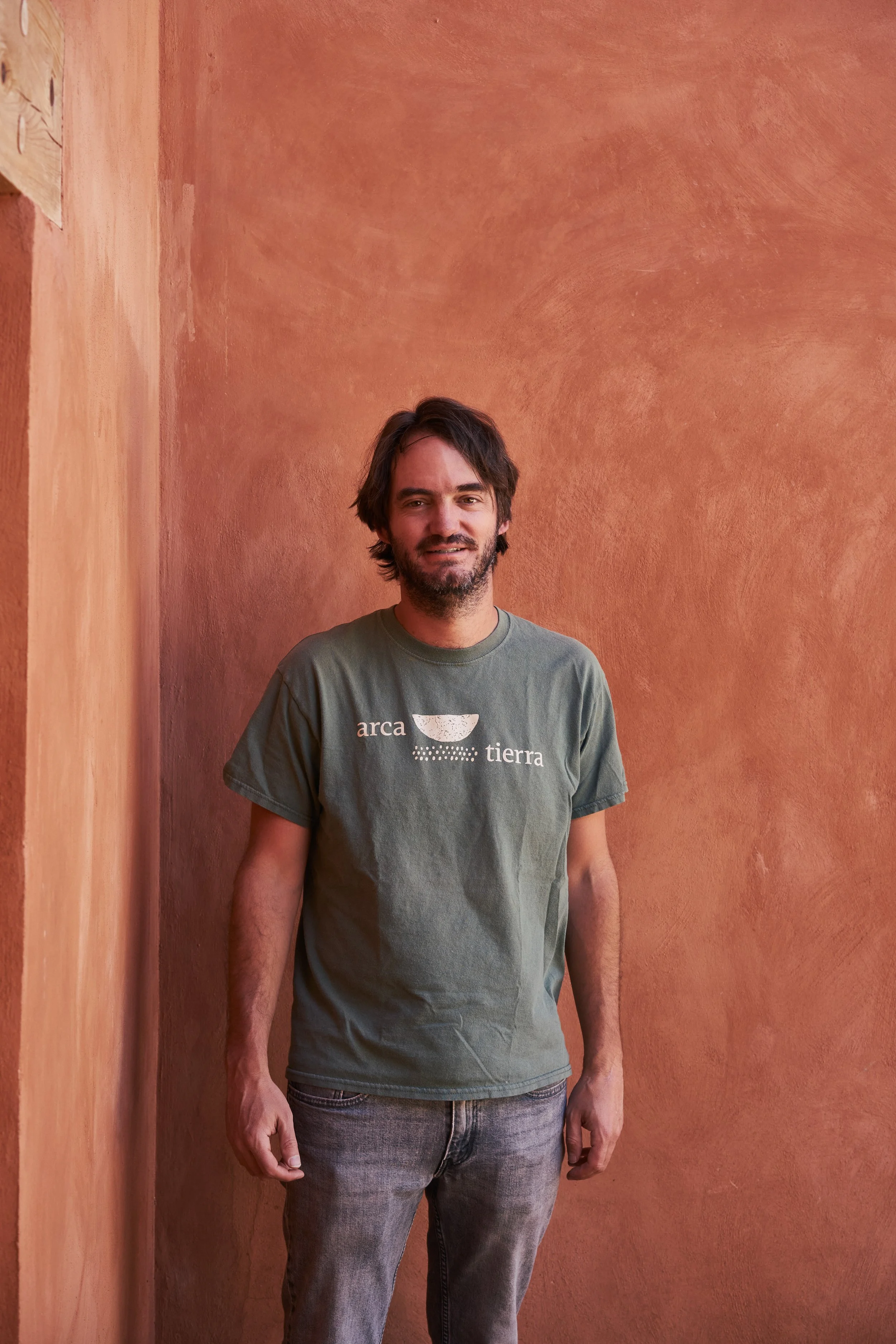
"I wasn't born as a farmer or as a person that was really close to hospitality," Usobiaga admits. His professional ambitions originally revolved around international law and human rights. A respectable direction for someone hoping to make a difference in the world. Except that somewhere along the way, the idealism got lost in the paperwork.
Double-click to edit...
I wasn't born as a farmer or as a person that was really close to hospitality.
After several years working for a large financial law firm, he found himself earning a comfortable salary and feeling increasingly uncomfortable about what he was doing to earn it. "I was earning more money than most of my friends at that age, but it was not something that was fulfilling." His next venture, a solar energy company, seemed to offer a more meaningful alternative. Five years later, however, he was once again sitting behind a computer, wondering whether this was really it.
Then COVID arrived. And with it, an unexpected opportunity. During the pandemic, Usobiaga began spending more time with his brother Lucio, who had already dedicated years to recovering agricultural land in Xochimilco through a project then known as Yolcan.
Lucio understood agriculture. Pablo understood business. And somewhere between the two, an idea began to take shape. What if they could make agriculture relevant to an entirely different audience? What if hospitality could become the bridge between the countryside and the city? Arca Tierra was born from that ambition. And things were about to get considerably more interesting.
Double-click to edit...
The ancient art of thinking ahead
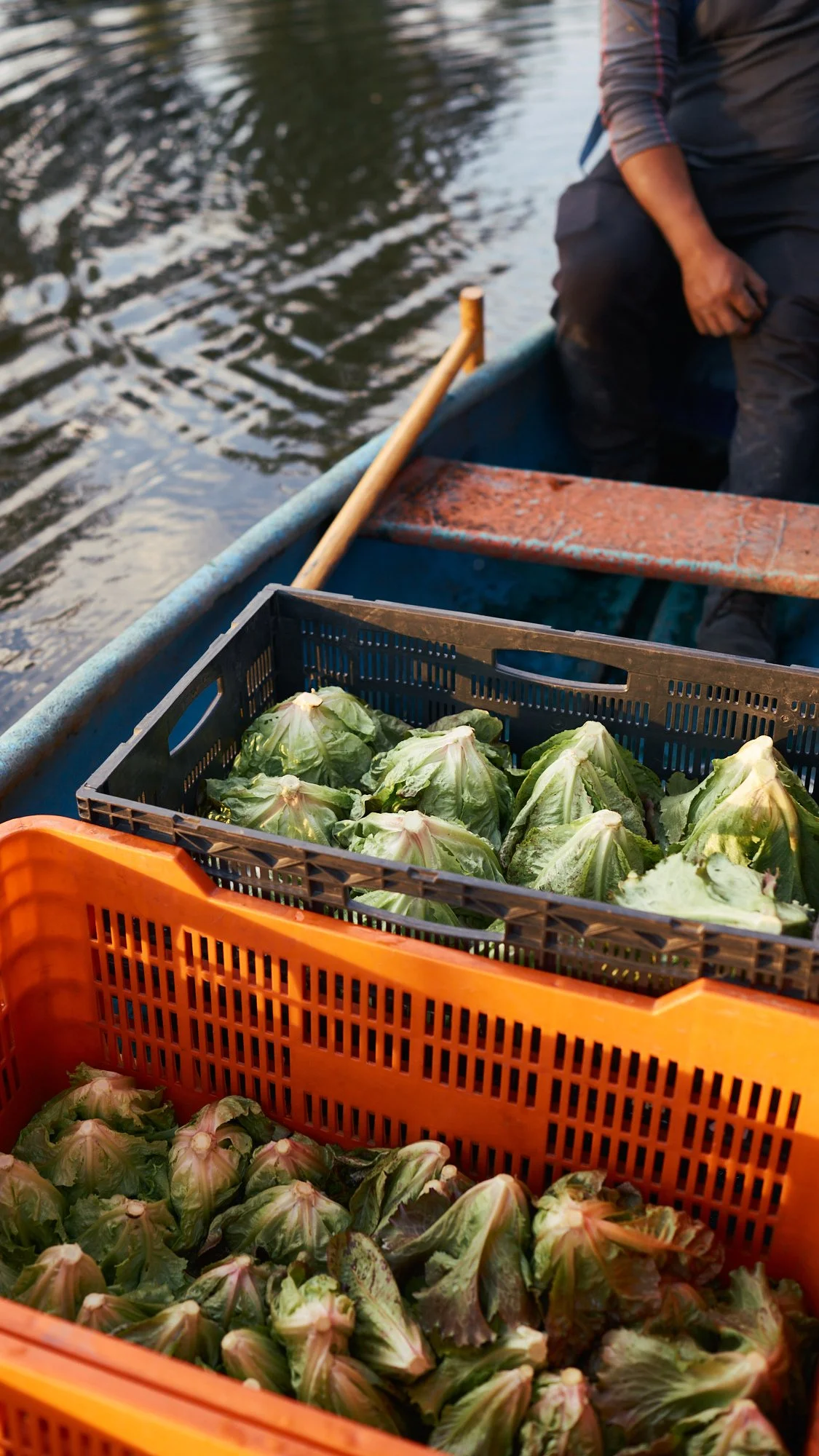
To understand what makes Arca Tierra remarkable, one must travel south of Mexico City's sprawling urban landscape, where an intricate network of canals conceals one of the world's most fascinating agricultural inventions. The chinampas.
Often referred to as floating gardens, these artificial islands were constructed centuries ago to produce food within the lake system upon which Mexico City was built. Except, as Usobiaga is quick to point out, they do not actually float. "The chinampas are human made. They are gardens, not floating gardens like many people say." A minor geographical correction, perhaps. But an important philosophical one.
Because what fascinates Usobiaga is not simply their age or agricultural productivity. It is the extraordinary relationship between humans and nature that made them possible. By constructing islands surrounded by canals, their creators developed an ecosystem capable of supporting food production while encouraging biodiversity.
Think about that for a moment. At a time when human intervention is increasingly associated with environmental destruction, here is a centuries-old example of people actively improving the natural environment. "The chinampa shows that if we act as part of nature because we are, we can definitely make things better instead of worse." It is an optimistic perspective. Almost provocatively so. And Usobiaga has little patience for the notion that humanity must wait for some revolutionary technology to rescue the planet.
"We already have the answers. We don't need a special technology or someone to save us." In other words, while much of the modern world searches desperately for the next great innovation, the answer might have been growing quietly in Xochimilco for centuries. The irony is rather delicious.
The chinampa shows that if we act as part of nature because we are, we can definitely make things better instead of worse.
Double-click to edit...
Who really deserves the applause?
There is another contradiction in contemporary gastronomy that seems to particularly irritate Usobiaga. We have become remarkably good at celebrating chefs. We know their names, recognise their faces and travel halfway around the world to experience their cooking. Restaurants receive awards, accumulate stars and build international reputations around the ingredients they serve.
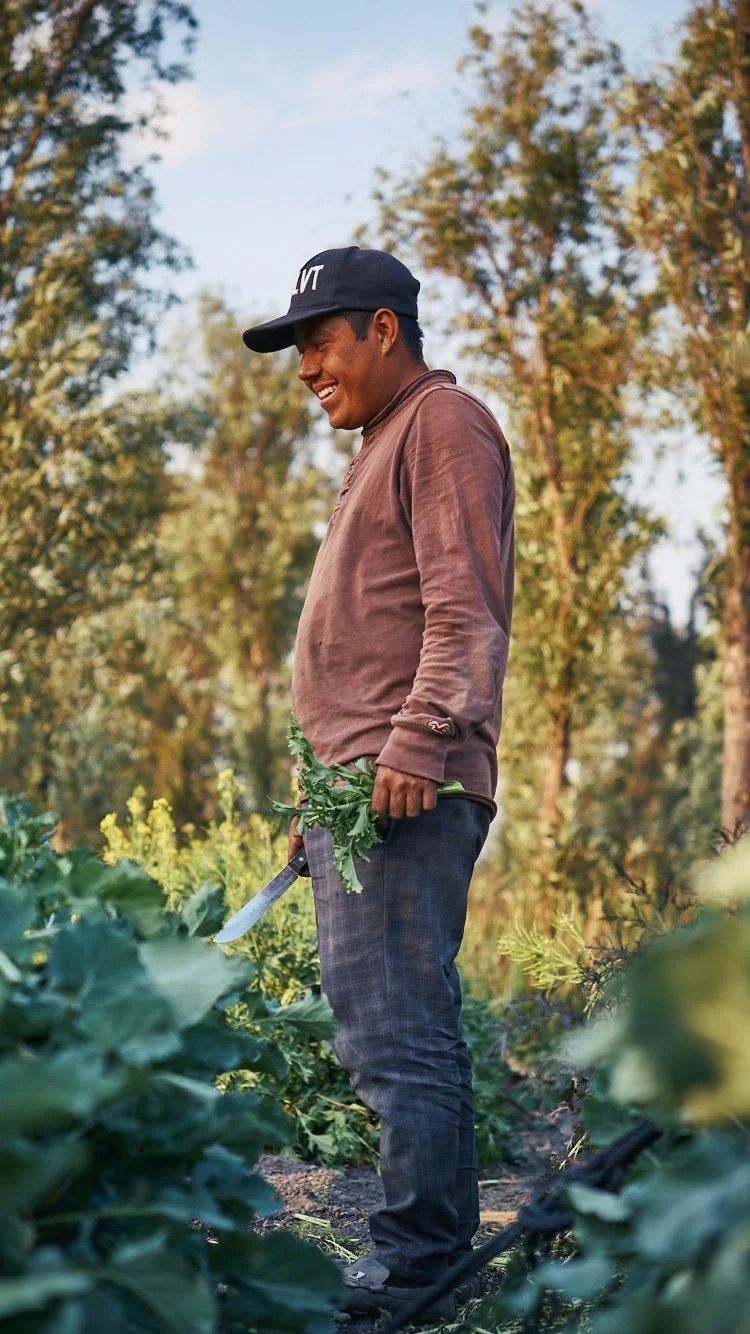
But what about the people who actually grow those ingredients? "We talk a lot about regions, but we talk less about people," Usobiaga observes. And here, the conversation takes on a more serious tone. "Peasant farmers, those are the heroes of our day and age. They are the most important people by far in society."
It is difficult to argue with the logic. Without farmers, there are no ingredients. Without ingredients, there are no restaurants. And without restaurants, well, an awful lot of celebrated chefs would find themselves in a rather unfortunate position. Yet the people responsible for producing our food remain among the least recognised and frequently least rewarded participants in the entire industry. Arca Tierra has spent 17 years attempting to address that imbalance, building relationships between agricultural communities and Mexico City's restaurants.
Peasant farmers, those are the heroes of our day and age. They are the most important people by far in society.
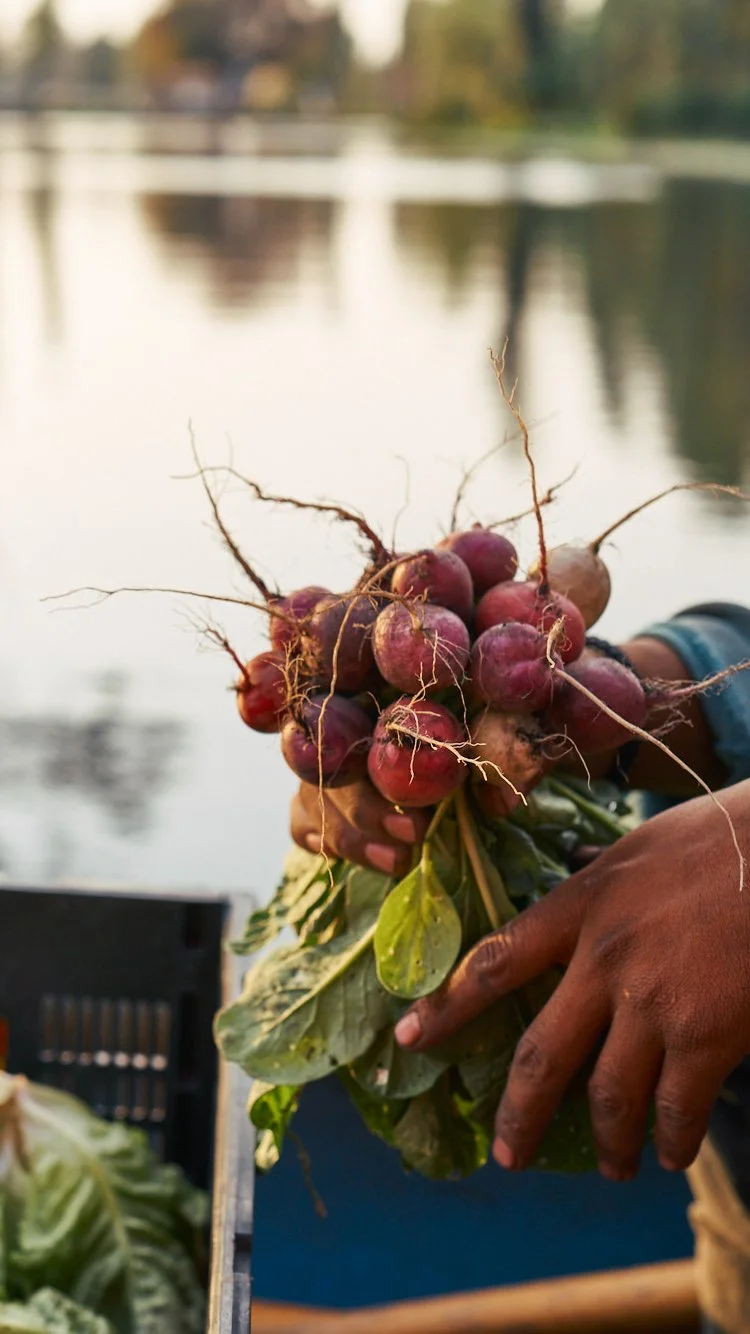
Today, the network works with more than 60 farming families across central Mexico. "We know their names, we know their houses, we're friends with them," Usobiaga explains. This is not sourcing as a fashionable marketing exercise. It is sourcing as a relationship. And that distinction matters.
Because after years of supplying some of Mexico City's most celebrated restaurants, Usobiaga began noticing something rather frustrating. Many establishments were perfectly happy to celebrate local agriculture. Less enthusiastic, however, about actually committing to it. Some would purchase a small percentage of their ingredients from regenerative projects while continuing to rely on conventional supply chains for the rest. Enough to tell a compelling sustainability story, perhaps. But hardly enough to transform the system. So the brothers decided to demonstrate what a more complete commitment might look like. Enter Baldío.
Read also: Baldío
The restaurant that got it backwards
Most restaurants begin with a chef, a concept and a menu. Baldío began with the farmers Opened in Mexico City in 2024, the restaurant operates according to a deceptively radical principle: source exclusively from local communities and projects committed to regenerative practices, and allow the ingredients to determine what happens in the kitchen. Not the other way around. "We're a restaurant from the farmer's point of view," Usobiaga explains.
It sounds almost absurdly simple. Yet in an industry obsessed with consistency, predictability and absolute control, it represents a considerable departure from conventional thinking. If the weather changes, the menu changes. If a harvest fails, the chefs adapt. If an ingredient is unavailable, well, there is little point pretending otherwise. The kitchen must follow nature's rhythm rather than demanding that nature accommodate the kitchen. And then there is the zero-waste business.
Baldío has attracted considerable attention for operating without conventional waste bins. An impressive achievement, certainly, although Usobiaga seems slightly frustrated that this has become the restaurant's defining characteristic. "When people say we're a zero-waste restaurant, it's okay, it's not incorrect, but it's much more than that."
His reasoning is rather compelling. "If you value food, you don't waste it. If you see food as a commodity, you waste it." For Usobiaga, food waste is not simply a kitchen problem. It is the symptom of an industrial system that has taught us to regard food as endlessly replaceable. Remove the intermediaries, reconnect with producers and understand the work involved in growing an ingredient, and wasting it becomes considerably more difficult to justify. Zero waste, in this interpretation, is not the grand achievement. It is the logical consequence.
We're a restaurant from the farmer's point of view.
There is, however, a rather interesting complication. Baldío's unconventional approach has earned it a Michelin star. A remarkable recognition for a restaurant determined to question so many of the industry's established rules. One might imagine Usobiaga celebrating this as the ultimate validation of his philosophy. And he is grateful. Naturally. But there is a catch."We started going on a road that we didn't want to go," he admits. The problem? Fine dining. Or, more precisely, the perception that Baldío was becoming an exclusive destination for wealthy Mexicans and international visitors rather than the accessible community space he had envisioned.
"If we're only a restaurant that tourists and rich Mexicans can pay for, we're not what we want to be." So where does one go after earning a Michelin star? For Usobiaga, the answer is not another restaurant, a more elaborate tasting menu or international expansion. Quite the opposite. He wants to open Baldío up.
His plans include Sunday markets where farmers, artisans, artists and musicians can sell their work without paying for space, accompanied by a more informal offering of tacos and beer. It is a small but telling shift in perspective. Instead of asking how to make the restaurant more exclusive, Usobiaga is asking how to make it more useful. And that question leads to something considerably bigger. Behind Baldío's kitchen is a preparation and experimentation space where the team explores new ways of working with Mexican ingredients, reducing waste and developing culinary techniques. Usobiaga wants to build on this foundation to create a research, education and innovation centre. Universities are already part of the conversation.
I see Baldío as a platform more than a restaurant.
We're receiving private and public universities in our prep center to talk about zero waste and traceability and new techniques on how to cook Mexican ingredients," he explains. But education is only one part of the ambition. Usobiaga also wants to work with larger food and beverage companies to rethink the materials they routinely discard. One project under development involves collaborating with a major tequila producer to transform a discarded production by-product into a new, traceable beverage.
The idea is intriguing. Rather than simply criticising the industrial food system from the sidelines, why not use what Baldío has learned to change parts of it from within? The proposed centre would bring together culinary research, product development and education, connecting chefs, farmers, students and businesses in the process. Funding is still needed, and the project remains a work in progress. But Usobiaga is thinking well beyond the restaurant's dining room. "I see Baldío as a platform more than a restaurant."
A Michelin star might bring people through the door. What he really wants is for the ideas to travel much further.
Double-click to edit...
The Next Revolution Won't Be Served on a Plate
While Baldío looks towards research and innovation, the future of Arca Tierra depends on something considerably more fundamental: whether there will be anyone left to cultivate the land. In Xochimilco, much of the ancient chinampa system has already been abandoned. Farming offers little financial security, younger generations are turning towards other professions, and centuries of agricultural knowledge risk disappearing with the people who possess it. "No one wants to be a farmer anymore," Usobiaga says.
The consequences extend far beyond the loss of a remarkable agricultural tradition. The chinampas are an essential part of Mexico City's ecological infrastructure, supporting biodiversity and helping regulate the surrounding environment. "The fate of the chinampas and the fate of Mexico City are really intertwined." So Arca Tierra is doing something about it.
Its agricultural school is training a new generation of farmers in the chinampas. At the time of our conversation, the programme had reached its sixth generation, with 79 students, more than 73 percent of them women. It is an encouraging development in a landscape where the disappearance of traditional farming has long seemed almost inevitable.
And it reveals something important about Usobiaga's ambitions. For all the talk of restaurants, innovation and research centres, his vision ultimately revolves around people. The farmers who preserve agricultural knowledge. The communities that sustain it. And the next generation who must find a reason to continue.
The fate of the chinampas and the fate of Mexico City are really intertwined.
"I wouldn't open another restaurant," he says. "I think this is the example." Instead, he imagines Arca Tierra and Baldío at the centre of a much larger network of initiatives. A farming school in Xochimilco. A research and innovation centre in Mexico City. Community markets. Educational programmes. Collaborations with producers and businesses willing to rethink their relationship with food. Different projects, but one underlying ambition: to demonstrate that economic success need not come at the expense of nature or the communities that depend on it.
It is a rather extraordinary vision for someone who once spent his days navigating corporate financial structures. Yet perhaps the former lawyer has simply found a different way of putting his original interest in human rights into practice. After all, what could be more fundamental than the right to earn a dignified living from producing the food upon which everyone else depends?
Recognition as one of Latin America's 50 Best Restaurants' Champions of Change is another indication that Usobiaga's ideas are resonating beyond Mexico. But awards, it seems, are not what keeps him moving. He is far more interested in what comes next.
And herein lies the wonderful contradiction at the heart of his story. While much of the gastronomic world is preoccupied with inventing the future, Usobiaga is building his by protecting knowledge that has existed for centuries. Perhaps changing the world does not always require inventing something new. Sometimes, it requires remembering what we were foolish enough to forget.
