
Double-click to edit...
Nicolaj Møller
Opens up on self doubt, meeting expectations and how respect should work in the industry
PUBLSHED may 2022 ı PHOTO: Jesper rais
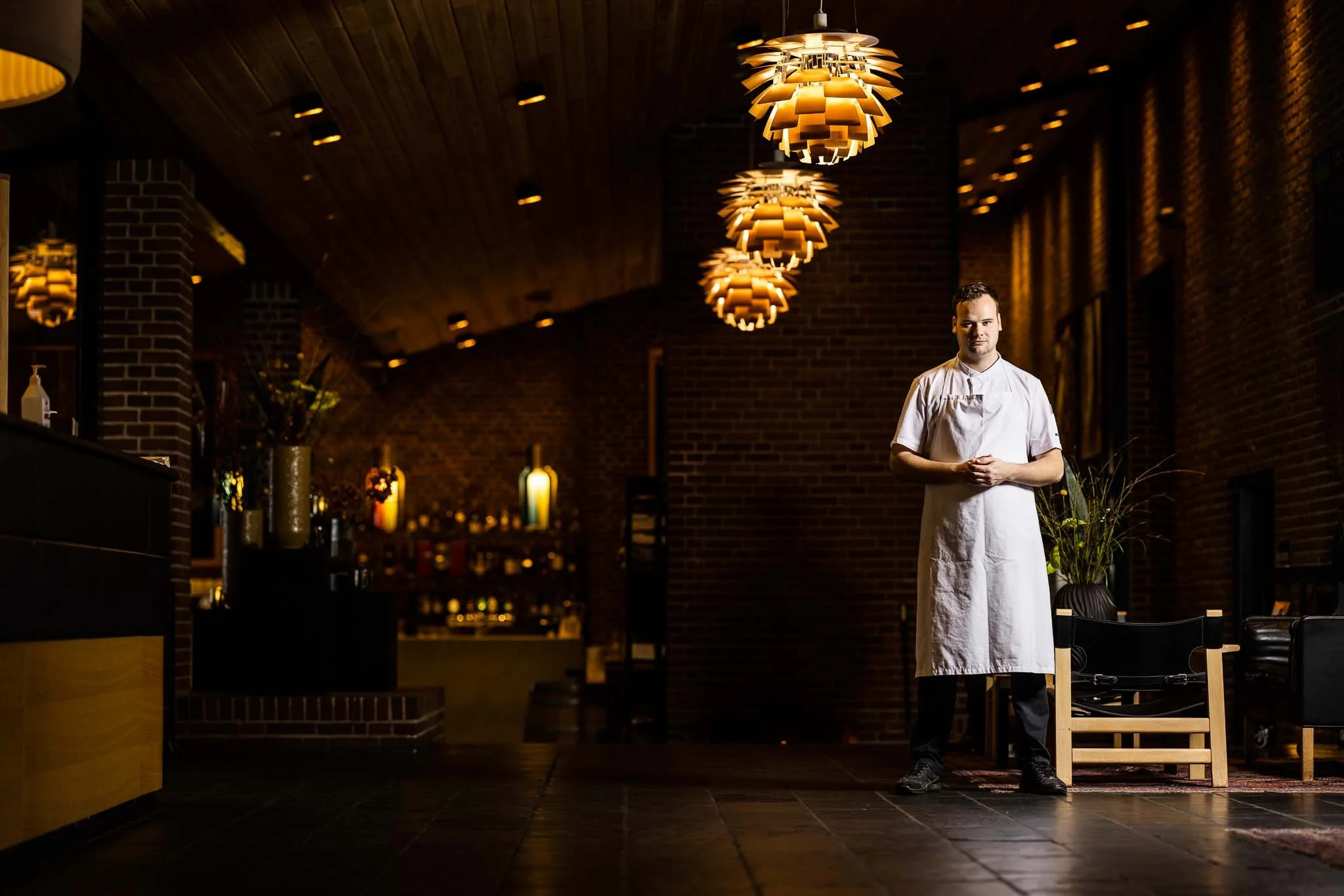
In the unlikely setting of a provincial hotel restaurant, a young man has caught the admiration of reviewers and chefs across all of Denmark. At only 23, Nicolaj Møller became head chef of Treetop Restaurant in Vejle. Five years, multiple awards and several recognitions later, his ultimate goal is not a Michelin star. It is to create a better industry based on understanding, support and respect.
To an outsider, he may seem like any ambitious, young chef. Yet, there is nothing quite ordinary about Nicolaj Møller, who abandoned his personal ambitions in favor of an offer to become head chef of what some have called a factory of culinary talent. In the five years that have passed, he has also published a cookbook, been crowned Chef Talent of the year 2020 and won Oyster Chef of the Year 2021 while growing tremendously in recognition and personality.
Yet, there is also nothing pretentious about the young achiever who was headhunted for fame and destiny at a very young age. No ego or sense of entitlement. Rather, if you listen to his story, he speaks openly on issues like self-doubt, meeting expectations, growing with responsibility and the importance of respect across generations.
Daring to risk, risking to dream
“Phew, it has all moved so fast,” he starts his story thoughtfully and slowly. “It has been stressful and chaotic in a way. I do not think anybody starts an apprenticeship with an immediate plan to become head chef at age 23. At that age, I think you are much more focused on seeing a lot of things, trying a lot of techniques and working your way through a lot of kitchens.”
For a young Nicolaj, his plans included pursuing a promising career on the Danish National Culinary team as well as a dream of working at a Michelin-starred restaurant in England. But neither of these ever came to life. Instead, he was faced very early in his career with an offer to become last in a line of talented, young head chefs at renowned Treetop Restaurant. “When I was offered the position, I simply had to accept. For me, it was either or,” he explains on cashing in on the opportunity of a lifetime and never regretting the choice, nor all the challenges and opportunities it brought.
“You have zero leadership experience at age 23,” he explains of the formative challenge that lay ahead. “You have no idea how to tackle contrasting personalities. But those are just two aspects of a greater picture. Alongside learning leadership, you also have to find your own style and develop personally - while facing the fear of not being good enough! In my case, I had people before me that performed tremendously well. People like Rasmus Munk and Bryan Francisco,” he continues, revealing for the first time why he chose a rural small-town kitchen over any other kitchen in the world.
You want to perform just as well as those who came before you, if not better. There are a lot of things at stake here.
Rasmus Munk, Nicolaj argues, famously elevated Treetop Restaurant from an upscale rural hotel restaurant to a gourmet temple, while Bryan managed to carry on the torch. After Rasmus and Bryan, Treetop Management could have hired any seasoned talent from all over the country, he explains, but Rasmus’ success inspired them to focus on developing young talents.
“Journalists and commentators have since called Treetop a form of talent factory. Where young chefs go to find their calling. It is a wonderful opportunity, and an immense challenge. I have tremendous respect for Rasmus,” he says in a voice full of admiration, “He, too, started as head chef of Treetop at 23, and look what he achieved. You want to perform just as well as those who came before you, if not better. There are a lot of things at stake here. But first and foremost, I would say it has been an interesting journey.”
Treetop at 23
For Nicolaj Møller, navigating through expectations at an early age proved a worthy challenge and creating his own footprint on not only the culinary aspect but also work culture quickly became essential. “We decided early on that we did not want ants on the plates, nor smoke or avant garde elements. We simply wanted to create crazy delicious food,” he explains. Yet, to him, being a leader in a kitchen was always about more than simply serving stunning plates of edible art. It was also about acting as a role model and standing up to the visible issues that have given the industry he loves a bad reputation over the years.
“One thing we need to address is language,” he begins. “There has always been a military-like tone to the way we speak in a kitchen. A lot of barking orders and following suit,” he ponders solemnly. “I think you need to respect the need for discipline, but certainly also respect one another as individuals and human beings. For me, this is where it all starts. Trying to paint a better picture of the industry, by changing the way we talk and do things.”
I think you need to respect the need for discipline, but certainly also respect one another as individuals and human beings. For me, this is where it all starts.
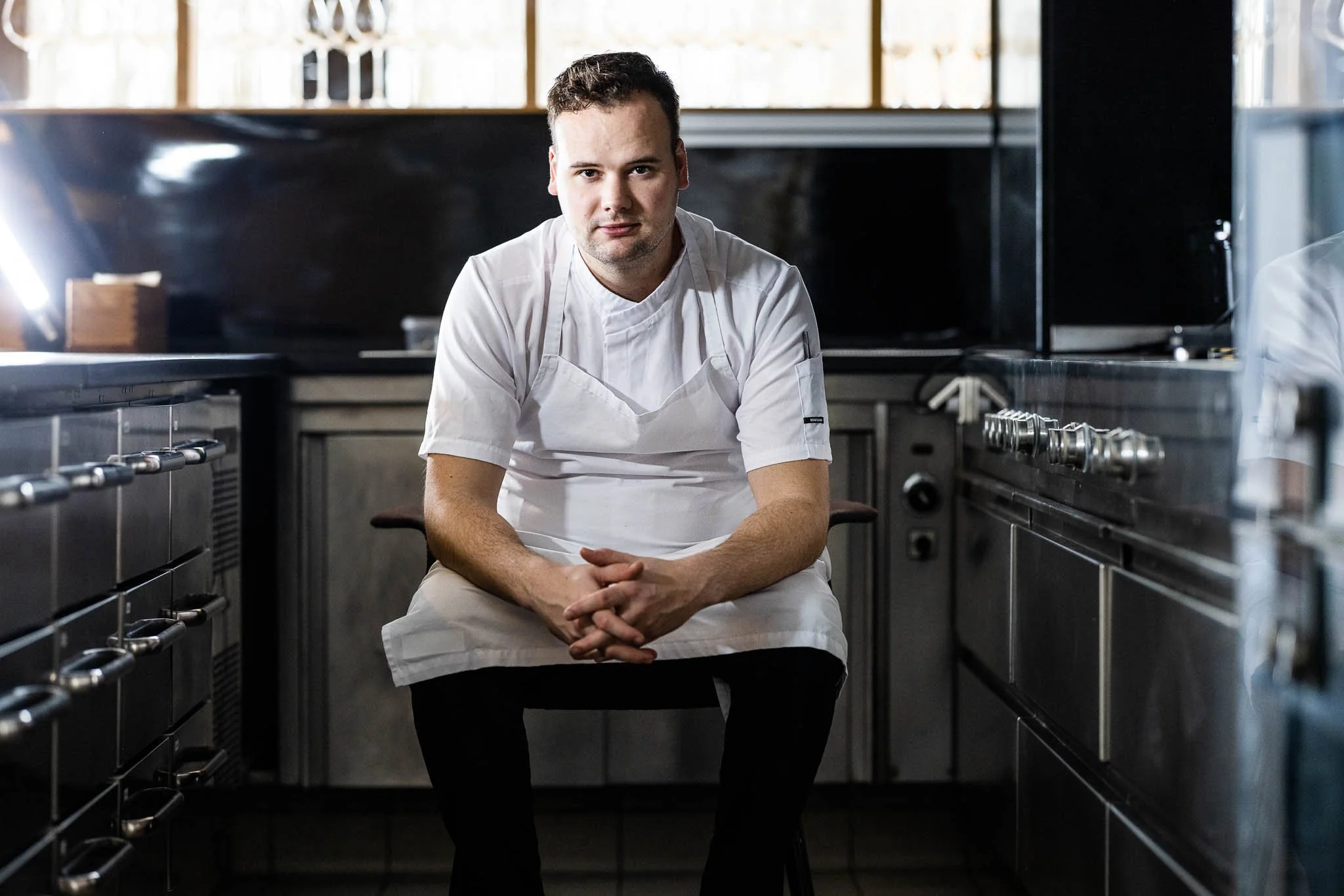
Painting a better picture of the industry
Generally, so many negative aspects of this business tend to get highlighted, Nicolaj argues. Perhaps justifiably so in some cases, he is quick to add. Things like long hours, tone of voice and work/life balance have far overshadowed the positive sides. “There are positive as well as negative aspects to everything in life,” he states bluntly. “It is all about perspective. You have to be passionate and happy with what you do. And just look at all the positive aspects of the business for God’s sake: The freedom to create, colleagues, camaraderie, network and, perhaps most, true friendships.”
“There are so many things to love about this business, especially the people,” he says with a humble, grateful smile. “On my own accord, I was amazed by how seasoned people of the industry have embraced me with open arms. I mean, here I am - off the beaten path - cooking the best I can. And I suddenly have prominent people like Jonathan Berntsen of The Samuel and other veterans of the game including Kristian Baumann and Kasper Hasse coming over regularly, praising my food while offering their input and advice! It just means the world to me that they support a young man like myself. Not too long ago, as a young chef, you really had to prove yourself to be offered this level of help and support. In some places it is still like that.”
I find it laughable that simply because you earned two or three Michelin stars, you suddenly feel like you do not need to acknowledge other people.
“I find it laughable that simply because you earned two or three Michelin stars, you suddenly feel like you do not need to acknowledge other people,” he frowns. “The older generation should embrace the younger. Young people, I can say from personal experience, have a hard time knowing how to ask your mentors, or even your icons, for advice. They need that level of comfort.”
“I mean, you should obviously not be insecure, yet at the same time, you sometimes feel the need for someone to take you by the hand and show you the way,” he says, nodding softly as he speaks. “It means so much to me that these icons spend their precious time coming all the way over here to enjoy my food and offer their advice. They could easily spend it on so many other things, yet they chose me. That makes me happy. And damn proud. What is most important in this business, if you ask me, is respect. We need to respect one another. No matter where your spot in the culinary hierarchy may be,” he stresses wisely, “you are still a human being with an important function to fulfill.”
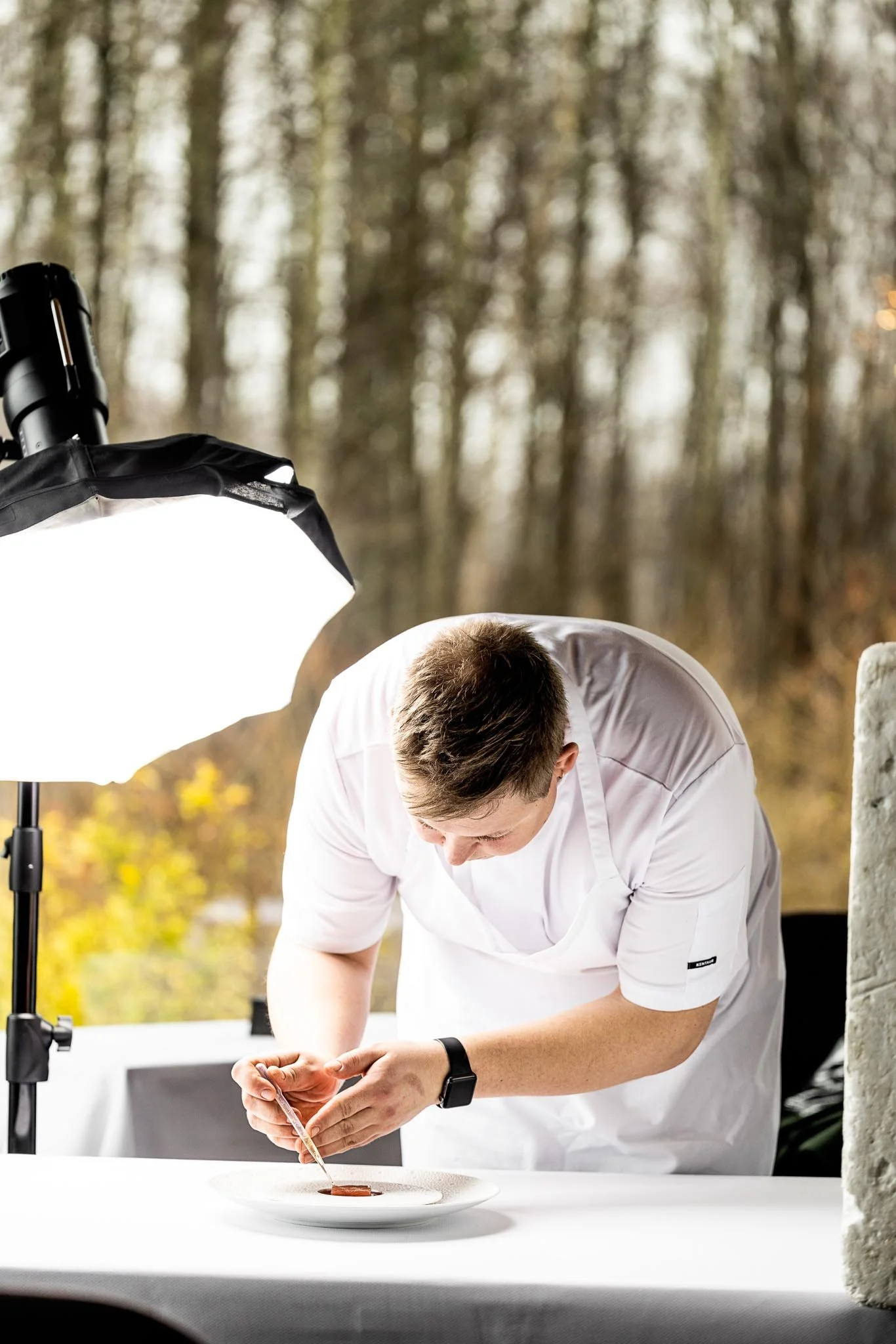
Passing the torch to a younger generation
As he speaks of respect and the need for advice in life, his words paint a picture of a man standing between generations. Young enough to still rely on the input of others yet seasoned enough to help shape future careers of others. This double role becomes obvious when the talk touches upon his recent addition of a new sous-chef, Alexander, to his team and on shaping the future of Treetop.
“Alexander brings a lot of experience to the table,” he flat out states. “He comes from a previous position as head chef, but wanted to step back a bit. So, he came over here to help and improve our team. He is a person who, like me, is good at talking to people and handling differences. He is going to add finesse and skill to the mix, but also help us build an even stronger team and a better workplace. I am certain I am in safe hands with him and that he can elevate our concept and team,” he says, unselfishly highlighting his codependency. “He is empathic, sympathetic, smiling and calm. But more importantly, he is in tune with our spirit and goals.”
I am deeply motivated by this constant, controlled strive for improvement. I really enjoy pushing my team’s creative boundaries without pressuring or stressing them in any way.
“We have no two-year plan to achieve a Michelin star or similar,” Nicolaj honestly reveals. “Instead, we focus on constantly improving. If we made a dish yesterday, how do we make it even better today? If we had clinches yesterday, how do we mend them today? We need to have fun and feel good about being in the kitchen - not be afraid to fail or make mistakes. I am deeply motivated by this constant, controlled strive for improvement. I really enjoy pushing my team’s creative boundaries without pressuring or stressing them in any way. Feed them new ideas, keep their creative mindsets alive at all times and just develop, develop, develop.”
“Am I happy? You bet I am very happy with what I am doing. I am happy cooking food and watching guest reactions. I am happy to stand at the counter watching my team’s dishes flow out of my kitchen. I am also happy doing things like this,” he smiles. “all these beautiful things that surround what I do; talking to journalists, diners, foodies and peers. There are many good years left in me. For me to work on myself, my cooking, my team and the things we do together in this business.”
