
Double-click to edit...
Giuseppe OlivA
Sourdough wizard, rule breaker and innovator
PUBLISHED AUGUST 2021 ı PHOTO: PETER BONDO GRAVESEN
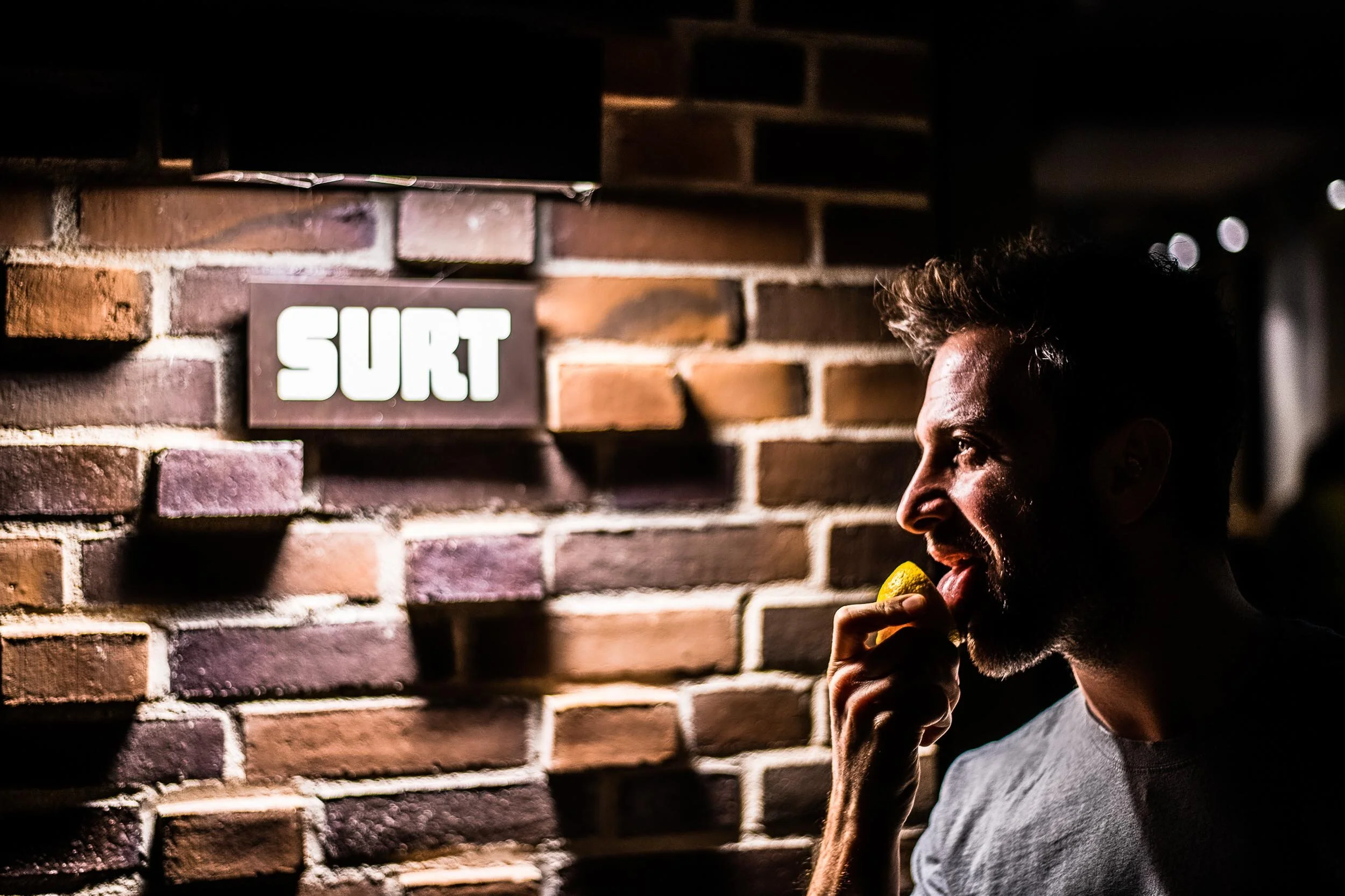
Despite being Sicilian-born and deeply Italian in heritage, champion pizzaiolo Giuseppe Oliva does not give much for the rules and regulations of Italian cuisine. His Pizzas are classic in appearance, but full of his trademark attitude. Meet the young sourdough revolutionary who helped star-chef Christian Puglisi open world-renowned BÆST but is now making a name for himself spinning top quality sourdough pizzas at SURT in Carlsbergbyen.
“Maybe it’s a silly example,” he says thoughtfully before delivering one of the best descriptions of a restaurant environment to date. “It is a little like sourdoug. Sourdough is composed of elements and bacteria that take the flavor in different directions. To me, SURT is exactly the same. Every staff member should give something to the place, not only take someting.”
“Most places will tell you: ‘Do this, like that’,” he continues. “Yet, when you are your own master, you challenge yourself daily and learn new things. You become free of monotony in your life and your creativity flows freely. There is a limit, of course, but freedom within boundaries is important.”
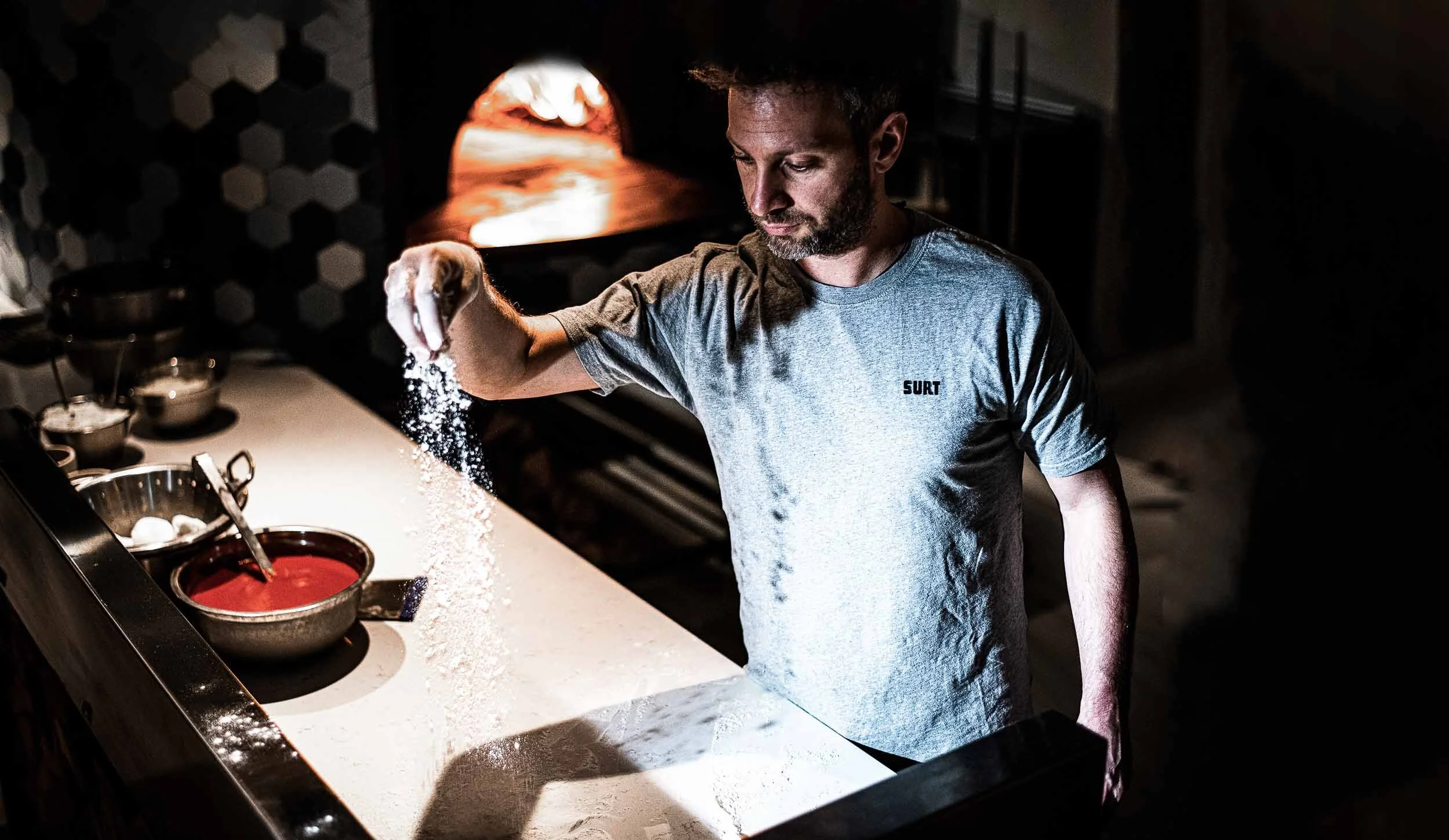
These thoughtful, nearly poetic words are those of sourdough wizard and world-class pizzaiola Giuseppe Oliva, caught in a rare calm and quiet moment before service at his relatively newly opened but already trending restaurant in Carlsbergbyen. Hailing from a family of millers and bakers, Giuseppe was practically born with flour on his hands and has worked with flour and baking almost all of his life. For the past decade or so, his greatest passions in life have been sourdough and pizza. And his passions have earned him quite a name in Copenhagen and around the world.
Double-click to edit...
His greatest claim to fame in the general population is probably helping star chef Christian Puglisi open and operate BÆST for 4.5 years with great success. A masterful deed which brought the world’s eyes on Copenhagen pizza, but also a draining ordeal.
After five years, the young, Sicilian-born pizza wizard knew within himself that he needed a change. He did not know what sort of change. He only knew it had to be wholesome and make sense. “I took a small break,” he says, “did some consulting work in New York and Paris. I also lived in Italy for a while. I did not know where to go next: Italy or Copenhagen? But Copenhagen was sort of my priority because I loved the city.”
And it was while roaming the streets of his beloved Copenhagen one day, pondering his future, that he stumbled upon it by accient. The bare and empty premises situated in Carlsbergbyen; Copenhagen’s hip and upcoming borough, that would come to house his own equally hip and upcoming pizzeria and restaurant, SURT.
“When I saw this space,” he muses, gazing across the large, open dining room. “Well, to be honest, the first time I saw it, I thought it was too big for me.” “But it started to grow on me,” he adds with a determined smile, “and I thought: Well, what the hell. Now or never!”
Now or never - Crafting the perfect pizza restaurant
From the raw surfaces of the newly constructed space, he created a warm and homey pizzeria and restaurant setting. And just as he would have created his sourdough mother, it occured using a naturally occurring, sporadic, volatile blend of ingredients that more or less just happened to show up to the party.
“The guy on the pizza station is actually my brother. He came here from Italy,” he explains. “He was working at my father’s bakery in Sicily but decided to move here to help with the opening - and he’s happy so far to stay,” he says with a snicker of laughter.
Andrea, who heads the kitchen and takes care of the small dishes that supplements the pizza menu is another familiar face. Actually, he is the former sous-chef of Bæst. ”Andrea and I were colleagues and good friends,” Giuseppe explains. “When he heard about my dreams, he became interested. Andrea, I said to him, I don’t know if I will even have a kitchen. Maybe I will simply make pizza,” he recalls with a shrug.
“But once again, I started thinking, maybe I do not need a chef, but let us try! So, I brought in Andrea and we became not just a pizzeria but a pizza restaurant where every little extra thing added a little bit of identity to the place. Andrea's dishes really added something. And it is the same with everything else around here. Every little element. Every person. They add something special. Something extra.”
A little respect, a little uniqueness and a whole lotta craft
Hearing the tales of the passionate Sicilian who created an unusual pizza setting from a potent combination of skill, opportunity and qualified gambles, you cannot help but notice an underspoken yet pronounced disdain for rules, regulations and doing things by the book. It is as if he joins his generation of younger Italian cooks in rebelling against what could be seen as the strictness of classic Italian food culture. In this case, pizza.
“I do not understand why we should always do things the same way,” he says as if catching on to the drift. “Take Neapolitan pizza, for example,” he says with a resigned tone of voice, “they have created this very specific set of rules and boundaries for pizza making: You have to use a certain kind of flour, a certain kind of tomato, a certain kind of mozzarella. If you want to be recognized. You will have to follow these rules.” “That I do not respect,” he says, suddenly stressing every syllable.
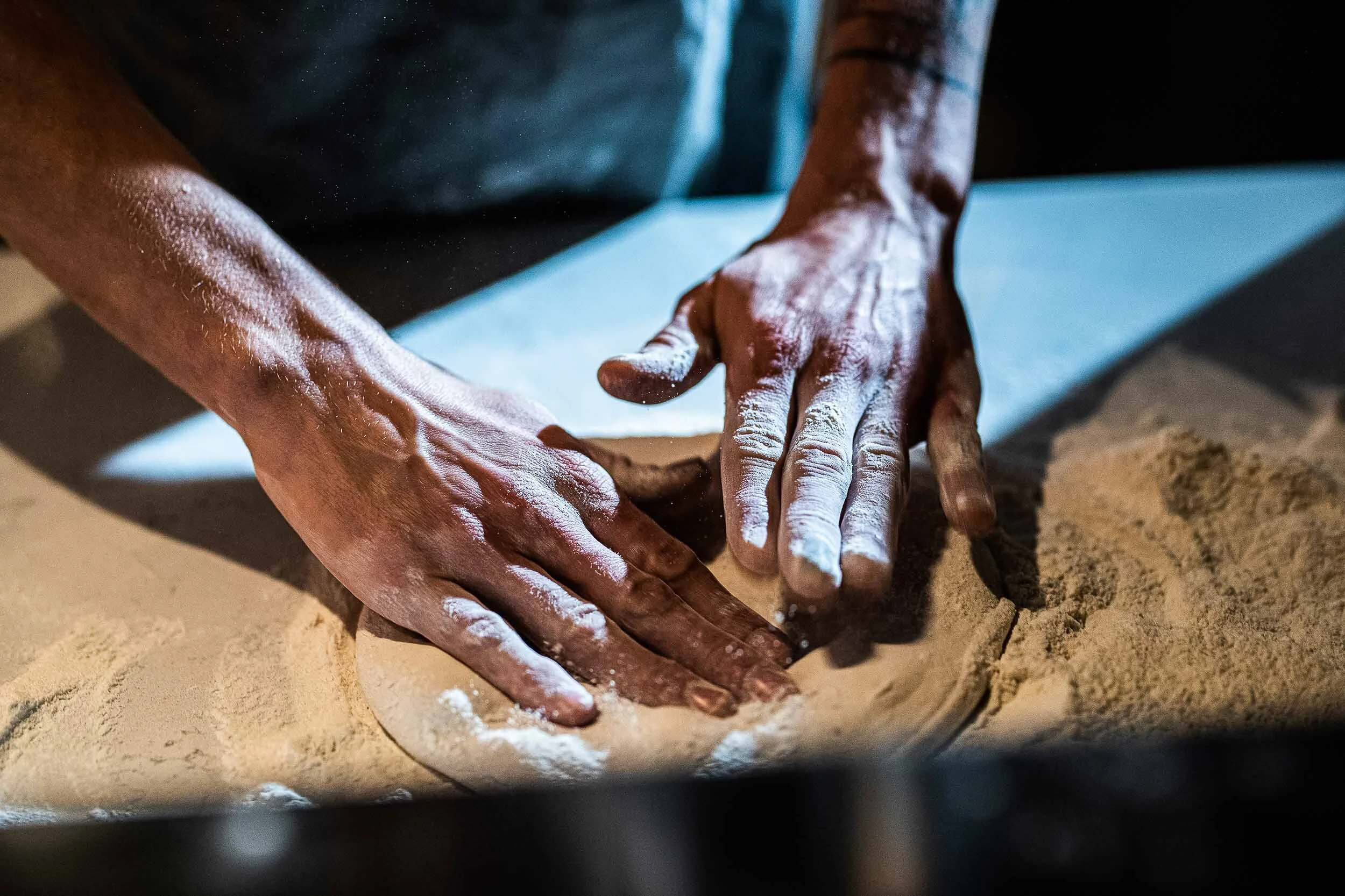
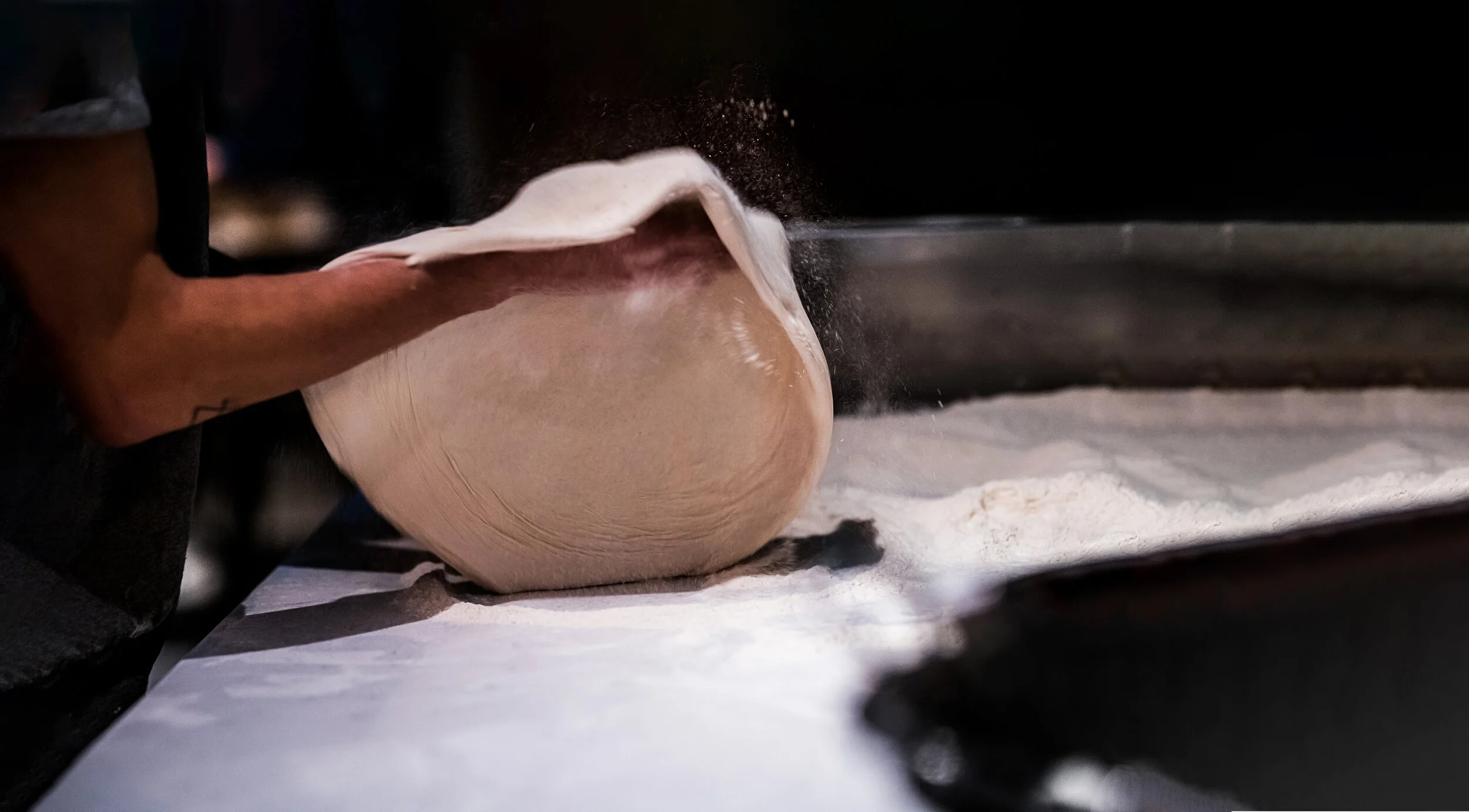
“What we do here at SURT is exactly the opposite,” he argues. “Rules are walls. You do not have freedom with walls around you. I use different kinds of flours. I use sourdough. That is not even allowed in Neapolitan pizza.They use yeast because yeast can be controlled. I am an artisan, I come from an artisan family and I believe in artisan goods and methods. I grew up in a bakery, my granddad was a miller. So my entire family is connected to flour and to the craft.”
Sourdough to me is an extra way for an artist to express himself and create something truly unique.
“Sourdough to me is an extra way for an artist to express himself and create something truly unique. If I give you a piece of my sourdough to you, in two weeks it’s going to be different. Depending on how you feed it, the temperature at which you keep it, the bacteria on your hands, the PH of your skin. It changes a lot of things. It is a way for an artist to give his identity and soul to the product. In terms of taste and texture.”
But it is not just the bacteria in the famous sourdough that add taste and a touch of locality to his world-class pizzas at SURT. The produce, too, like mushrooms and greens are locally and sustainably sourced whenever possible. “Sustainability is, of course, important to us,” says Giuseppe. “Whenever possible, we use small farmers from around Copenhagen.
I am a big fan of Funga Farm, for example. When I met Thomas from Funga Farm, he told me he had this idea of growing mushrooms in a different way and creating a new taste. For me they taste different. I tasted them and I agreed with him. He and people like him also add identity to our product. I think when people bite into it, there are a lot of small things - a lot of identity - that you can really taste and feel.”
I come from an artisan family and I believe in artisan goods and methods. I grew up in a bakery, my granddad was a miller. So my entire family is connected to flour and to the craft.
Yet, sustainability to Giuseppe is more than just locality. It is in thinking wisely, creating the best possible product without waste or unnecessary impact. “In everything we do and the ingredients we use, we try to keep the quality high and the batches small. This helps us in being sustainable. When you do quantity, there is simply more waste. If you plan wisely, you (as a restaurateur) save money, but more importantly, you help the planet. And perhaps most of all, it seems respectful towards people who do not have anything.”
And here is the thing. Unlike many of his peers, sustainability is far from a simple, religious choice for Giuseppe and it certainly is not synonymous with locality. Italian produce is still used in the kitchen at SURT. Simply because they provide the superior quality he demands. While supporting local communities at the lowest possible impact.
“I have a friend in Alcamo where I come from, who grows this old Sicilian variety of tomato,” he explains fondly. “His particular plot of land is very hilly. He plants his tomatoes in springtime and he never waters them,” he stresses. “The variety is called Siccagno. It is a small, dry tomato without a lot of pulp. During the day they get a lot of sun and during the night there’s a lot of humidity drawing down from the mountains. That is all the water the plants get. It’s a very low yield production of small thick-skinned tomatoes. He only makes one batch per year, preserves the passata and that’s what I get.”
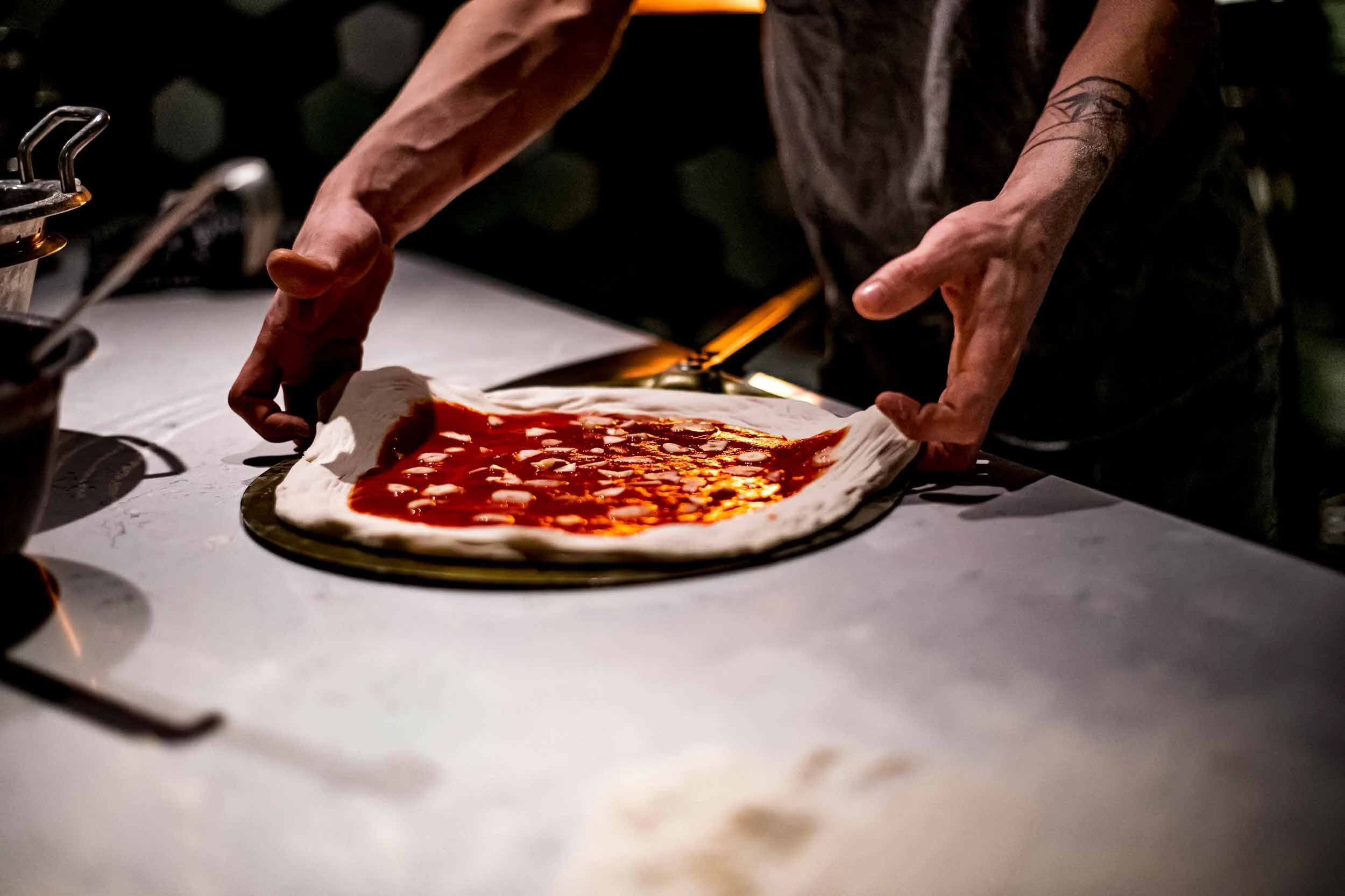
“I also prefer the buffalo mozzarella from Campania because it is more rich in flavor. And again, I prefer small producers. To make mozzarella, you need a lactic bacteria starter. Big companies make use of frozen lactic bacteria starters. With a natural product, the flavor is different - it’s not as consistent, but it’s more unique and it taps into my artisan mindset.”
Double-click to edit...
“I also prefer the buffalo mozzarella from Campania because it is more rich in flavor. And again, I prefer small producers. To make mozzarella, you need a lactic bacteria starter. Big companies make use of frozen lactic bacteria starters. With a natural product, the flavor is different - it’s not as consistent, but it’s more unique and it taps into my artisan mindset.”
Crafting the perfect pizza
It sounds complicated, this mix of treasuring what is local and supporting micro producers in far away countries. And maybe it is. Yet to Giuseppe, it is simple: He wants the best possible ingredients. As sustainably as possible. He wants to make a difference for his producers. And he wants to make the best pizza he can. Because, to Giuseppe, good pizza is much more than the sum of its parts. It is also about the thought process and choices that go into the creation of the pizza.
Double-click to edit...
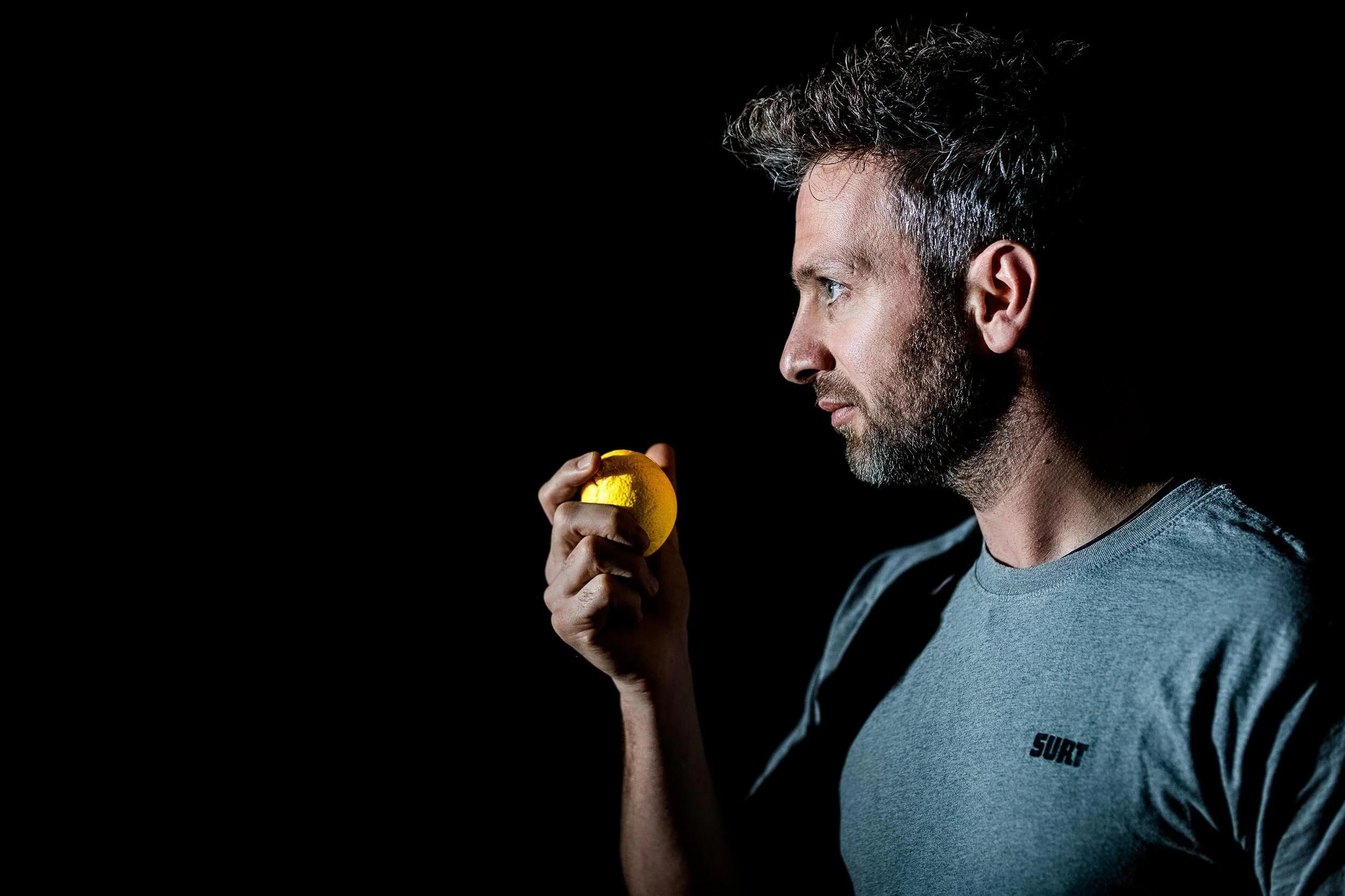
“What makes a good pizza, he repeats when faced with the question, “I love pizza. But for pizza to shine, you need to feel the identity of the pizzaiola and the pizzeria. When I go out to eat pizza, I look for spirit and identity. I am not a fan of chains where one day the pizzaiola is one guy, the next day another. It could be good pizza, but I do not get a feel for the identity.”
“It is kind of like winemaking,” he continues. “Different winemakers make very different wines from the same grape, based on climate, temperature, fermentation and so on, so forth. Still, when you drink a good wine, you want to taste not only the grape, the soil and the climate but also the winemaker and what he did to it. Pizza is exactly the same.
