
Double-click to edit...
Bocuse d’Or: Team Denmark 2021
Character, teamwork dedication, and sacrifice - what it takes to be number one at your game
PUBLISHED SEPTEMBER 2021 ı PHOTO: Stine Christensen x Claes Bech Poulsen
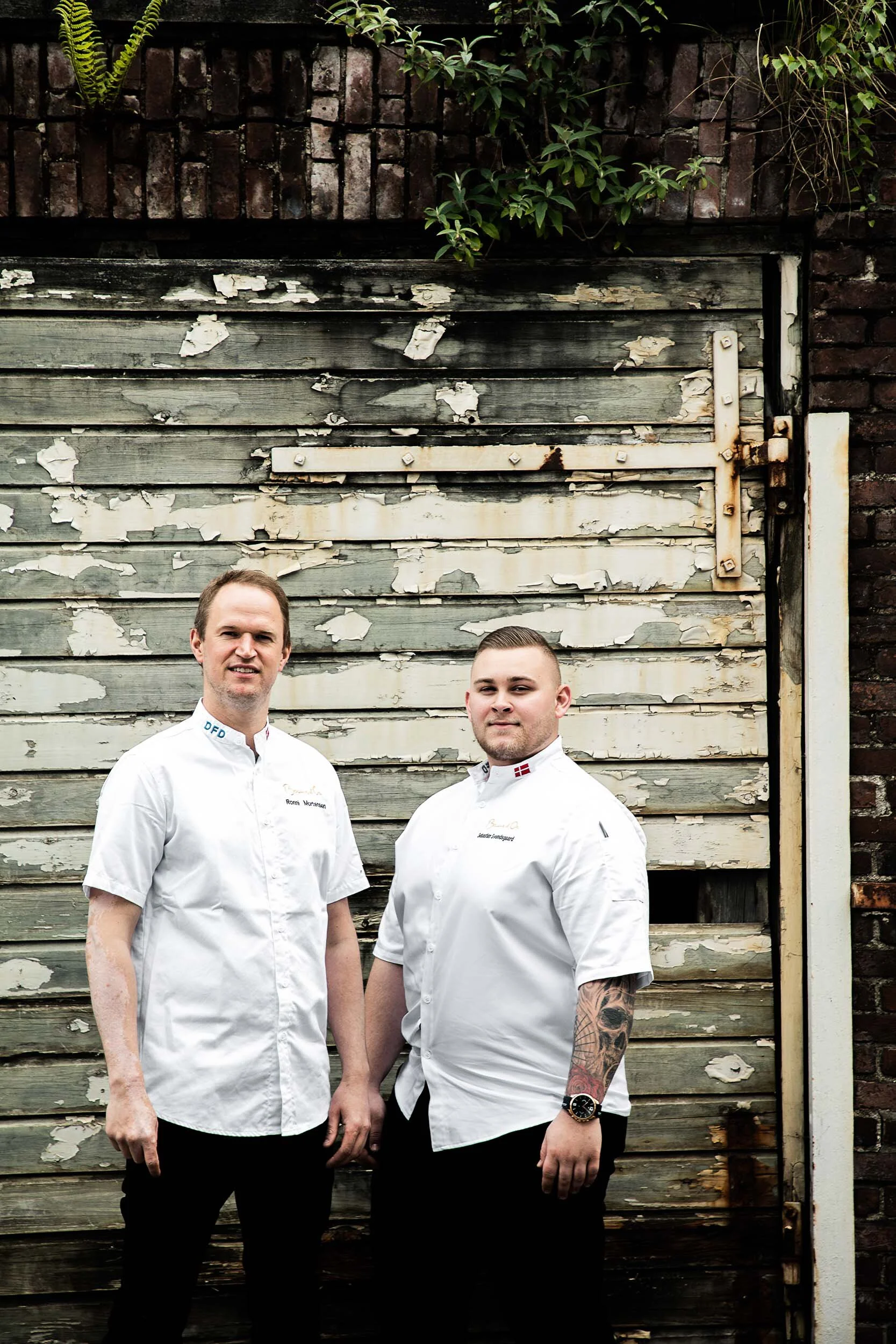
“It is a team sport. Even if it is my name on the bill, says the captain of Denmark’s Bocuse d’Or 2021 team. A team which stands as one of the most tightly knit and well-playing teams in recent times. A team which relies more on personality, character and willpower than accomplishments to reach their common goal; victory in Lyon.
What makes up a winning Bocuse d’Or team? In a few days, at the Bocuse d’Or 2021 finals in Lyon, we will know for sure. On paper, however, it seems simple: A team is made up of The Candidate, a hopeful young chef. A Commis, aged 23 or less (before the final competition). And a coach, in the case of Team Denmark this role is played by star chef Rasmus Kofoed. And various assistants who, as we shall witness in this article, are as essential to the operation as everybody else.
Double-click to edit...
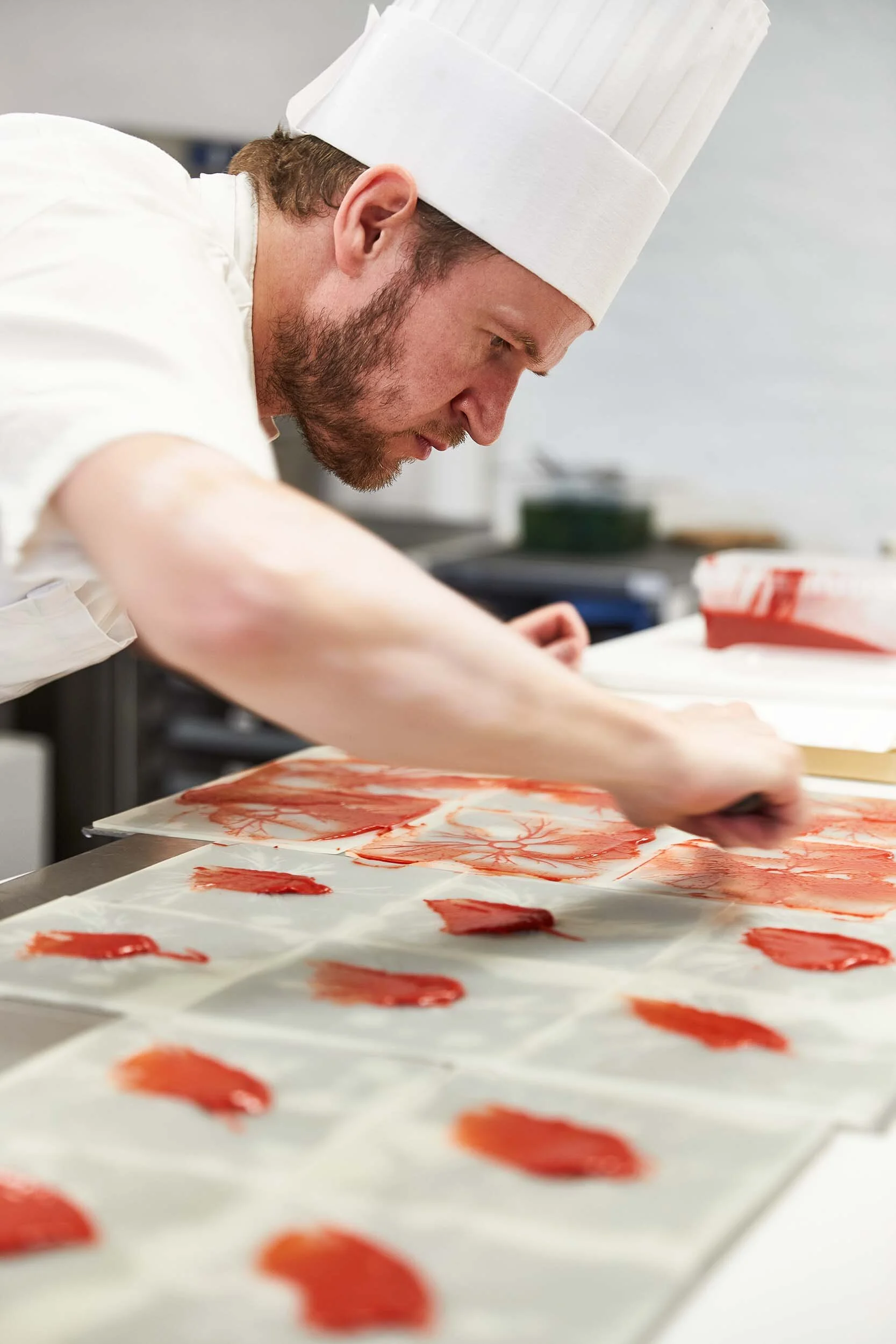
The Candidate: Ronni Vexøe Mortensen, on team spirit and personality
“As a team, we have been working as one. Ever since the qualification,” explains team captain Ronni Vexøe Mortensen, sous chef at Geranium and Denmark’s 2021 Candidate for Bocuse d’Or glory.
“This is about so much more than simply talent,” he continues, “It is about character. Passion. Personalities. Our assistant, Olivia, for example I did not personally know. Sebastian did. He is super nice and we have always worked well together at Geranium and through this. So he got her along for the ride, and she won her place on the team fair and square - not because of her resumé, but because of her character and personality.”
“Skills are important, of course, but what is even more important is personality. We need to play along perfectly. All our players need a bit of an ego, of course, but not too much of an ego. This is a team sport, even if my name is on the bill,” nods Denmark’s new hope.
While Ronni Mortensen may not be the most familiar face in Danish gastronomy, his accolades speak for themselves. He was shaped into the chef that he is today by his then mentor and now coach Rasmus Kofoed. He has participated as commis twice in Bocuse d’Or and learned the ropes of the industry that way.
It is a tremendous amount of work, and a major sacrifice on some fronts.
“Rasmus has taught me basically everything I know,” he admits. “Asking me what I have learned from him is like asking what I have learned from my parents. But first and foremost he taught me discipline. To set goals and follow them. Come whatever may. I have learned never to quit.”
Ronni’s first time as commis at Bocuse d’Or for Rasmus Kofoed taught him most everything about the game and how demanding it is, he recalls. “Man, I had no idea,” he sighs. “When we were still practicing, he would start optimizing garnishes at 1 in the morning. And in my head, I was tired and just wanted to go home. But I stayed and it taught me a valuable lesson: You do whatever it takes. To be the best.”
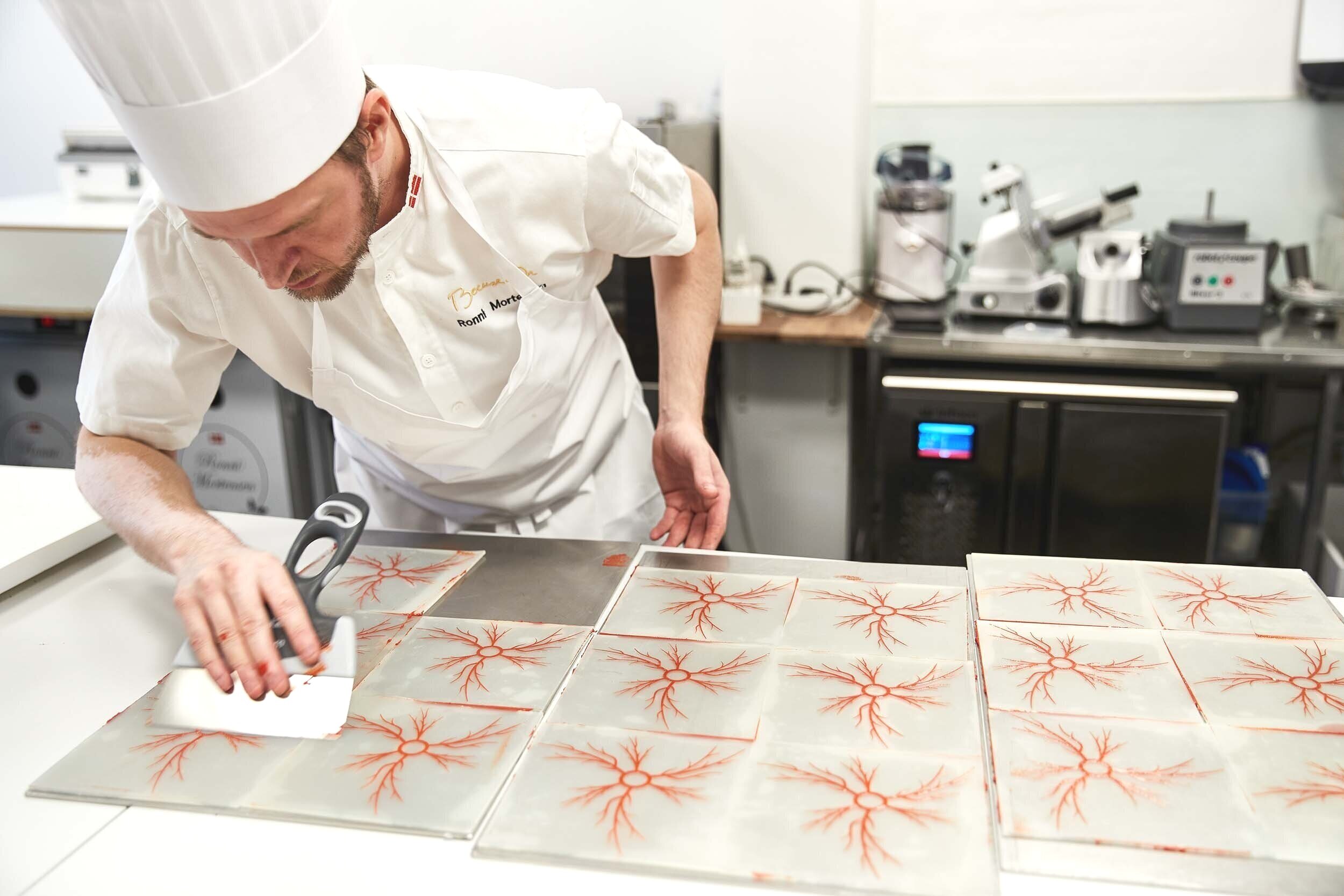
“For some years, I took care of processes and acted as a support for others and mediator in everything that needed to be done,” he says fondly. “This year, it all culminates. This year, I am in charge. It is an artform in itself to make all the decisions and have people execute your thoughts and ideas. It is a level of responsibility that those on the other side of that figurate kitchen wall simply do not fathom. The greatest challenge is control. Especially control of those factors you cannot control.”
The Commis: Sebastian Holberg on sacrifices and will
“When it comes to something like this,” Ronni says, “you need to be aware of your priorities in life. I have a girlfriend and children at home. I chose this path without ever looking back and I will have to make amends in the future.”
“You should not feel guilty for chasing your dreams,” he stresses “but you need to be aware that there is a backside to every medal and that Bocuse d’Or demands certain sacrifices. I am lucky to have a supportive girlfriend and for that I am eternally grateful.”
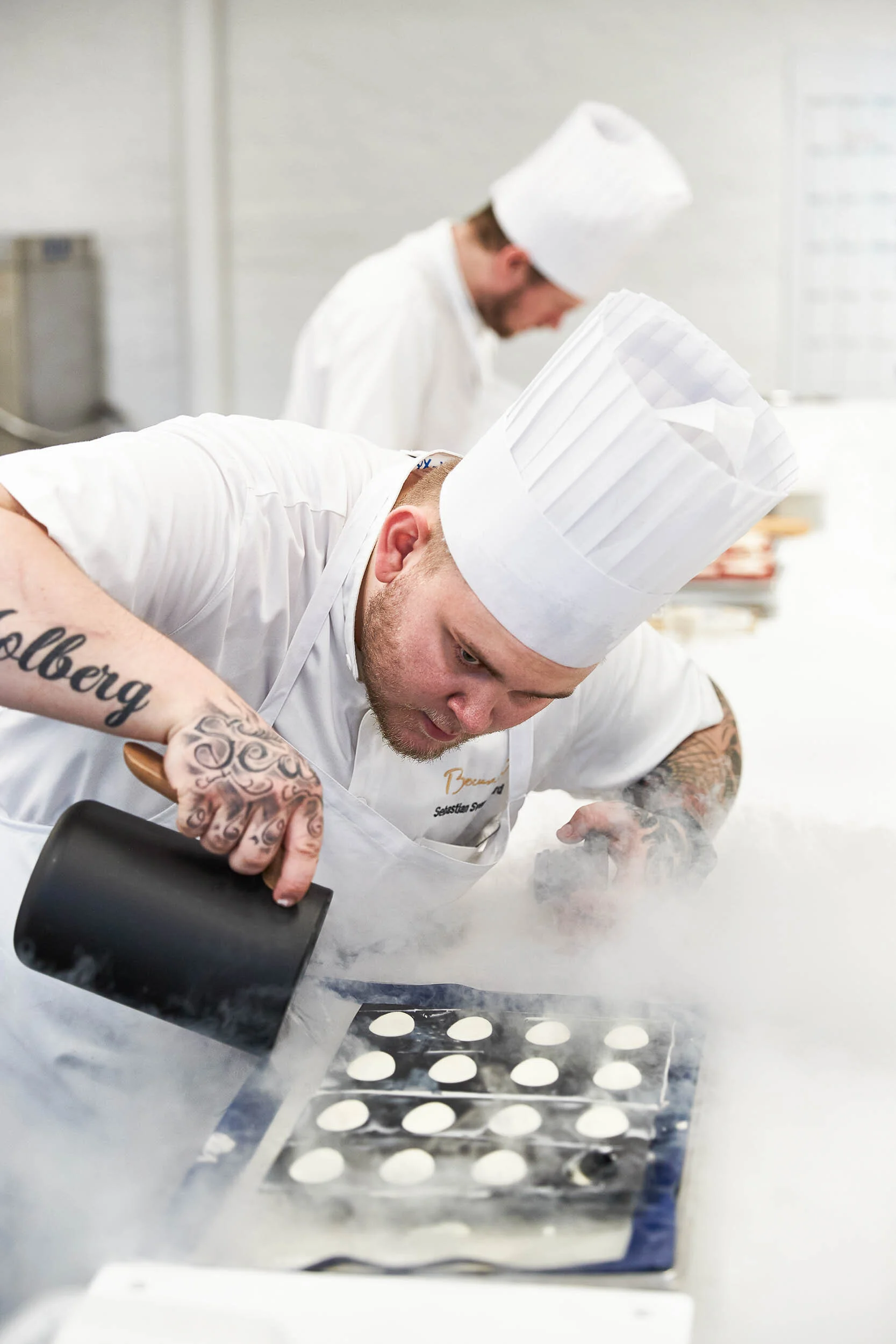
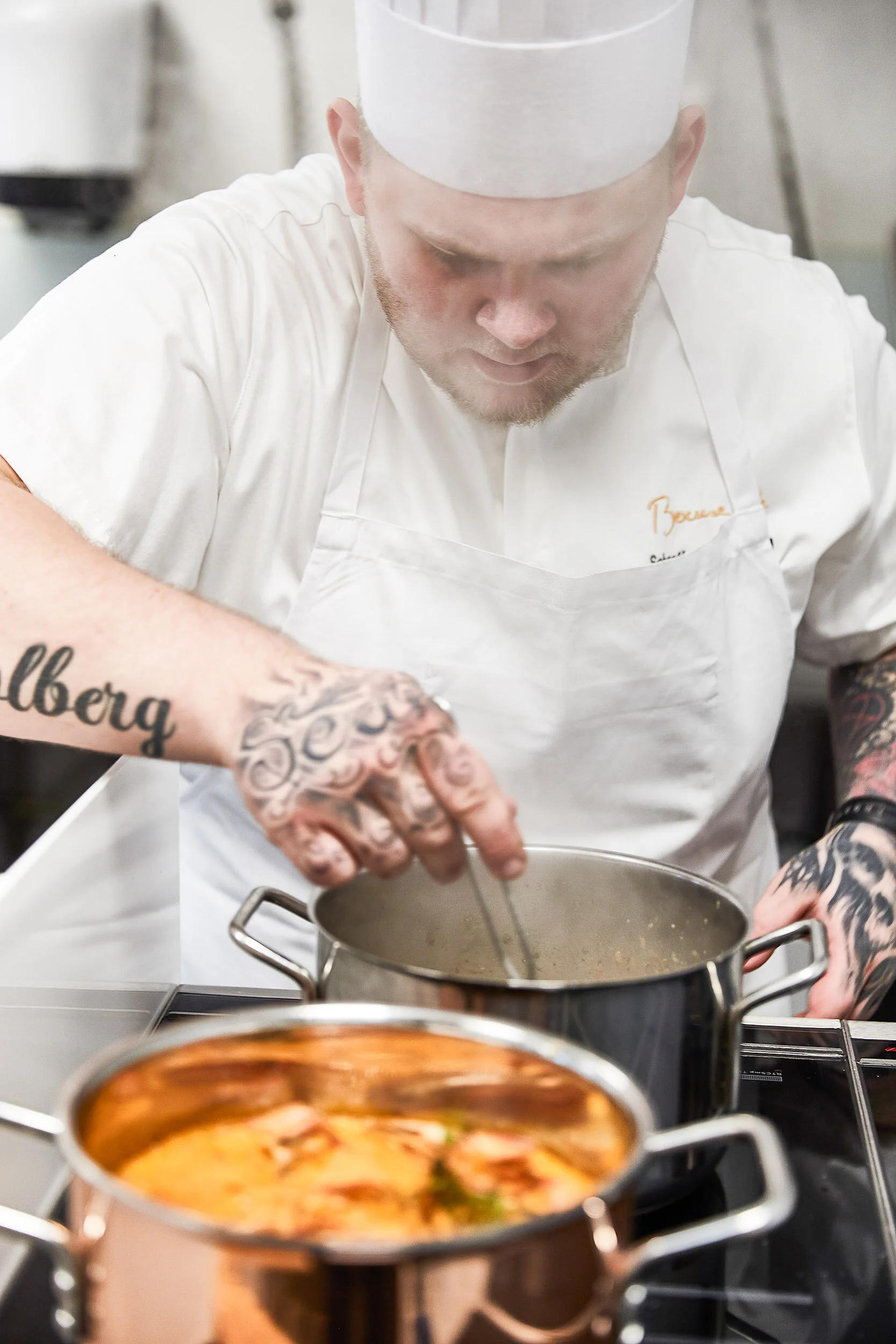
“As of right now, we are doing this seven days a week,” commis Sebastian Holberg adds. “From 9:30 in the morning to anywhere between 11 and 01 in the evening. It is tough. I will admit, but we are so close to the goal that if we did not give it our very best, we would regret not making this sacrifice. We have spent two years and eight months of our lives preparing for this one day. It is one hell of a journey, and you need to appreciate that journey.”
Still young, yet wise beyond his years, Sebastian is no stranger to hard labor and sacrifice. When he was 16, he moved away from home to pursue his dreams to be a professional chef. He went directly from public school to 70 hour work weels, discipline and verbal asskickings if things went wrong. And it shaped him into the chef that he is today.
The culinary school he attended was small, he recalls. As was their competitive team. Even so, the ambition was there to be better than all other schools and they won every contest imaginable for three or four years straight. “I feel like we were the small school that beat all the big boys. I took that with me. To this day, I fight for the underdog. And I fight with all that I have. The same goes for Bocuse d’Or,” he smiles.
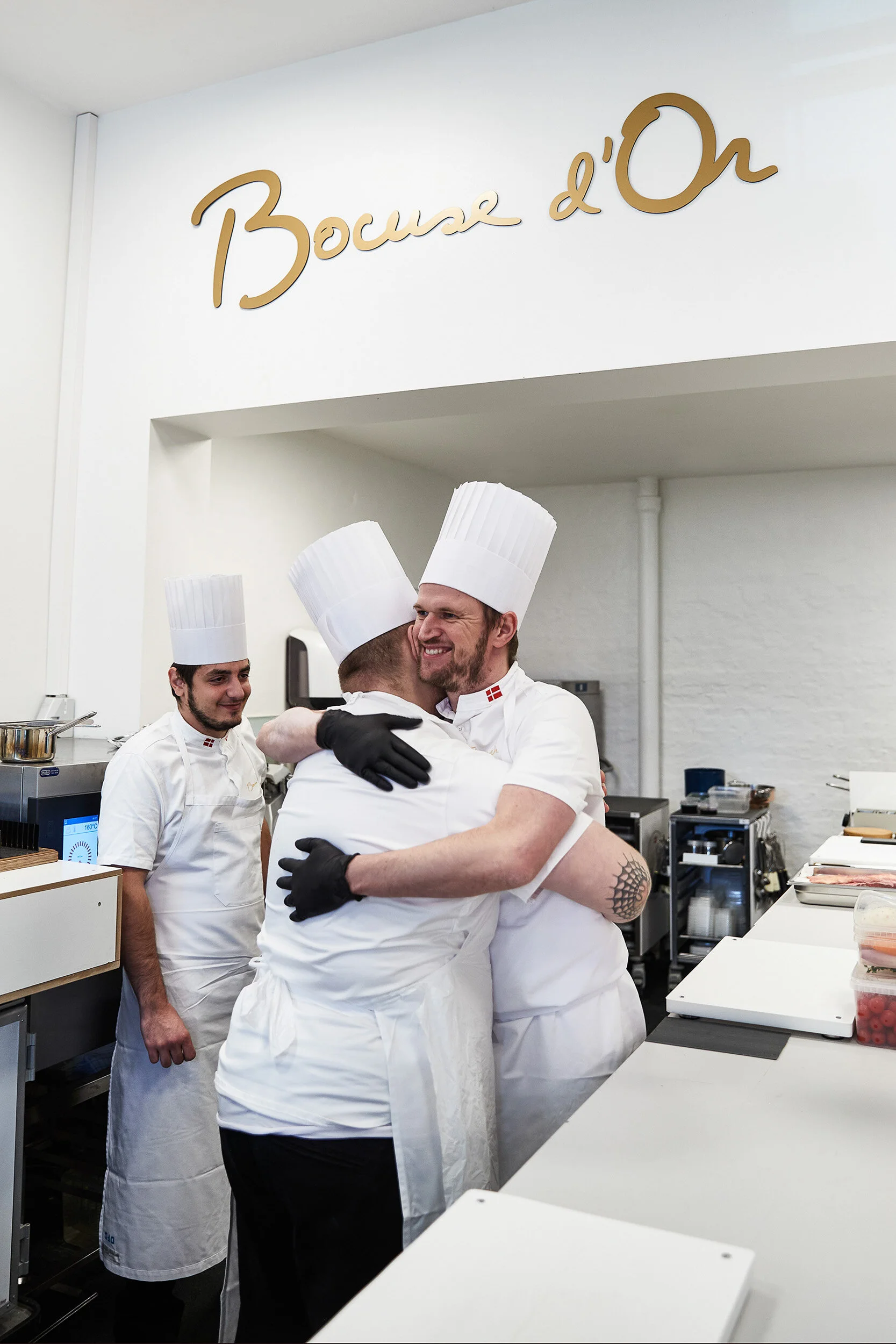
“Ronni, too, is incredibly passionate and dedicated. No one has willpower like he and Rasmus. Nobody thinks outside of the box like they do. To observe their way of thinking and working in a kitchen. That really teaches you a lot. We feed off one another and we push one another. Yet at the same time we work towards the same goal. We feel each other. We know where the others are. We crack jokes and fool around. And we grow together.”
Double-click to edit...
The assistant: Olivia Thorbek on the rewards
“Honestly, my hope is that I can inspire people to follow their dreams,” says Ronni in response to his commis’ word of praise. “To know that they can do whatever they put their minds up to. People ask me if I have always dreamt about Boucuse d’Or glory. The truth is, I have not. Sometimes dreams pop into your head. And you owe it to yourself to chase those dream with all that you have.”
His sentiments are echoed by the team’s indispensable assistant, Olivia. “I think what others can learn from our experience is that you should dare to dream and to pursue your dreams with everything you have,” she says confidently. “If you can dream it and live the dream, getting out of bed every morning is like the continuation of that dream. We are here in this kitchen every day because we really, truly love to be here.”
Olivia plays a unique role on the team in that as an assistant, she works every bit as hard as everybody else, is essential to the operation, but gets the least attention. Also, as a woman in a so-called man’s world, she sadly runs the chance of being stigmatized and overlooked. But not in the Danish Bocuse d’Or kitchen. Here she is an equaland she is every bit as respected and part of the team as everybody else.
“It was Sebastian who called me up,” she explains on joining the team. “We were in the same class in Culinary school. He asked if I wanted to be a part of a great adventure. When he explained, I had to grab hold of management and the home front.”
“How about I take a leave of absence for about three months,” she would ask, “you probably will not see me much.” And luckily for the determined young woman, everybody had her back. “It does not get any bigger than this,” they would say, “and it is a good direction for you.”
“And really. It is,” she agrees. “It is the biggest achievement in our field. The unofficial world championship. Yet there was doubt in me. “Not because I was a woman,” she points out. But because I came from a brasserie, I was not used to handling herbs with tweezers. Am I even good enough? Am I capable of what they expect? Of course, in the end, I was. And that makes me proud.”
Double-click to edit...
“I am also very proud to show that not only the guys can make it to the front line of this business. But girls can, too,” she stresses “There are not a lot of us, but we are equally determined to succeed. And there is no room for discrimination in the kitchen.”
“My role is very practical. I help prepare the kitchen, I weigh all the ingredients, Prepare the herbs. Make sure everything is ready. I help the boys as much as I can. Every ounce of weight I can take off their shoulders, I will gladly take. It is my job to keep my head clear and prepare everything down to the smallest detail.”
“It is tough. You need to really power through and enjoy the ride. As a girl, specifically, you also need to know that the kitche jargon and boys are harmless, really, and that you are their equal. That you can run as fast as they can, lift as much as they can and do every damn thing that they can. You need willpower and character, enjoy the ride and have fun all along.”
Her team player, Sebastian, backs her up. “This is about more skill or even gender. It is about how far you can go through willpower and hard labor. I am, in all humility, quite skilled. But the main reason I am here is because I have proven again and again how much I want to be here. You must have talent, but more importantly, what matters is dedication and willpower.”
“For the new generation out there, I think it is important to know that you do not need to master all skills of the trade,” he continues. “If you have the will, it will take you far. Everybody can do what I do if only they want it badly enough. You need to accept that this is a demanding industry. But if you can accept the rules of engagement, you can make it as far as your heart desires - as long as you have the courage and will. A brasserie chef or someone who cooks classical Danish food can be just as skilled as a three-star chef, as long as they give it their all”
Double-click to edit...
The unseen hero: Simeon Toniev Nikolov, on opportunity
The willingness to give it your all is perhaps one of the strongest bonds that keep Team Denmark together. From Ronni in front right down to the unseen heroes in the back. Take Simeon Nikolov, known as Simi, for example. A young chef rom Sofia, Bulgaria who was called in late in the game to help take care of all the important tasks without which the team could never function: Preparing ingredients, organizing ingredients, getting things ready and cleaning up when done.
“Nobody, he says, “understands how much prep is needed. It takes two days of preparation, 12–14 hour days, to get ready for one Bocuse d’Or meal,” he reveals. Or about four times the amount of time spent on the competition day alone. Is it worth it? To Simi, it is as simple as it is to every other member of the team:
“I hope, of course, it will be beneficial to my career,” he says earnestly, “Ronni, Sebastian and Rasmus, have all taken me under their wings. Blessed me with knowledge, technique and new ways of working. It is of course their big moment. They are of course the stars. But we are part of the team and we feel equally proud.”
“For me, this is the biggest learning experience I have ever had,” he says completely frankly, “I was a commis for Bulgaria, but for me this is much, much bigger. Our food scene is on the rise back home and being part of Team Denmark is a great achievement for me. One that can open a lot of doors.”
What doors will be opened for Team Denmark? Which culinary accolades will be won at the finals? In a few short days, we travel to Lyon to find out.
