
Double-click to edit...
ritt bjergaard
How a life-long love for gastronomy helps support and fund Denmark’s Bocuse d’Or hope
PUBLISHED september 2021 ı PHOTO: Michael jepsen
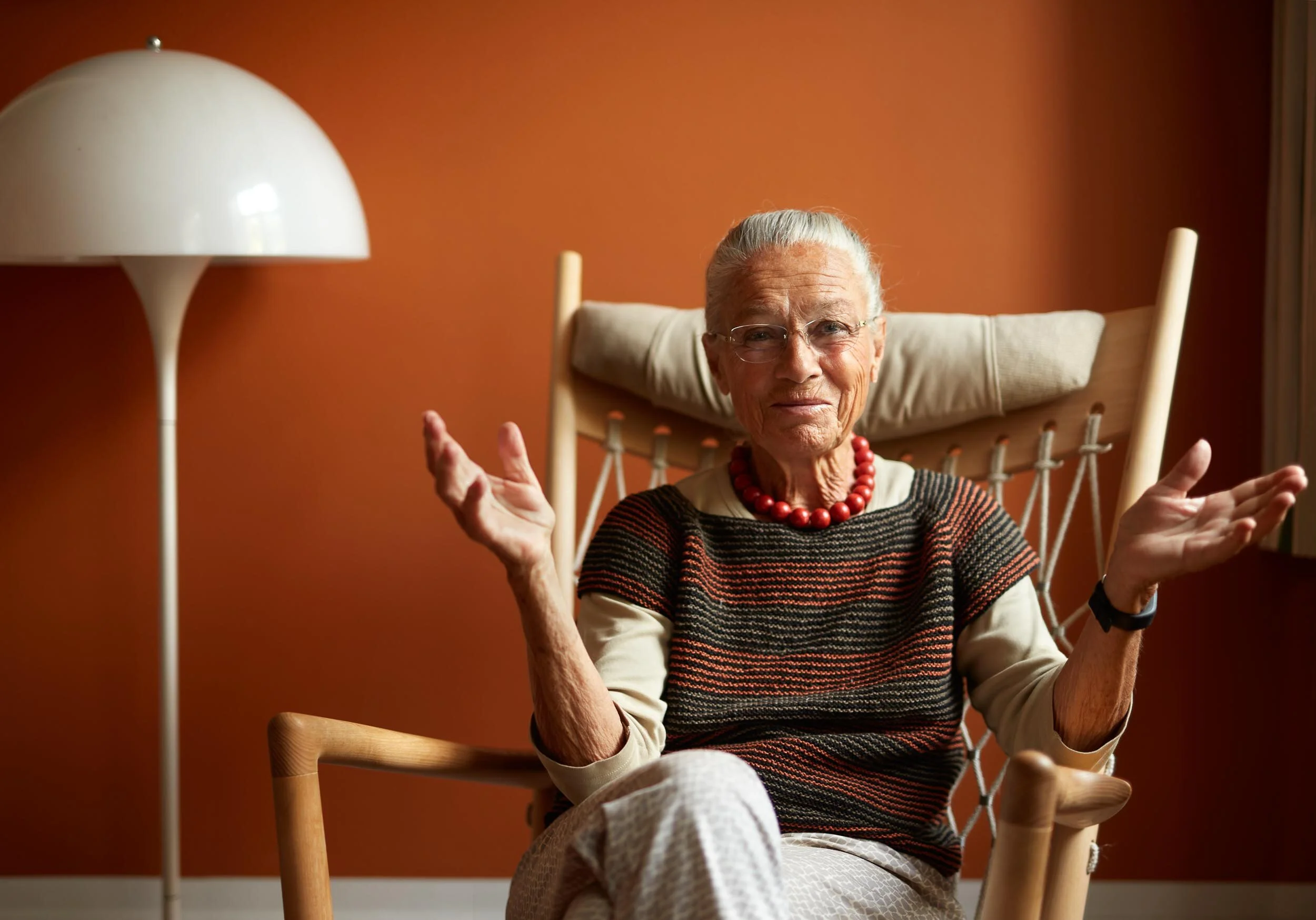
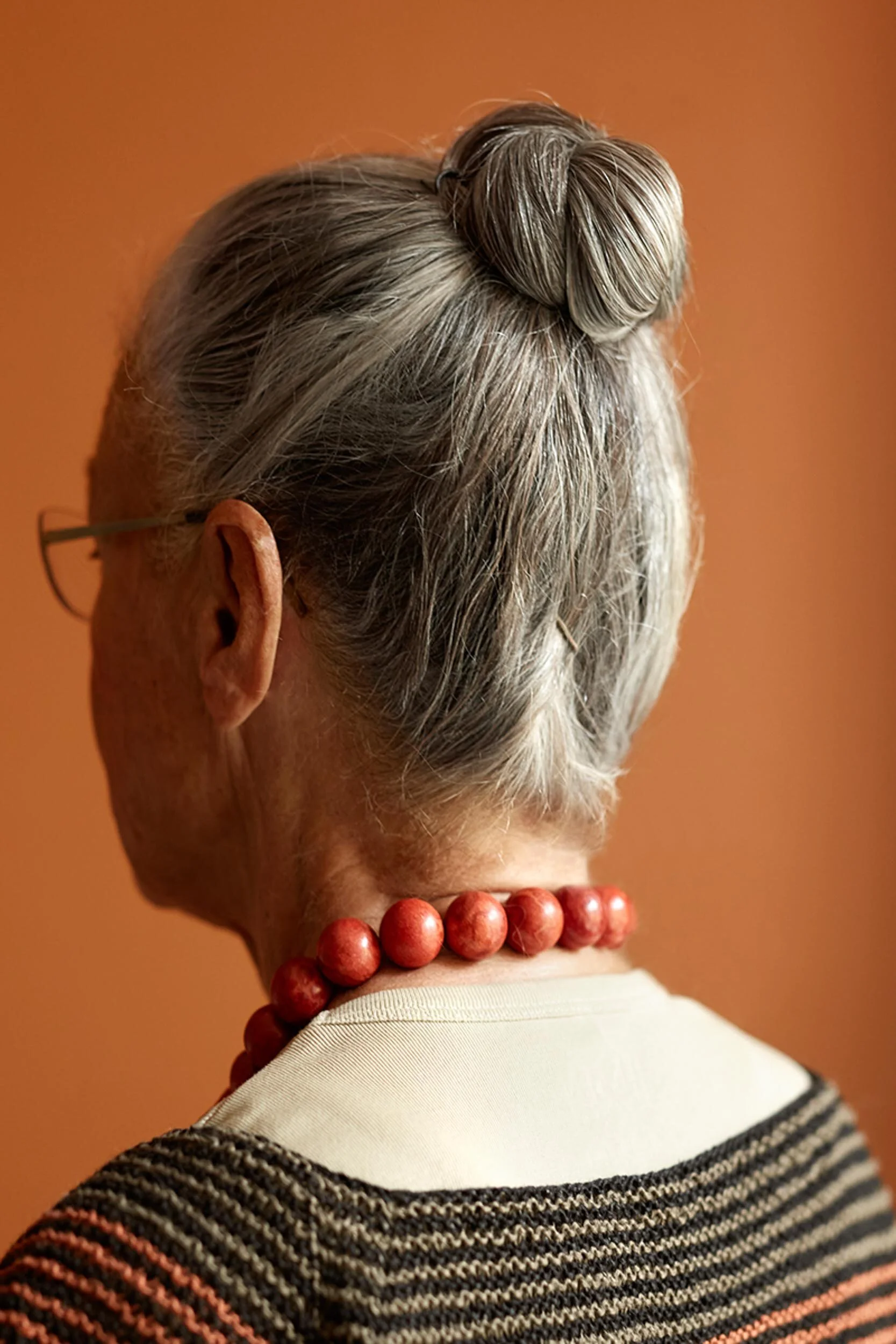
A lighthouse in Danish politics since 1971, 80 year old former Lord Mayor of Copenhagen, Ritt Bjerregaard, is probably best known for her political career. Not so much for her love for food and gastronomy. From her home in Copenhagen, Ritt Bjerregaard talks to Yeswefood.com about her life, her love for food, her role as President of the Board of Bocuse d’Or Denmark and reveals just what it takes to send three young people to the Bocuse d’Or final in Lyon.
For years, former politician Ritt Bjerregaard, has been President of the Danish Bocuse d’Or Academy, the association responsible for picking and funding Denmark’s candidate for the Bocuse d’Or cooking competition in Lyon.
Quite unselfishly, it is a role she took upon herself not out of need. But out of want. Yet, to fully appreciate why a powerful woman who has lived a rich, busy life and could easily retire from the game, has decided to spend her time and energy helping young talents achieve their dreams, we need to turn the clock back nearly 80 years to a very different time.
“In a way, my love for gastronomy dates all the way back to my early childhood,” she recalls from one of her favorite chairs in her Copenhagen home. “I was born in 1941 in the borough of Vesterbro which was back then a poor worker’s quarter. We were malnourished and were quite often sent to the hospital.”
“My parents were told that we should acquire an allotment, a small garden outside of town, and we did. The garden was magnificent,” she recalls vividly, “in that it really improved our health and it taught me the importance and value of fresh vegetables. We had a cherry tree, an apple tree, peas, carrots,” she continues down memory lane.

Double-click to edit...
“It was not the bountiful experience of shopping at a supermarket today mind you,” she points out, “it was half a split carrot on a piece of rye bread, but it was an improvement nonetheless. And it instilled in me at an early age the importance of good food and proper nutrition.”
While definitely improving in quality over the years, the food enjoyed by the Bjerregaard family throughout the 1950s was still very traditional and very one-dimensional, she recalls. Meat, potatoes, gravy, boiled vegetables. Classical Danish fare. A sign of the times, if you will. Until, that is, another defining moment in Ritt Bjerregaard’s culinary evolution occurred.
“In my younger years, I was blessed with a French pen pal who would visit us and whom my family and I would visit in France in return. And culinarily, that visit was a complete eye-opener!”
The family from the less than gentrified part of Vesterbro had never heard of garlic nor olive oil or many other Mediterranean ingredients. And they were certainly not used to vegetables that had not been cooked to a complete mush, but rather had been pan pal to perfection.
It is perhaps hard to grasp today’s modern world, but back then - when eating locally and with the seasons was not a trend but the norm, the experience must have been mind-blowing.
It was not the bountiful experience of shopping at a supermarket toda,y mind you, it was half a split carrot on a piece of rye bread, but it was an improvement nonetheless.
And, indeed, the brush with Europe’s classic culinary culture showed the Bjerregaard family a completely new way to prepare and enjoy food. After the trip, Ritt Bjerregaard recalls, they completely changed their ways of cooking and eating and Ritt? She fell in love with French cooking.
The fascination with the art of French cooking has stuck with Ritt Bjerregaard for a lifetime. And has only grown through the years. Especially after meeting her husband, Søren. “He has cooked throughout our entire marriage which has lasted for more than 50 years, quite a while is it not” she muses. ”He, too, is very much into quality ingredients and taught me much more about the French kitchen.”
“He bought this big, bulky, French cookbook,” she laughs, “we knew a little French, of course, but not nearly enough. I was tasked with looking up the words we did not know in a dictionary and that way, we taught ourselves how things were supposed to be done.”
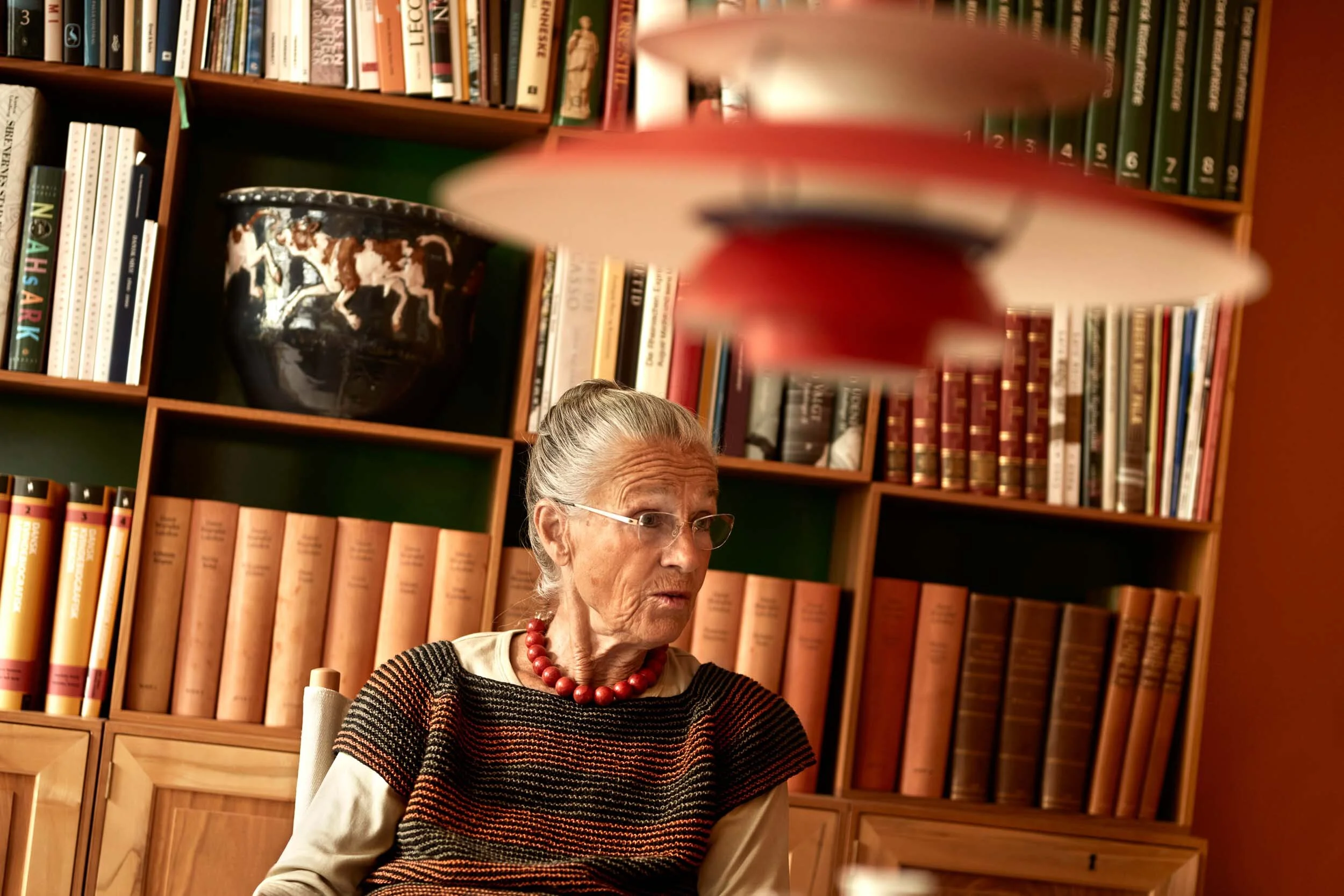
Meeting her husband Søren and being part of his 1973 inclusion in the Danish Gastronomic Society, Ritt believes, is what helped infatuate her with fine dining and exquisite wines. And it became the final pillar to her fascination with food as an important aspect in her life. A life dominated by politics and public appearances, but also a love for gastronomy, quality food and the importance of good nutrition. A more or less unspoken love that served both as a counterweight to her political activities, but certainly also as an important aspect on her political agenda.
Checks and balances: Food as a source of recreation and politics
“Way back in 1988, along with my parents, we bought this plot of land at the center of the Danish island of Sealand, she recalls “and with the help of a local NGO, we turned it into an organic apple orchard.” An orchard that would not only provide a positive imprint on the local environment and a source of joy for Ritt Bjerregaard, but also an important safe haven from the busy world of politics.
“I loved walking through that orchard,” she smiles. “It was a perfect counterweight to my political activities. A political process is lengthy. It may stretch across several years and you can never be certain of the result. In an orchard, things move relatively fast. You plant trees. Apples grow. You can eat them, and see if they taste well.”
I loved walking through that orchard. It was a perfect counterweight to my political activities.
In this way, food and gastronomy has played an integral part of Ritt Bjerregaards personal life and well-being. But it has certainly also played a part in her professional life, especially after she was appointed Minister of Food in 2000.
Indeed, one of her first deeds as minister was to partner with Københavns Madhus (Copenhagen’s Food House) to create a school food program for children in public schools, based largely on her memories of the importance of these programs during her own early school years.
“Actually, that very movement is something, I am quite proud of politically,” she recalls, even though the critical voices were numerous in accusing her of robbing parents of one of their most important tasks: Providing for their children.
To this, though, she remains completely unfaced to this day. “I mean, dear God, if parental love is to be boiled down to taking the time to pack a school lunch,” she says in her calm, respectful yet brutally honest manner, “maybe that time is better spent elsewhere. Maybe they should spend that time sitting down and actually talking to the children instead?” - “In the end, though,” she smiles, “most of them realized that in terms of quality, we could offer their children something they could not as easily provide themselves.”
This ability to make decisions based on what she thought better for the general public, the environment and nutrition in general, not necessarily public opinion and demand, is an ability that stayed with Ritt Bjerregaard through her tenure as Minister of Food and onwards. And it was probably also this ability which earned her a seat at the Danish Bocuse d’Or Academy.
From Minister to President of the Board Bocuse d’Or Denmark
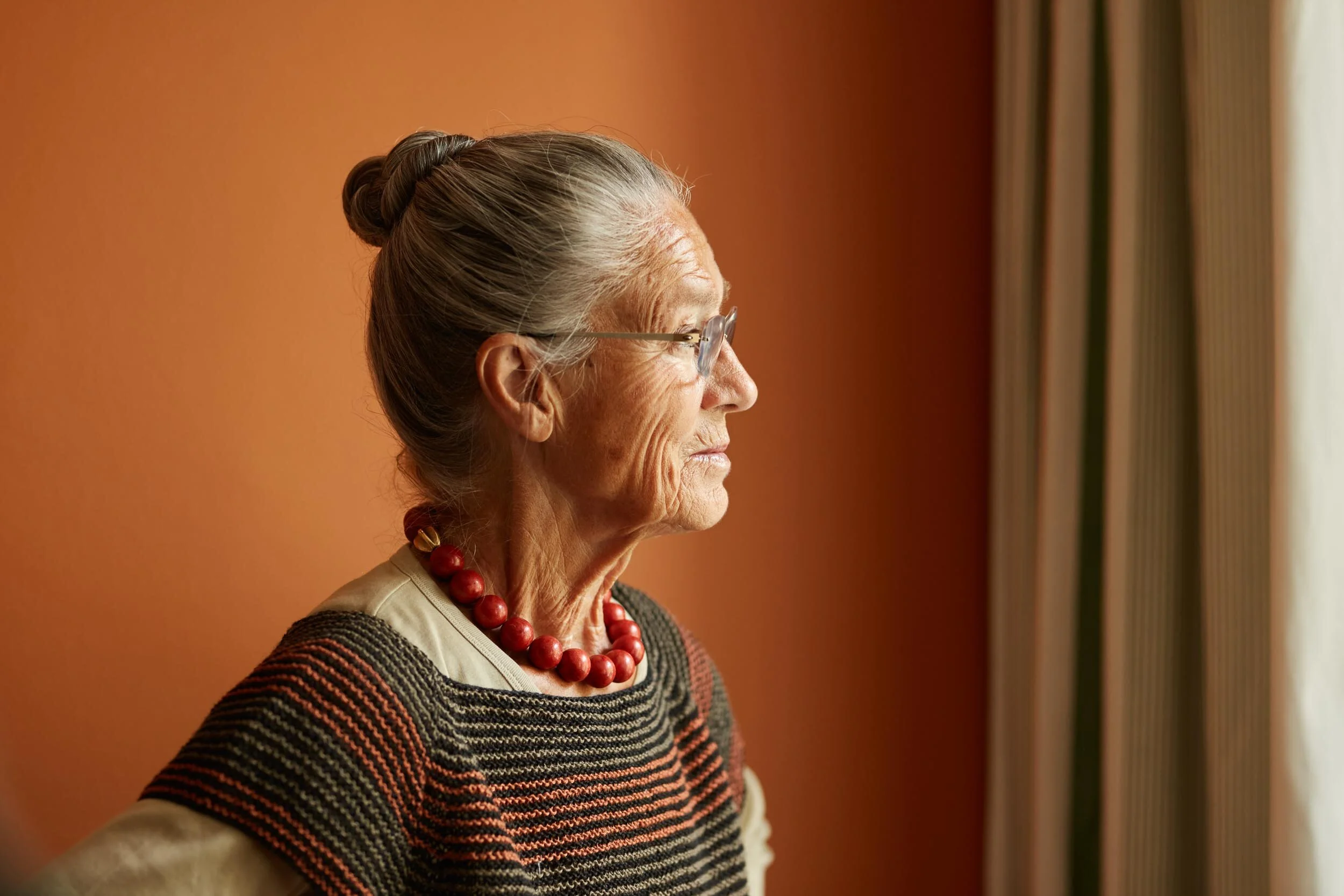
It was fellow politician Eva Kjær Hansen who, after her run as Minister of Food, asked Ritt Bjerrgaard to join Bocuse d’Or Denmark as vice president. She felt, Ritt recalls, that it would add some drive and, with Eva being a right wing politician and Ritt a left-winger, some political breadth as well.
“Of course I said yes,” she states matter of factly. “Not only because of my love for gastronomy, but because I felt the high level of craftsmanship could serve as an inspiration for so many other young talents. When Eva Kjær ventured back into politics, I became president of the board and have remained so ever since.” Owing in no uncertain part, she states, to her Secretary General Ulla Trolle and the rest of the team who push on relentlessly with passion and energy.
“My primary role - our primary role - in all of this,” she explains, “is to help raise awareness and funding for the surprisingly large operation that is competing in Bocuse d’Or. And that, honestly, is not an easy job. I actually do not think a lot of Danes understand how massive of an operation Bocuse d’Or really is.”
Bocuse d’Or, to Ritt, is a grueling competition in Lyon, but it is much more than just that. It starts with a national contest to find a suitable candidate. This initial process leads to regional finals where the field is narrowed down to the 24 chefs that compete in Lyon for the gold. It is, in the end, a two year process culminating in one single event. Two years during which the candidate and his helper, known in culinary terms as commis, must practice, practice and practice.
I actually do not think a lot of Danes understand how massive of an operation Bocuse d’Or really is.
“It is an incredibly all-consuming task,” she confesses, “and over the years we have tried to establish a way in which we can pay the chefs a fitting salary for all their hard work. We have also established training facilities at the Hotel and Restaurant School in Copenhagen that we hope will not only serve as a safe space for the candidate and commis, but also as an inspiration for all the young students who get to witness them working away in the kitchen out there.”
Such a setup obviously requires quite a bit of funding, and Ritt’s absolute primary objective, she feels, is to help raise the DKK 5 - 6 million needed to fund such a process for two years. A deed that is easier said than done, she admits.
“I have often wondered why it is so easy to raise money for professional sports and top athletes, but not for top culinary professionals,” she says quite bluntly. “We have great producers and suppliers who offer their help in terms of ingredients and kitchen tools.
That means the world to us. But we need trustworthy and secure monetary backing. We have made the rounds and luckily quite a few sponsors have supported us financially. But it has been tough. Especially this year in light of the global pandemic which shut the entire world down and caused the entire competition to be moved.
“We are lucky to have a star like Rasmus Kofoed along for the ride,” she continues “he has been very generous with his help, also in generating attention for the competition. He is a star, even in Lyon. As is Kenneth Toft Hansen who won the gold in 2019. With this in mind, we have made extra efforts to raise funds, but it has been incredibly tough this time around.”
“I personally feel like some of the great national players in the field of grocery stores should step up to the game,” she confesses. “In our neighboring Norway, supermarket chain Rema 1000 funds their team with help from the state. We, too, are on the national budget with half a million or so, and for that I am grateful, but I think it would be fitting if a major grocery chain would venture into a sponsorship,” she says in one final appeal for reason.
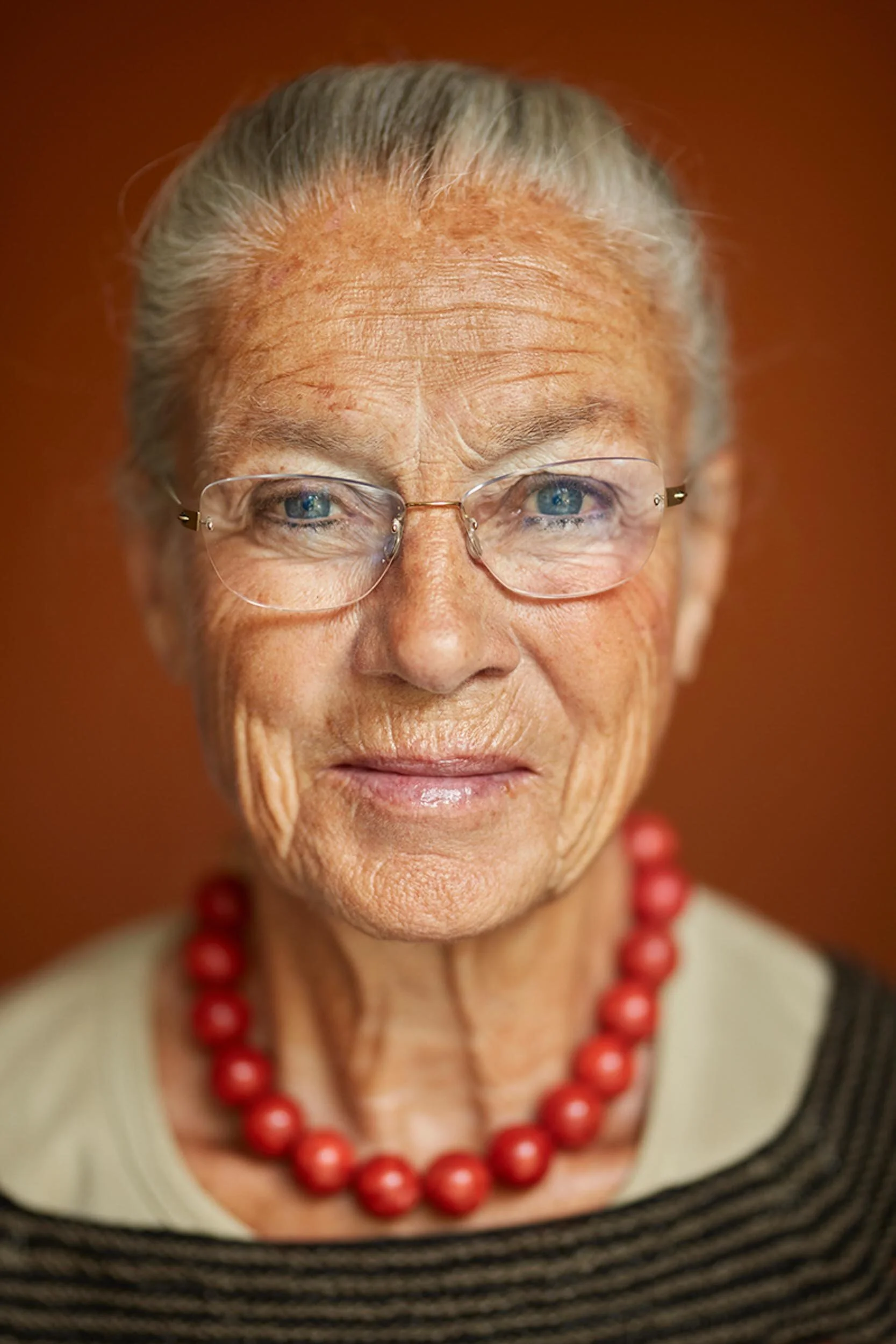

Despite hardships and challenges, however, Ritt Bjerregaard and her team of dedicated professionals have managed to gather and fund a strong team for the 2021 Bocuse d’Or finals. A team we shall visit in a future article on Yeswefood.com, and a team that Bocuse d’Or Denmark President, Ritt Bjerregaard herself, describes in the following words:
“The candidate, Ronni Mortensen, is incredibly disciplined. Ronni was culinarily raised by the team’s coach, Rasmus Kofoed and works at Geranium when not practicing. So does his commis, Sebastian, by the way, with whom he plays along beautifully.”
“This year, we are lucky enough to have a woman on the team in the shape of their assistant Olivia,” adds the politician whose other great focus in life has been on gender equality. “This, admittedly, is rare. Women have proven that they are entirely capable of becoming great chefs and even winning competitions. Yet, there are not a lot of women in the trade. Why? Well, iIt is an extremely demanding trade. The working environment is tough as is the tone of voice. We need to change the working environment. We need to look into the long hours. And we need a change in tone of voice,”
Luckily, the team’s assisting hand, Olivia, has proven quite capable of not only fitting into what some still perceive as a man’s world. She has thrived and grown and proven herself in the toughest of environments. More importantly, though, she has proven herself as part of the team, based on her personality, strength and willingness to compete. And in doing so, she completes what many have described as a most humble, yet tightly knit Danish Bocuse d’Or team. A team that Ritt Bjerregaard and Bocuse d’Or Denmark should be rightfully proud to send to the 2021 finals.
Check back over the next two weeks to read much more about Team Denmark, Bocuse d’Or and the 2021 finals in Lyon.
