
Double-click to edit...
KENNETH TOFT HANSEN
On going the distance: What it takes to win Bocuse d’Or
PUBLISHED SEPTEMBER 2021 ı PHOTO: Stine Christensen
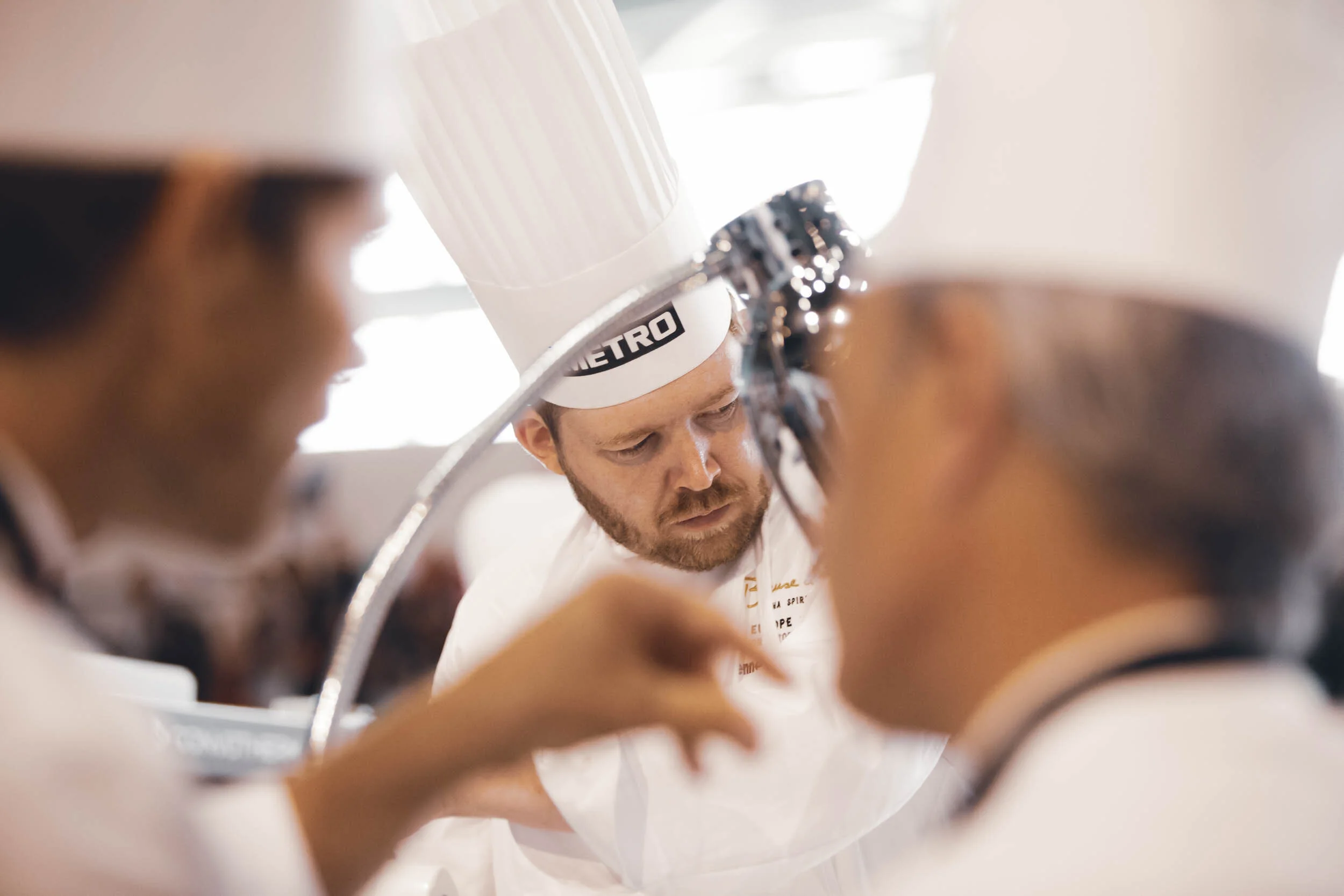
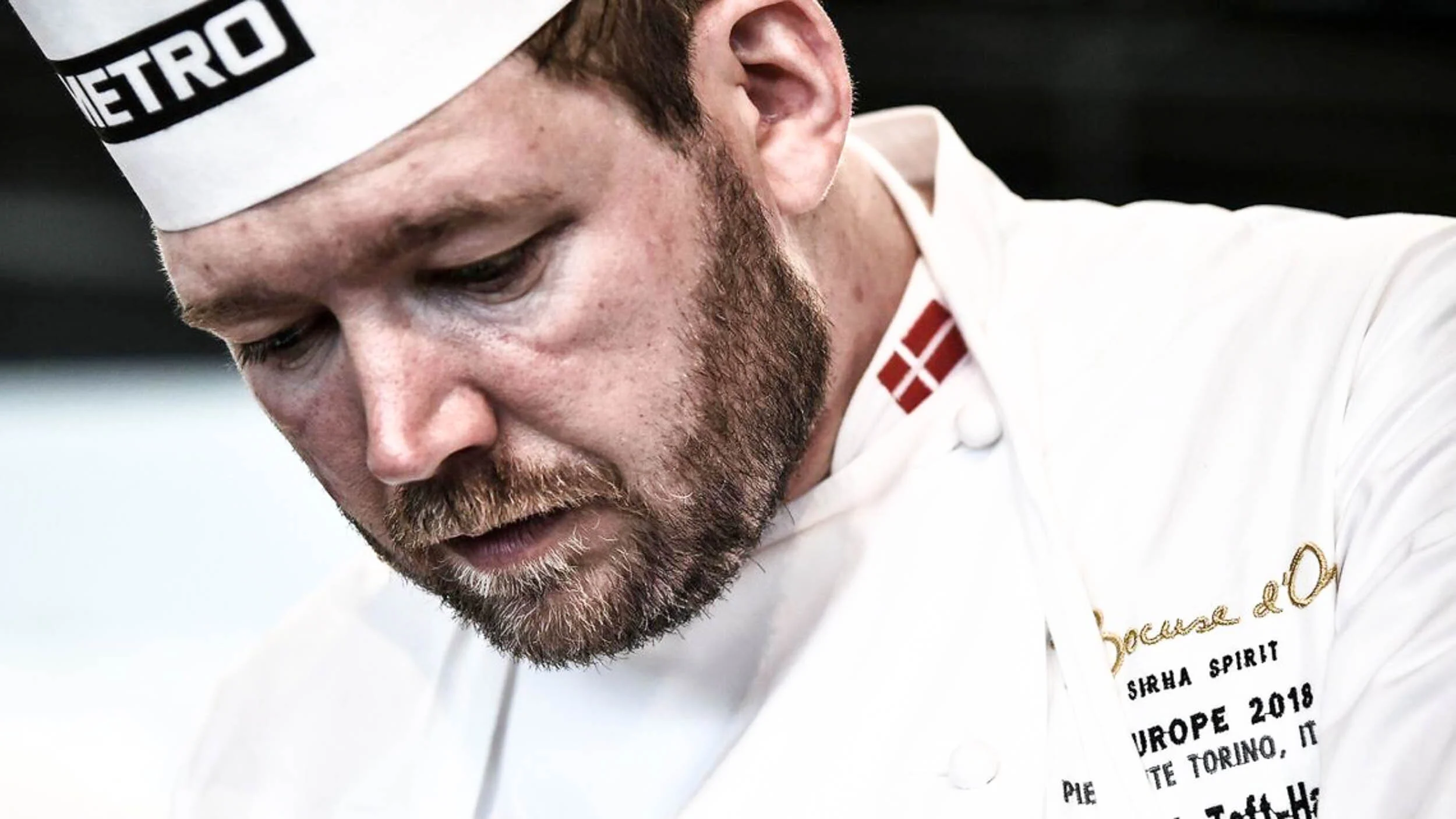
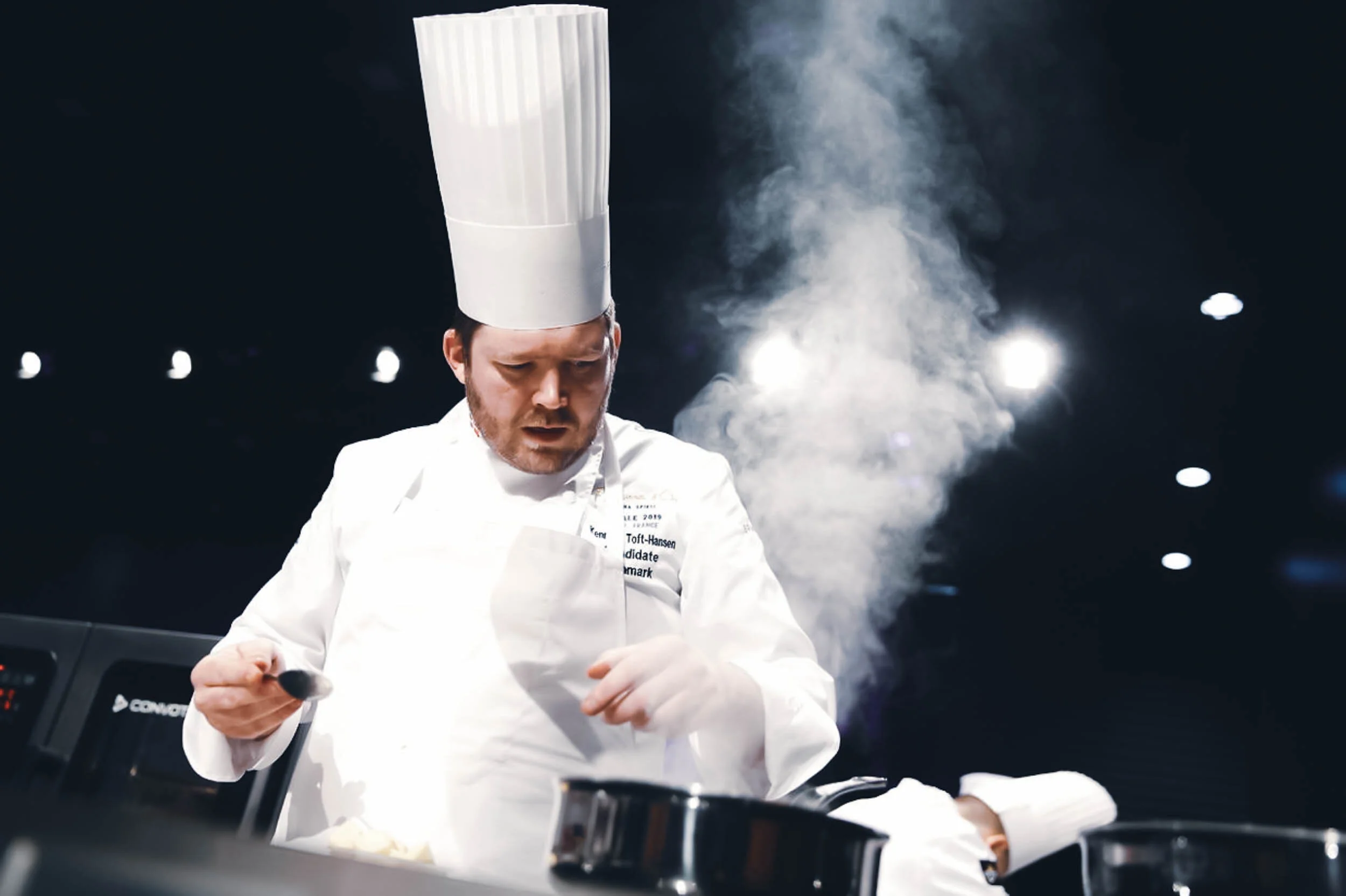
When Kenneth Toft Hansen won gold for Denmark at Bocuse d’Or 2019, not a single member of the Danish press was present for the award ceremony. This fact amuses the defending champion to this day. Yet, he also understands. The Danish public, and the Danish press, do not always understand the sheer scale and importance of Bocuse d’Or, he feels and in this exclusive talk with Yeswefood.com, he aims to set the record straight.
“It is so important to understand that there is a huge difference between gastronomy, even fine dining, and Bocuse d’Or,” begins his argument. Where fine dining is all about delivering the perfect plate to diners, he argues, Bocuse d’Or is about delivering several perfect plates to some of the world’s best chefs. With perfect timing and under heavy scrutiny. To Kenneth Toft Hansen, Bocuse d’Or is a discipline of its own within the world of gastronomy. It is not a restaurant experience. It is a craft. It is chefs cooking for chefs.
“Here in little, old Denmark, we do not always appreciate just how grand of an operation the Bocuse d’Or competition really is,” he says. “It starts out with representatives from 60 nations from all across the world. First chefs compete in a national contest to crown a candidate. They then compete in regional finals to find the final 24 for the grand final in Lyon. It is that huge an operation.”
Double-click to edit...
A lot has happened since the good, old days, he explains, and by the good, old days, he means before 2005 when former Bocuse d’Or champion Rasmus Kofoed first competed. Back then, he argues, things were probably a little more laid back and unorganized. “I mean, of course you would practice,” he says, but not at all in the way we do today. Today we have an entire professional team surrounding the event. A team that will ask what it takes to win, and do anything they can to make it happen.”
Delivering a winning effort, in Kenneth’s mind, is no longer about simply delivering the best possible effort. It is about developing unique dishes and unique techniques that wow the judges and make them wonder. And it should be done under absolute scrutiny.
The rules of engagement - What it takes to Go all the way
“Today, the rules of engagement are nothing like back in the good, old days,” he explains “When Ronni and Sebastian step into that kitchen in a few days, they are judged on a grand scale of 1500 maximum points. 80% of these are, as you would expect, awarded for the food. 20%, however, are awarded by kitchen judges who keep a keen eye on everything. There is now a grand codex for how things should be done in a kitchen, and you are judged accordingly.”
The addition of kitchen judges who keep an eye on everything from technique over hygiene to food waste, logistics and cooperation are now what makes and breaks a winner, Kenneth argues. “When we send a candidate, it is obviously with the goal of going all the way, “he reasons. “If you want to do that today, it is not enough to simply be a good cook.”
You need to also master all other aspects and skills of working a professional kitchen, Kenneth argues. To absolute perfection, it seems. “Look at the European final in Tallinn,” he motions. “There was a grand total of 50 points between Sweden’s bronze medal and Denmark’s silver. Ronni actually won the most points of all for his food, but lost valuable points on minor flaws in hygiene and technique. That was the difference between silver and gold,” he concludes matter of factly. “It is such a demanding test today that it is best compared to professional elite sports where every miniscule parameter counts.”
It is an absolutely maddening setup, he continues to explain. The planning, the logistics, space and tools management. The way time is kept track of down to the very second. Even when it comes down to planning when to pause for a drink or a bite of food to keep you soldiering on, there is even a plan for that, he reveals. “The contest is lengthy,” he explains erratically, “it is five and a half hours full of sheer pressure. Five and a half hours of you simply pushing yourself through with everything that you have to give.”
At the European finals in Tallinn, the team that placed 10th celebrated more than the winners. Because they had made the cut. That in itself is a victory. Because simply making the cut is a challenge.
“... And then there is the added twist of the takeaway box, this year,” he says with an honestly empathic face. Where Bocuse d’Or has usually been about creating a plated dish and a showpiece dish, this year the plated dish has been replaced by a three-piece takeaway serving. It is hailed by many as a great sign of innovation and a sign that Bocuse is moving with the times. But to Kenneth, it is also a cause for a bit of concern.
“It is a huge challenge to be honest,” he explains. “Earlier years, we had to present one plate per judge for our first serving. This year, Ronni has to present 42 courses at the same time, all packed in custom made takeaway boxes. One cold, one warm and one dessert. It is a next to impossible task that requires even more coordination and timing. How will the dessert evolve after three minutes at room temperature? How do you keep some elements from growing cold and others from growing hot? There are a thousand things to consider.”
But then again, such things are part of the game, the seasoned veteran acknowledges. The thing about cooking contests, he realizes, is that you are under constant pressure. You have to deliver on the day, however impossible it may seem, and the very reason you practice so much is that you have to deliver on the day. And on time. You cannot just keep an element or a dish waiting for a few minutes or change a few things around.
If you do, Kenneth points out, you are instantly out of the top three, or even worse. You have to think about every possible fault or error in advance and try to mitigate them. “Have you ever watched the olympics,” he asks, “have you ever seen a swimmer do a wrong stroke, a runner get off on the wrong foot? Have you noticed how devastated they are? This is the same thing exactly,” he nods thoughtfully. “They have spent two years of their lives making it this far. Now they have to deliver on the day. It is five and a half hours of tension and emotions released. This is why Bocuse d’Or is so special. So fantastic. So magical.”
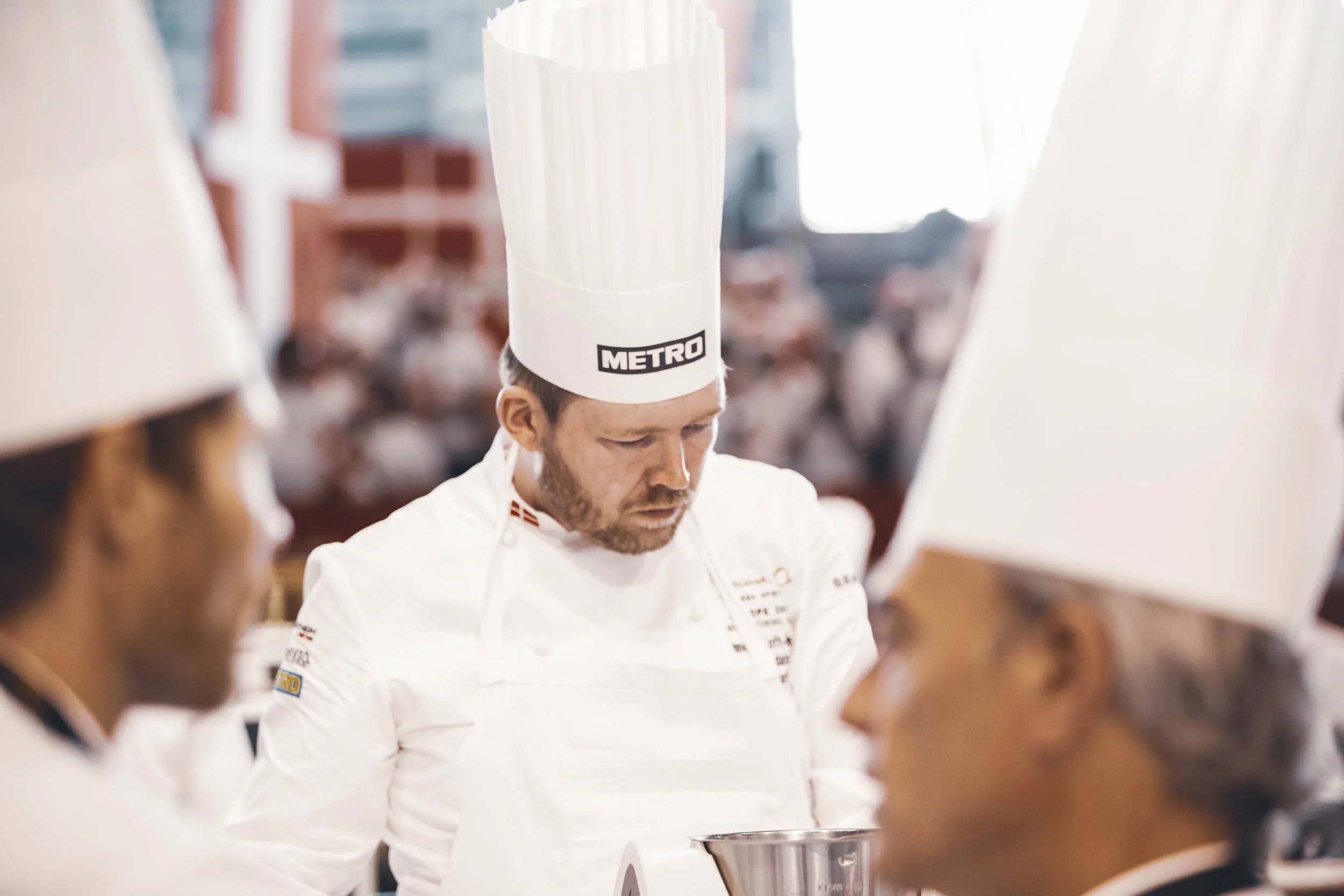
It is a big moment, and one that a lot of young, Danish talent has been privileged to experience. And to excel in even. In Denmark, Kenneth recokons, we have been incredibly lucky to have done extraordinarily well in big setups like Bocuse d’Or given the relatively small budget we have been given to work with.
Our training facilities are humble and placed at the Hotel and Restaurant School in Copenhagen and to Kenneth, it is magical and very inspiring to witness some of the world’s greatest culinary creations come to life right amongst hopeful young chef students who make their daily way at the cooking academy. And it must be inspiring, in return, for the younger generation, he reckons, to be able to watch, learn and witness how far not simply talent, but dedication and willingness to be the best of your game can get you. This, to Kenneth, is what Bocuse d’Or is about. Passing on the legacy and paying it forward to the new generation. To pass on and to teach.
Has the torch been passed? Can Denmark win the 2021 Bocuse d’Or?
When asked about whether the torch has been passed and the hopes for a Danish victory, the otherwise outspoken past winner turns a little quite and reflective. “Well, Sweden and Norway are favorites as well, and no matter what, one of them will be disappointed. Naturally, we are hoping that both of them will be,” he laughs. “The Icelandic team is really good as well and Finland are always in the top four. It must be their time, soon, to reach the pinnacle three. The French candidate, as well, is a threat. He has been a judge for many years and is a strong candidate for top three, as well,” he considers.
Double-click to edit...
“But then there is Ronni, of course,” he smiles, “he is already a seasoned veteran of the game. He was commis twice under two different candidates, and he helped out my team as well. He proved himself in Tallinn and showed clearly that only miniscule details kept him from going all the way. I would never go so far as to call him an underdog, but our neighboring countries are clear favorites. I would not be surprised, though, if Ronni tricked them all and went all the way,” he nods as the conversation draws to an end.
Can Ronni Vexøe Mortensen overcome the grueling challenges and pressure of the Bocuse d’Or final? Can he brush away the minor flaws that lost him the gold in Tallinn? Can he cheat everybody and go all the way? Time will tell on September 26-27 in Lyon and Yeswefood.com will be along for the ride.
