
Double-click to edit...
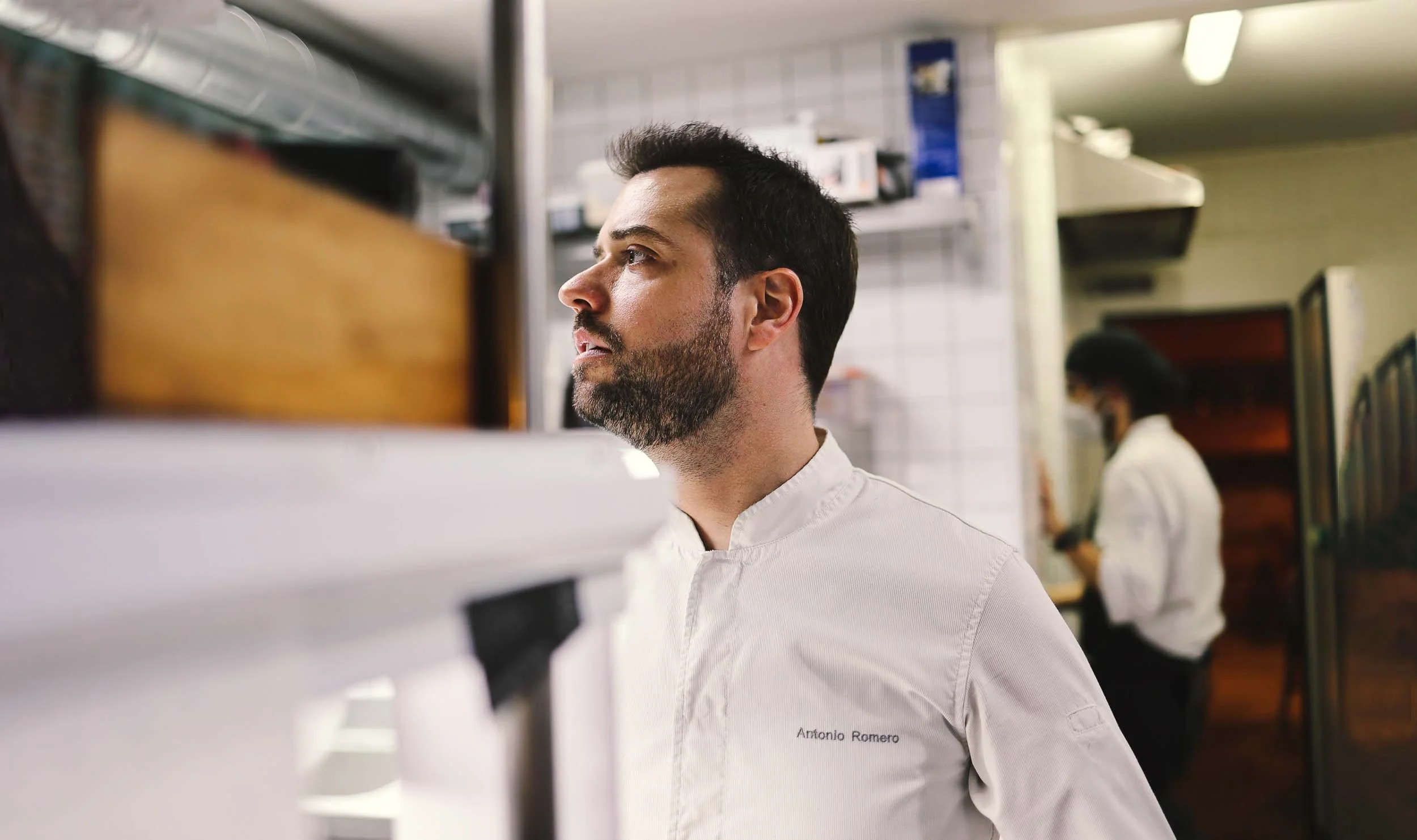
His 3-star resume includes El Bulli, Arzak and Maison Pic. Yet, for 35 year-old Antoni “Toni” Romero, his dream restaurant, Suculent in Barcelona, has been a chance for him to slow down and do what makes him happy - renovating classic Spanish dishes for the people, as he calls it. Meet a prodigy of Spanish cuisine who found peace in simplicity, in this his first exclusive interview with an English-speaking media.
“Describe myself in four words? I do not know,” he grins nervously, seemingly almost embarrassed by the question.
There are, generally speaking, two chef archetypes: One is loud, brilliantly charismatic and outspoken. The other, while charismatic in his own light, is a more introvert and professional breed. Someone who prefers to let his cooking and culinary accolades do the talking.
Antonio Romero from Suculent in Barcelona easily belongs in the latter category, making him perhaps one of the most skilled and accomplished chefs you have yet to hear of. Not only is he not very vocal about his extraordinary talent, he also belongs within what has been called the Spanish microcosm of cuisine. A strange, wonderful culinary world dominated by the “other” world language. And a world that seems strangely foreign to many observers as speaking only English easily becomes a barrier of entry.
Now, for the first time, the accomplished chef opens up to an English-speaking media. And the story he tells is that of a prodigy who exploded onto the scene and worked in the very best kitchens of the world, yet has now found peace in scaling down his act and cooking food with tradition and heart.
From academics to El Bulli
Born in Nules, a small town some 200 kilometers from his current hometown of Barcelona, 35-year-old Toni Romero became intrigued in the culinary world early in life. As so many other young men, he remembers having his culinary interest peaked by reading cookbooks and watching television programs featuring Spain's pioneering TV-chefs Sergi Arola and Ángel Leòn. But unlike many other young, prospecting academics, he decided to act on his newfound fascination.
Originally destined for a career in informatics, he changed career paths and enrolled in a Hospitality Management course at Costa de Azahar culinary school in 2005. Much against his dear mother’s will, by the way.
My culinary professor really inspired me and opened up the world of gastronomy to me.
Double-click to edit...
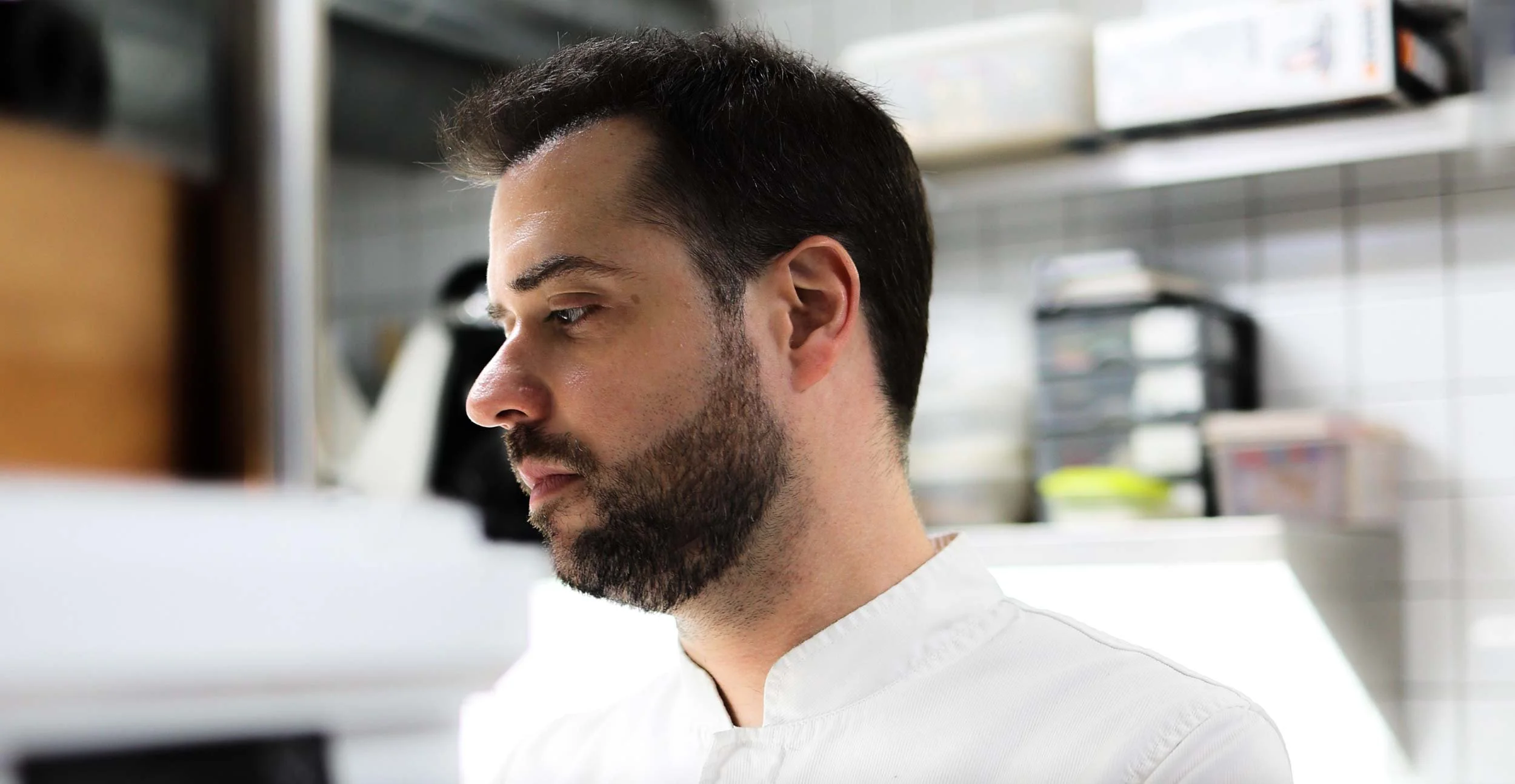
It was there, he said, he met the first person in life who really helped him down his culinary path. “My culinary professor really inspired me and opened up the world of gastronomy to me,” Toni says thankfully, “and taught me everything from textures and variety to the joys of competitive cooking.”
Humble by nature, but strong in character and will, young Antonio Romero proved a natural in the field of competitive cooking where he made a name for himself, winning or placing highly in a number of competitions. One such competition was SpainSkills, where he placed first in the regional finals and second in the national finals in 2007. Yet while highly successful in school and on the competitive circuit, he understood that if he wanted to go big, he also had to combine school and competitive cooking with practical experience from a real kitchen.
It was all about the purity of flavor.
Double-click to edit...
His very first kitchen job was at a holiday resort and from there it was a relatively short leap of faith for the prospecting young star into the holy grail of internships. A place in the kitchen of El Bulli, the then arguably most famous restaurant in the world, run by culinary masterminds Ferran and Albert Adrià.
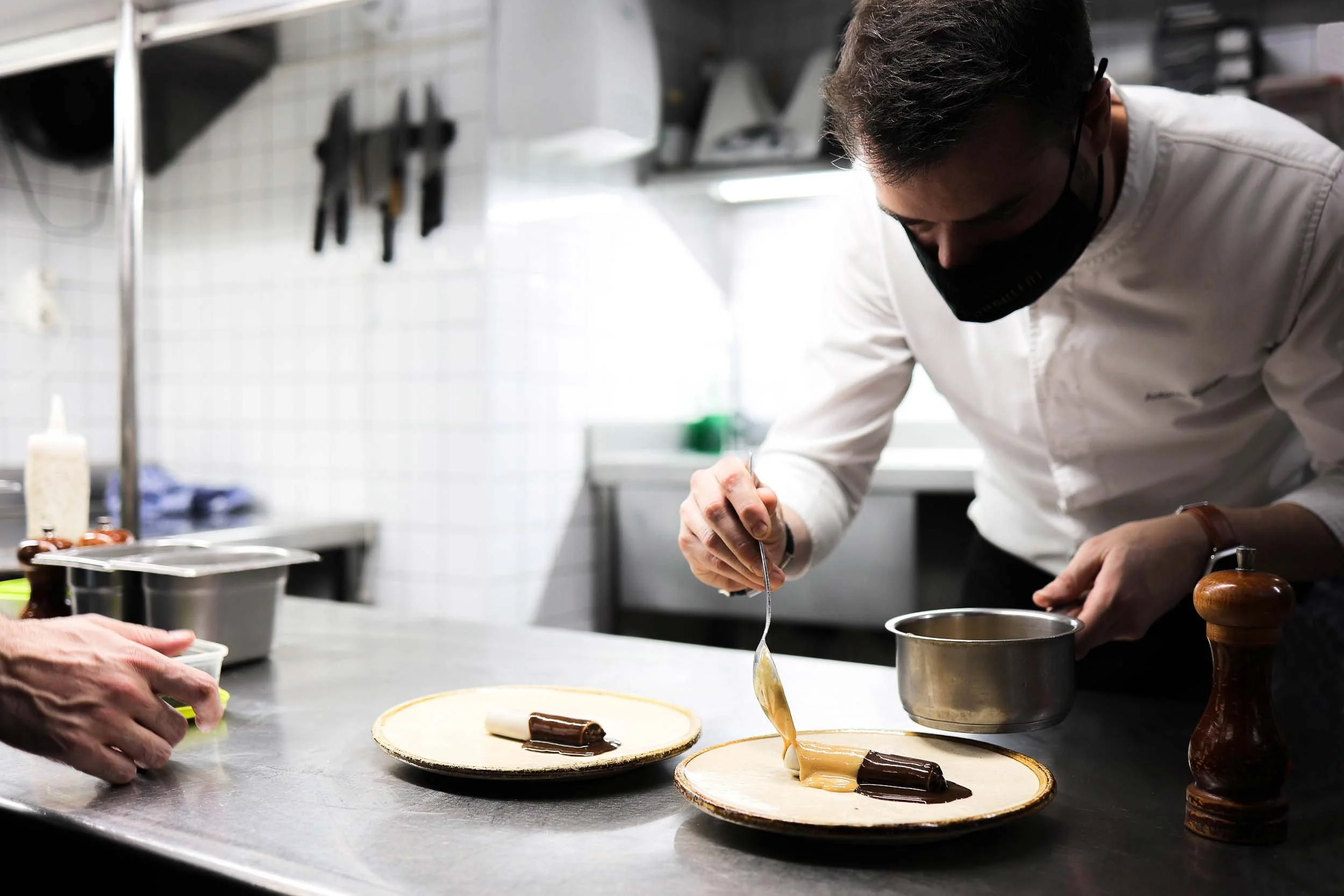
Starting in 2009, he spent a year as a volunteer in El Bulli’s famous kitchen, learning the insides of the culinary world as well as an entirely new mindset when it came to creating dishes. “The menu was long with focus on small bites, technique and varying textures. But above all,” he recalls, “was flavor. It was all about purity of flavor.”
And flavor, it turned out, was (and still is) something that resonated well with a young Antonio Romero. Actually, attention to flavor, above all, may have been the reason why, at the end of his internship, he was offered a paid position as chef de partie at the world famous restaurant.
Long hours and military-like perfection
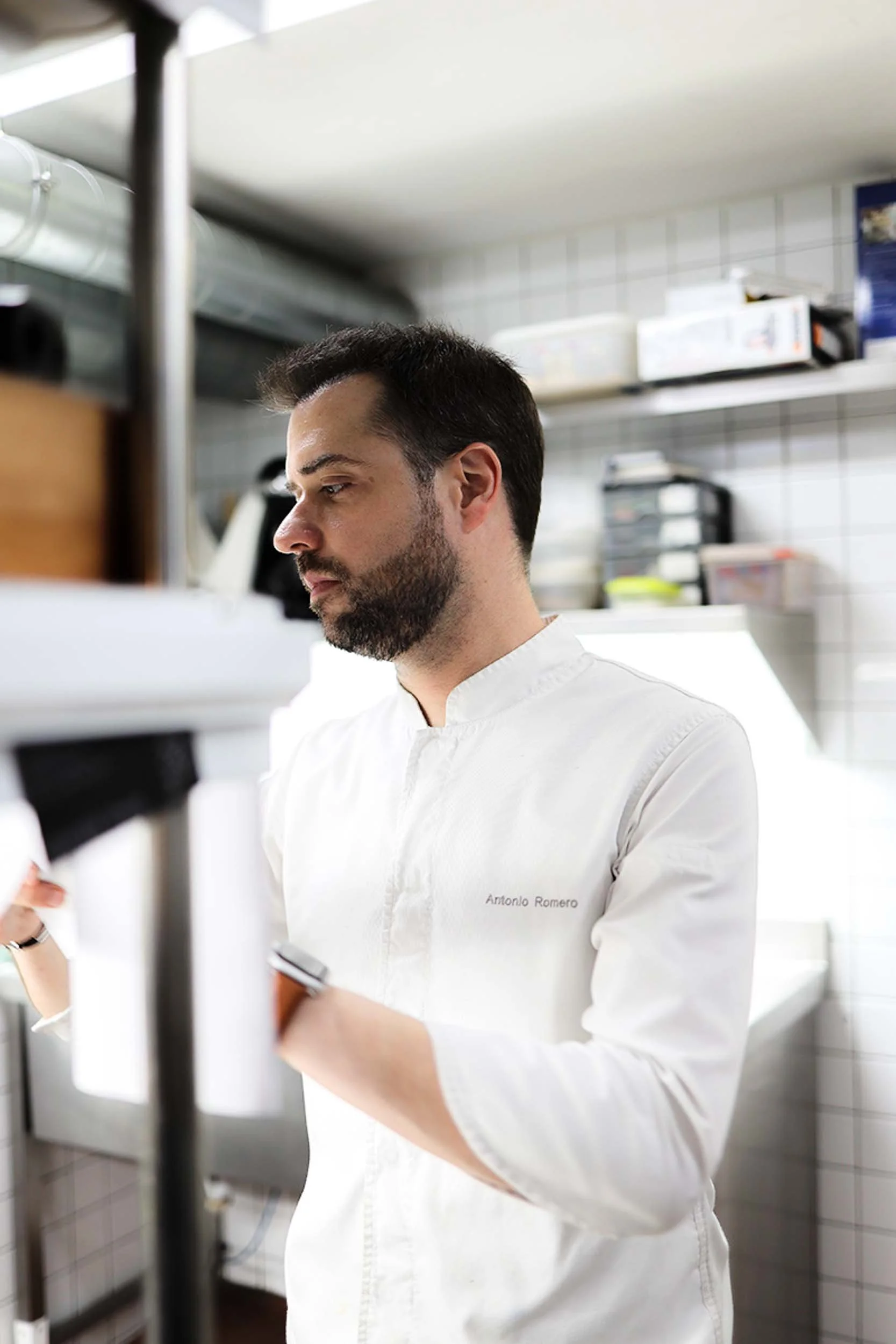
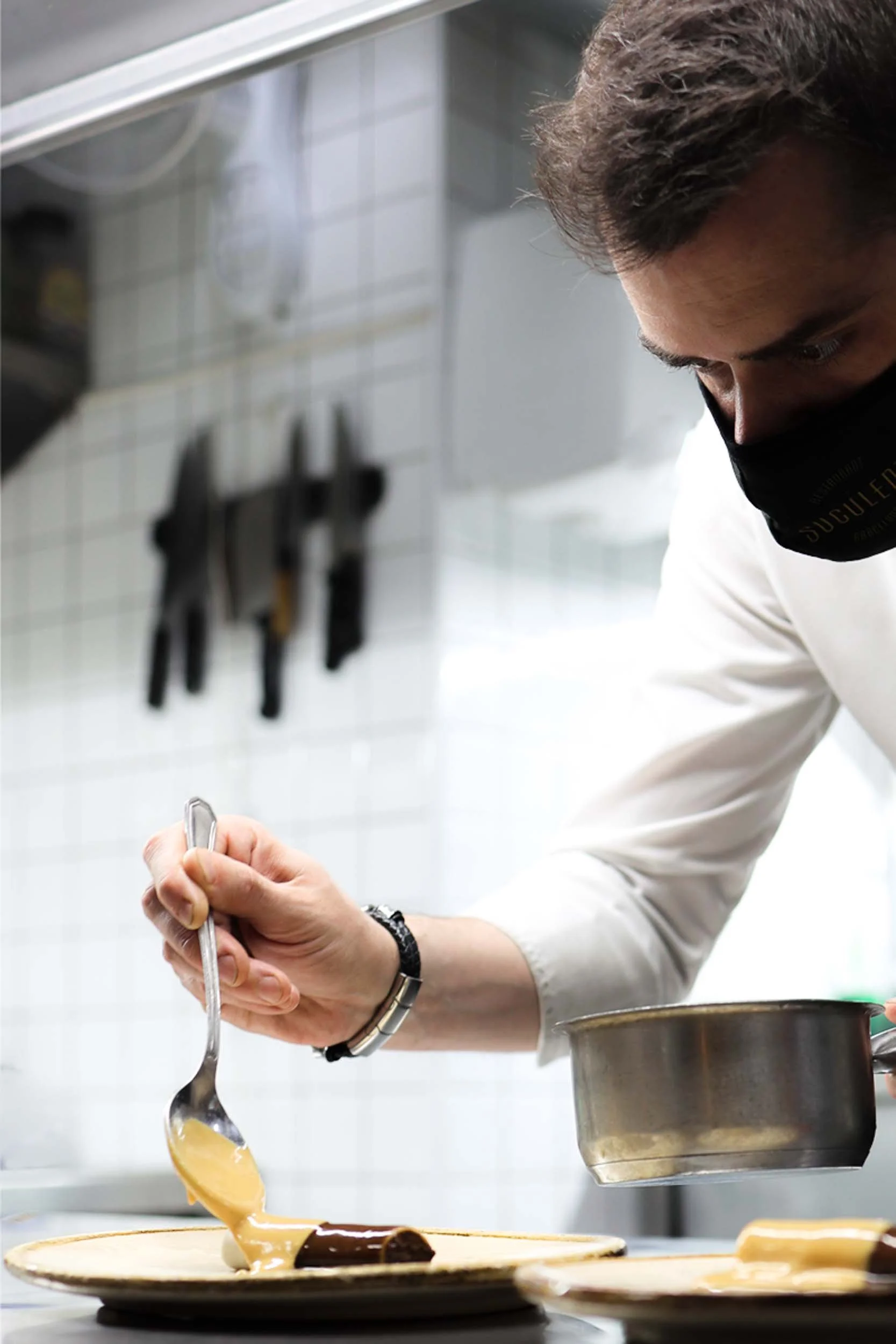
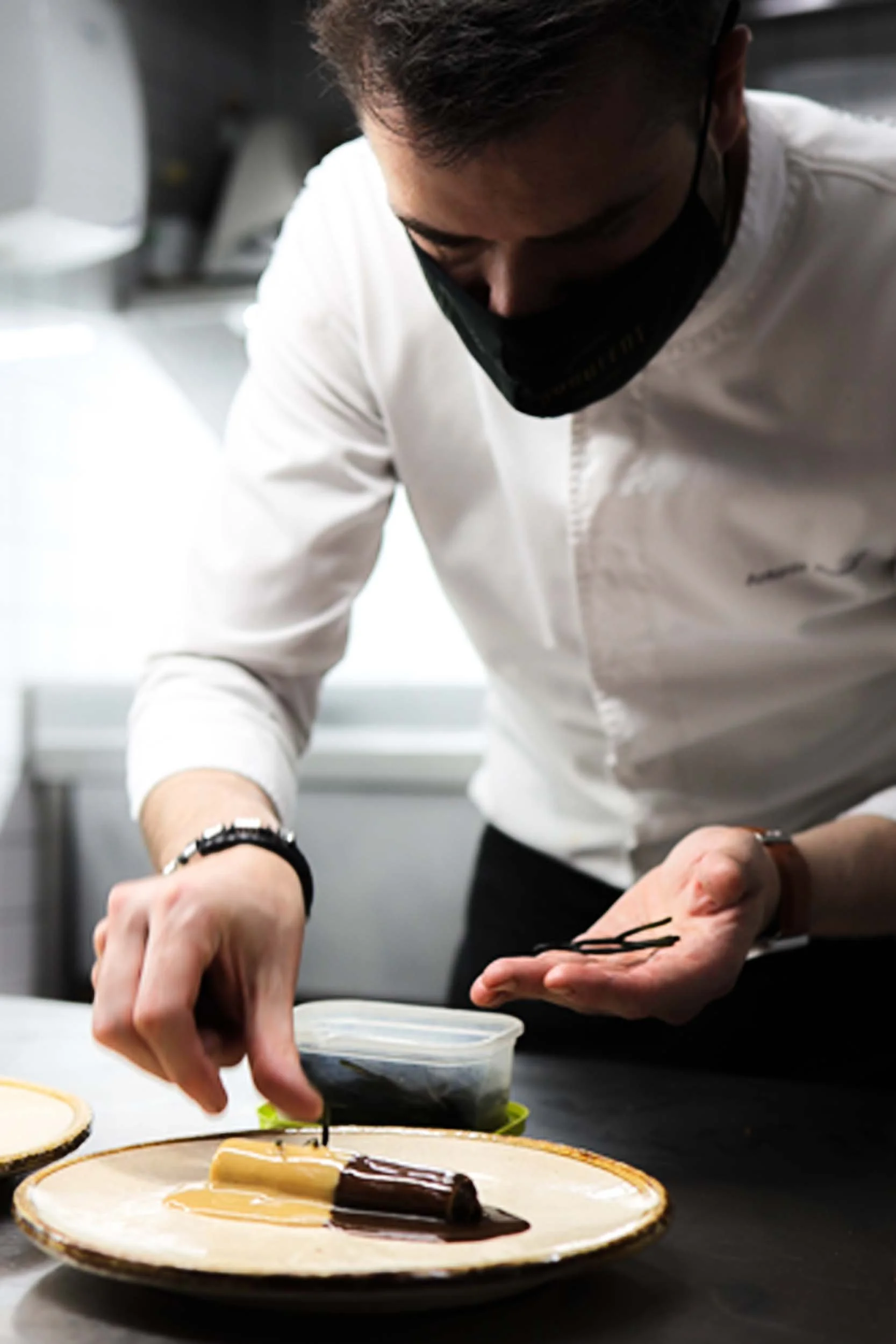
“The position as chef de partie really appealed to me,” he reveals, “because it was less about texture and presentation but more about flavor.” In essence, it was the time-consuming heart of cuisine, the stocks and sauces, that appealed to the young chef. And he soon prospered in his new role which also saw him spending the months of the year that El Bulli was closed working, and exchanging knowledge, at other 3-star restaurants such as Arzak in San Sebastián during the week and Akelarre on weekends.
In 2011, after El Bulli’s famous last service and permanent shutdown, Antonio moved on and started working for French star chef Anne-Sophie Pic at her eponymous 3 Michelin-starred restaurant Maison Pic in Valence. His time there, he believes, complemented his experience in Spanish avant-garde cuisine with French tradition, precision and excruciatingly long hours, and it helped mold him into the seasoned chef that he is today.
if you want responsibility, you need to deliver perfection. If you take on responsibility for something. Do it. And do it perfectly.
“If my experiences have taught me anything,” he ponders, “it is to take ownership of the kitchen and of my dishes.” - “It has been kind of like military service,” he grins, “and it has helped me grow up as a man. It has taught me that if you want responsibility, you need to deliver perfection. If you take on responsibility for something. Do it. And do it perfectly.”
This military-like precision, as he calls it, and attention to detail and technique became an integral part of Antonio’s life for almost a decade. And it became, essentially, all he knew. He thrived well with it, even, Until suddenly one day, his culinary world was turned upside down by a call from renowned Spanish chef Carles Abellan, who offered him a chance to help shape and develop a new concept in Barcelona. A concept that would prove an important turning point in Antonio’s career.
Double-click to edit...
Suculent - it’s not Succulent, it’s Sucar Lent
The result of the joint venture between Abellan and Romero eventually became the culinary hotspot Suculent which opened its doors in 2012, in a then less than renowned neighborhood of Barcelona. To the English-speaking world, the name reads a lot like succulent. And while not exactly far off, the name is actually a word play on the Catalan terms sucar (soaking) and lent (slow), and a strong reference to the very core values of the restaurant: flavor, tradition and time.
After El Bulli, I felt like cooking soul food. What I love about this place is that the concept is so different from how I was trained.
Suculent, in head chef Antonio Romero’s own words, is a return to the heart and traditions of Spanish and Mediterranean cuisine. Classic, deep and intense recognizable flavors presented in new, interesting ways. More importantly, though, it is an entirely new path for the young head chef:
A path that offers, he says, his take on Spanish culinary tradition, redefined and refined - without being “modernized”. It is, he argues, a “no bullshit” approach to cooking, and - commentators would probably argue - a great simplification compared to what he has previously done. Antonio himself, of course sees things differently. “El Bulli was pressure,” he confesses, “everywhere else was pressure,” he adds. “After El Bulli, I felt like cooking soul food. What I love about this place is that the concept is so different from how I was trained.”
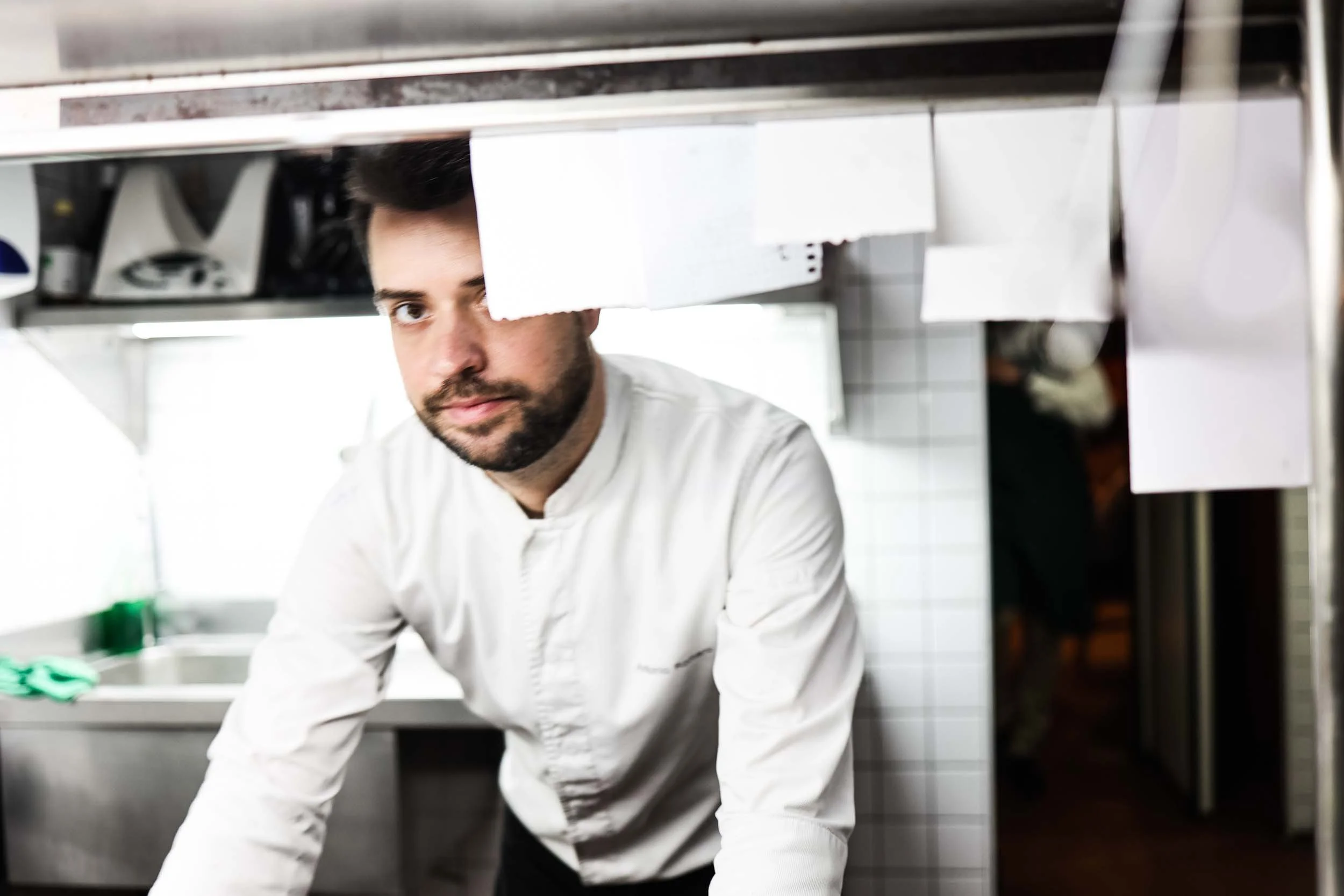
At Suculent, Antonio Romero breaks free of much of the cutting edge culinary boldness he learned at El Bulli and elsewhere in terms of presentation and innovation and he returns to a simpler style of cooking with focus mainly on flavor and heart. Rather than textures and culinary sleight of mind, he focuses on flavor, the essence of good produce and on presenting them for what they are. And he is loving it. “As of right now, this kind of food is what I want to cook,” he smiles, “and what my guests are looking for. Simple dishes with a lot of flavor.”
Double-click to edit...
At Suculent, Antonio Romero breaks free of much of the cutting edge culinary boldness he learned at El Bulli and elsewhere in terms of presentation and innovation and he returns to a simpler style of cooking with focus mainly on flavor and heart. Rather than textures and culinary sleight of mind, he focuses on flavor, the essence of good produce and on presenting them for what they are. And he is loving it. “As of right now, this kind of food is what I want to cook,” he smiles, “and what my guests are looking for. Simple dishes with a lot of flavor.”
Tradition, comfort and happiness in new and exciting ways
At Suculent, Antonio Romero works with the seasons, he explains, but not religiously in any way, he also admits. While focus is largely on local and seasonal ingredients, the menu still contains elements such as strawberry desserts in December because, as Antonio explains, “it represents my take on a very traditional dessert and my guests really like it!”
And this seems to be a defining feature for a more mature, wiser Antonio Romero. To offer tradition, comfort and happiness in new and exciting ways.
Rather than flair, dogmatic approaches and showmanship, his focus is now primarily on comfort. First and foremost, he wants to communicate to his guests his pride and joy in what he is doing. Rather than merely impress and reinvent, he wants to treat his guests well. He wants to connect with you as a diner and show you the things he loves to eat and make you love them as well.
I like to look at tradition and history but offer my own interpretation. The flavors are traditional, it is not modern cuisine.
Renovating the classics, he calls his style. He reimagines classic dishes using his own techniques and style, again without making it what he refers to as modern cuisine. where avant-garde presentation and experimentation takes over. “I like to look at tradition and history but offer my own interpretation. The flavors are traditional,” he stresses again, “it is not modern cuisine.”
Indeed, Antonio’s new style is much less about innovating and more about rediscovering. About catering to what guests want with classic, comforting flavors rather than constantly innovating and starting anew. “For the first time I am not doing tasting menus, but a la carte”, he muses, “I am catering to people’s tastes and, thankfully, a lot of people liked it,” he smiles gratefully. “This,” he trails further off into thought, “is my personal success story.”
“Like everybody else, probably, I still want to do more with life,” he admits. “Maybe open more restaurants. But as of right now, I am very happy that I have my freedom. What matters is that the restaurant is full and that the guests are happy. My wellbeing is important. My family is important. As is my team. That my team is happy and performing well is also very important to me.”
“Coming back to the beginning,” he closes his well-considered trail of thoughts, “I guess if I were to describe myself in four words, they would be honesty, (personal) style, creativity and belonging. The latter is really important. I feel like I have found myself on my journey and that right now, right here, this is where I need to be.”
